
Garner Septic Tanks: NC Homeowner’s Installation Guide
Discover how to install Garner septic tanks in NC with our comprehensive guide. Save time, reduce costs, and ensure long-term performance!

Garner septic tanks are precast concrete wastewater treatment systems designed for residential use across North Carolina, built to meet state code requirements and engineered for long-term performance on properties without municipal sewer access. If you are planning a new installation, replacing a failing tank, or simply trying to understand what sits beneath your yard, knowing how these systems work saves you time, money, and serious headaches. This guide covers tank features, the NC permitting sequence, maintenance schedules, and the warning signs every homeowner should recognize before a small problem becomes a drain field replacement.
What are Garner septic tanks and how do they work?
Garner septic tanks are conventional onsite wastewater treatment tanks, the same category the industry calls conventional septic systems, built from precast concrete and sized to match the occupancy of a residential home. Precast concrete dominates the NC market because it resists soil pressure, lasts decades without structural failure, and meets the material standards set by the North Carolina On-Site Wastewater Contractors and Inspectors Certification Board (NCOWCICB). The tank’s job is straightforward: receive all household wastewater, separate solids from liquid, and release clarified effluent to the drain field.
Inside the tank, three distinct layers form naturally. Heavy solids sink to the bottom as sludge, grease and lighter materials float to the top as scum, and the clarified liquid in the middle flows out through an outlet baffle toward the drain field. Anaerobic bacteria break down organic solids continuously, which is why the system works without electricity or chemicals. Many modern installations include an effluent filter on the outlet baffle, a small but critical component that blocks suspended solids from reaching and clogging the drain field.
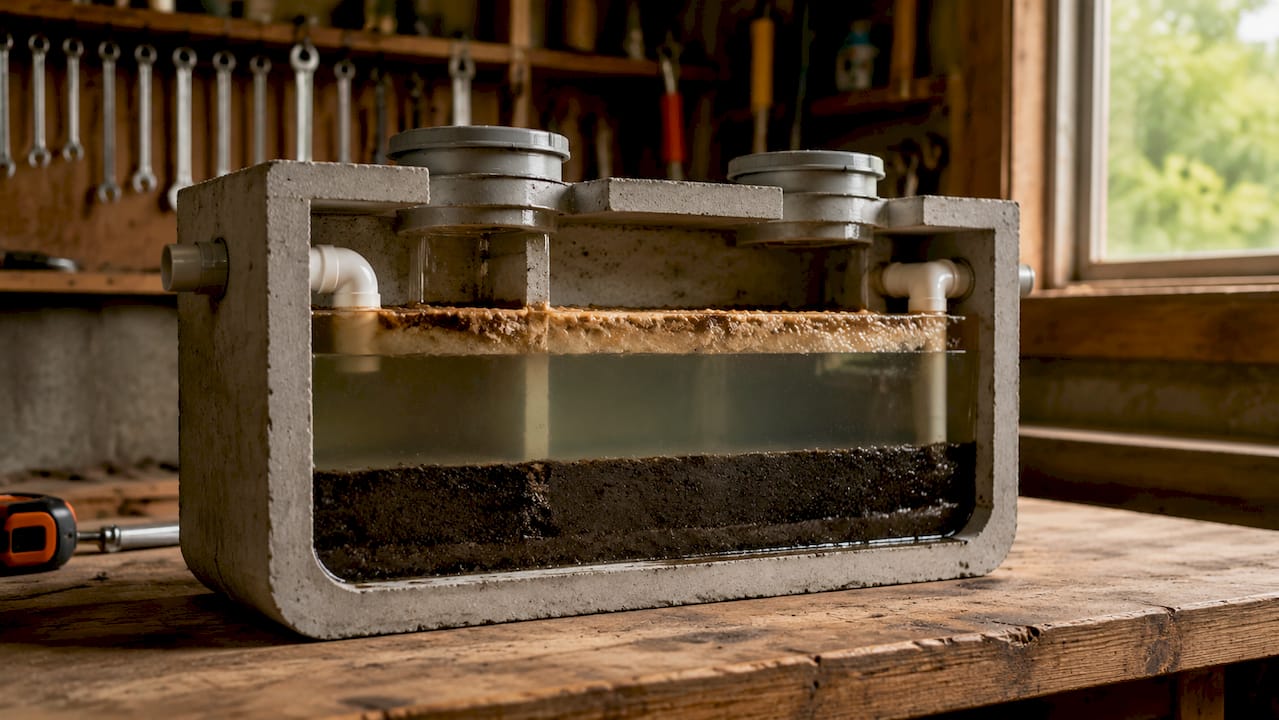
Typical residential tank sizes in NC range from 1,000 to 2,000 gallons, with the correct size determined by the number of bedrooms in the home, not the number of occupants. A three-bedroom home typically requires a 1,000-gallon tank, while a five-bedroom home may need 1,500 gallons or more. Undersizing a tank accelerates sludge buildup and shortens the interval between pump-outs significantly.
Pro Tip: Ask your installer to include an effluent filter at the outlet baffle during any new installation or tank replacement. Retrofitting one later costs more and requires a service call, but the filter alone can double the life of your drain field.
How does the NC septic permitting process work?
North Carolina requires a three-permit sequence before any septic tank is installed or replaced: the Improvement Permit, the Construction Authorization, and the Operation Permit. Each step gates the next, so skipping or rushing one delays the entire project.
- Improvement Permit. A licensed soil scientist or county environmental health specialist evaluates your property’s soil type, depth to restrictive horizons, and lot size to confirm the site can support a septic system. This permit establishes where the tank and drain field can be located.
- Construction Authorization. Once the site is approved, a licensed designer submits a system design for county review. The county issues Construction Authorization when the design meets code. No contractor can legally break ground without this document.
- Operation Permit. After installation, a county inspector verifies the system was built according to the approved design. The Operation Permit is issued upon passing inspection and is required before the home can be occupied or sold.
The table below shows realistic timeframes for each phase based on typical NC county processing times.
| Permit phase | Typical duration |
|---|---|
| Improvement Permit (soil evaluation) | 1 to 3 weeks |
| Construction Authorization (design review) | 1 to 2 weeks |
| Physical installation | 2 to 5 days |
| Operation Permit (final inspection) | 3 to 7 days |
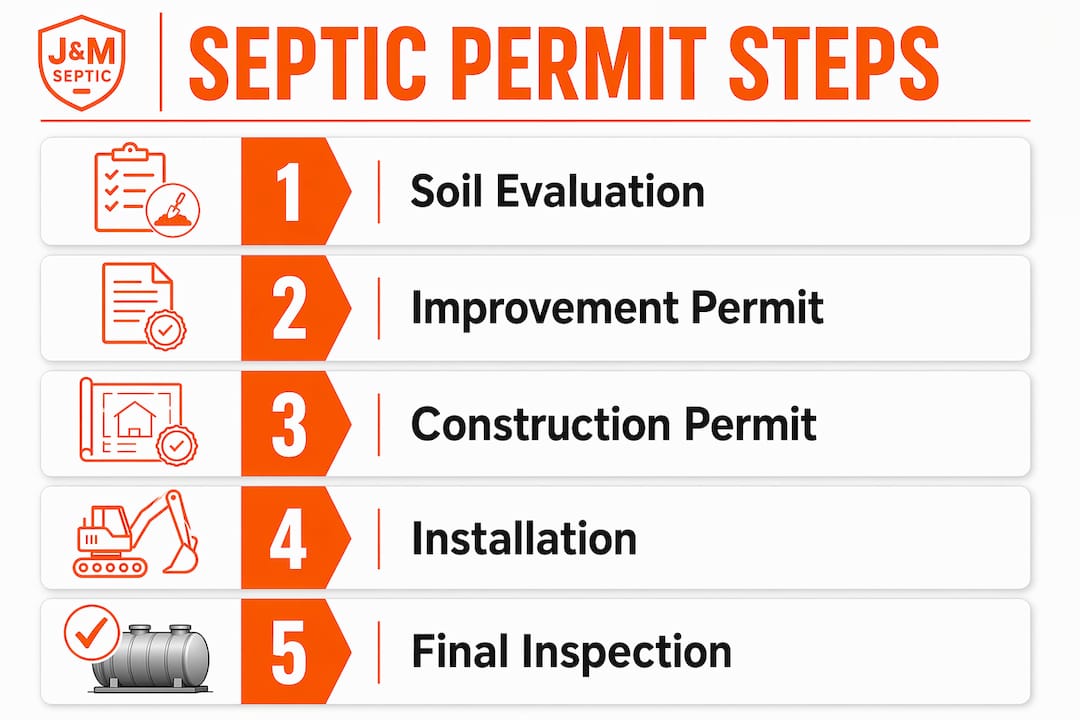
The largest scheduling risk in any NC septic project is the soil evaluation queue, not the construction itself. County environmental health offices in Alamance, Orange, and Chatham counties can run two to three weeks behind during spring building season. Starting your permit application in late fall or winter cuts weeks off the overall timeline. Even a like-for-like tank replacement requires Construction Authorization and a certified NCOWCICB contractor. The permit documents and approved site plans govern tank sizing and placement, not whatever tank happens to be in the ground already.
When and how should you maintain your septic tank?
The EPA recommends inspecting residential septic tanks every one to three years and pumping every three to five years, with the exact interval depending on tank size, household size, and how quickly solids accumulate. That range exists for a reason. A two-person household with a 1,500-gallon tank may go five years between pump-outs without issue. A family of six with a 1,000-gallon tank may need service every two years.
The most reliable way to set your pumping schedule is to measure sludge and scum depths during each inspection rather than following a fixed calendar. Sludge depth measurement is the single most accurate indicator of when a tank actually needs pumping. When the sludge layer reaches within 12 inches of the outlet baffle, it is time to pump regardless of when the last service occurred. Ask your inspector to record these measurements in writing so you can track accumulation rates over time.
A professional inspection covers more than depth measurements. The technician checks inlet and outlet baffles for cracks or displacement, cleans the effluent filter if one is present, inspects the tank lid and risers for structural integrity, and looks for signs of hydraulic overload in the drain field. Pump-out costs average $300 to $600 for a standard residential tank in 2026, with the job typically completed in 30 to 60 minutes. Emergency service calls outside business hours cost significantly more, which is the strongest financial argument for staying on a regular inspection schedule.
Regular inspections and pump-outs prevent costly drain field failures that result from neglect. Replacing a drain field costs five to ten times more than a decade of routine maintenance.
Pro Tip: Install a riser and lid at ground level over your tank access port if one is not already there. It makes every future inspection faster and cheaper because the technician does not have to dig to find the lid.
What are the warning signs of septic system problems?
Septic system problems rarely appear without warning. The EPA identifies five consistent indicators that a system needs immediate attention rather than a scheduled service call.
- Sewage odors indoors or outdoors. A properly functioning tank contains odors. If you smell sulfur or sewage near your tank, drain field, or inside the home, the system is under stress.
- Slow drains throughout the house. A single slow drain usually points to a localized clog. Slow drains in multiple fixtures simultaneously suggest the tank is full or the drain field is failing.
- Standing water or unusually green grass over the drain field. Saturated soil above the drain field means effluent is surfacing instead of percolating. This is a public health concern, not just a yard problem.
- Sewage backups in toilets or floor drains. Raw sewage backing up into the home is the most urgent sign of system failure and requires same-day service.
- Gurgling sounds in pipes. Gurgling after flushing or draining indicates pressure problems in the system that often precede a backup.
Preventive habits reduce the frequency of these events considerably. Spreading laundry loads across the week instead of running multiple loads in one day prevents hydraulic overload. Keeping cooking grease, wipes labeled “flushable,” and harsh chemical drain cleaners out of the system protects the bacterial population that makes the tank work. For a deeper look at what causes these failures and how to address them early, the common septic problems guide at Jmseptic covers each issue with specific repair options.
Scheduling an inspection at the first sign of any symptom costs far less than waiting. A tank that needs pumping costs $300 to $600 to service. A drain field that fails because the tank was never pumped costs $5,000 to $20,000 to replace.
Key takeaways
Proper maintenance and early permitting are the two decisions that determine whether a Garner septic tank serves your home for decades or fails within years.
| Point | Details |
|---|---|
| Tank sizing matters | NC residential tanks range from 1,000 to 2,000 gallons; size is set by bedroom count, not occupancy. |
| Three permits required | NC mandates an Improvement Permit, Construction Authorization, and Operation Permit for all installations. |
| Inspect every 1 to 3 years | Pump every 3 to 5 years, but base the exact interval on measured sludge depth, not the calendar. |
| Act on warning signs immediately | Odors, slow drains, and standing water over the drain field signal problems that worsen quickly without service. |
| Start permits early | Soil evaluation queues are the longest delay in any NC septic project; apply in fall or winter to save weeks. |
What I’ve learned after years of NC septic work
The homeowners who have the worst experiences with septic systems are almost always the ones who treated the tank like it was invisible. They never scheduled an inspection, never asked about sludge depth, and called us only after sewage backed up into the house. By that point, the drain field was usually compromised too.
The fixed-interval pumping advice you see everywhere, “pump every three years,” is a reasonable default but a poor substitute for actual measurement. I have seen 1,000-gallon tanks serving two-person households that did not need pumping after five years. I have also seen 1,500-gallon tanks serving large families that needed service after 18 months. The sludge depth tells you the truth. The calendar does not.
On the permitting side, the single most common mistake I see is homeowners waiting until spring to start the permit process because that is when they want to build. Soil evaluation queues in Alamance and surrounding counties can stretch three weeks in April and May. Starting in November or December means you are ready to break ground the moment the weather cooperates. The permit does not expire the moment you get it. Use that window.
My honest advice: find a contractor who knows NC code, pulls permits correctly, and will hand you a written inspection report with sludge measurements after every service visit. That report is worth more than any verbal reassurance.
— Jason
How Jmseptic helps NC homeowners with septic installation and repair
Jmseptic is a locally owned septic installation and repair company based in Mebane, serving homeowners across Alamance County and the surrounding Piedmont Triad. Whether you are installing a new system on a vacant lot or replacing a failing tank on an occupied property, the team handles the full process from soil evaluation coordination through final inspection.

For homeowners who want to understand what type of system fits their property, the conventional septic tanks guide explains tank types, sizing, and what to expect during installation. If you are working through the permit process for the first time, the NC permitting walkthrough at Jmseptic breaks down each step with county-specific detail. Call Jmseptic directly to schedule a site assessment or get a straight answer about what your system actually needs.
FAQ
What size septic tank do I need for my NC home?
North Carolina sizes residential septic tanks by bedroom count, with most homes requiring between 1,000 and 2,000 gallons. A three-bedroom home typically uses a 1,000-gallon tank; larger homes require proportionally larger tanks as specified in the approved site design.
How often should I pump my Garner septic tank?
The EPA recommends pumping every three to five years for most residential systems, but the accurate trigger is sludge depth reaching within 12 inches of the outlet baffle. Ask your inspector to measure and record sludge levels at every visit so you can schedule pumping based on actual conditions.
Do I need a permit to replace a septic tank in NC?
Yes. Even a direct tank replacement requires a Construction Authorization permit and must be performed by an NCOWCICB-certified contractor. The approved permit documents govern tank sizing and placement, not the existing tank in the ground.
How much does septic tank pumping cost in NC?
Pump-out costs average $300 to $600 for a standard residential tank in 2026, with the job typically completed in 30 to 60 minutes. Emergency or after-hours service calls carry higher fees, making routine scheduled maintenance the more cost-effective choice.
What are the first signs my septic system needs service?
Sewage odors near the tank or drain field, slow drains in multiple fixtures, standing water over the drain field, and sewage backups in the home are the clearest indicators. The EPA advises scheduling an inspection immediately when any of these symptoms appear rather than waiting for a routine service date.