
Flushing Septic Tank: A 2026 Homeowner’s Guide
Learn the essential steps for flushing your septic tank correctly in 2026. Discover what to flush and the best maintenance tips for homeowners.

Flushing a septic tank is defined as the practice of controlling what enters your system daily while scheduling professional pumping every 3–5 years to remove accumulated solids. Most homeowners treat their toilet like a trash can, and that single habit causes more septic failures than any other factor. The US EPA confirms that homeowners bear full responsibility for keeping harmful items out and maintaining a regular service schedule. Only human waste and septic-safe toilet paper belong in your system. Everything else is a threat to the bacterial balance that keeps your tank working.
What can you safely flush in a septic tank?
The short answer: only the 3 Ps. The 3 Ps rule means pee, poop, and paper. That is the complete list of what your septic system is designed to handle. Anything beyond that disrupts the bacterial colonies that break down waste inside the tank.
Single-ply toilet paper is the safest choice. Single-ply paper dissolves in 2–4 days and prevents up to 90% of common septic issues. Thicker, quilted brands take far longer to break down and contribute to sludge buildup over time.
Items that should never enter your septic system:
- Flushable wipes (they do not break down in septic conditions)
- Paper towels and facial tissues
- Feminine hygiene products
- Dental floss
- Cat litter
- Cotton balls and swabs
- Medications
- Cooking grease or oil
Pro Tip: “Flushable” on a wipe label means it can physically pass through your toilet. It does not mean it breaks down in your tank. Flushable wipes cause pump clogs and filter blocks that require expensive service calls.
Chemicals are just as damaging as physical debris. Harsh drain cleaners kill beneficial bacteria with recovery times of 2–6 weeks. Without those bacteria, solids do not break down, and your tank fills up much faster. Swap chemical cleaners for enzyme-based products, which clear minor buildup without harming your system’s biology.
| Item | Flush or Bin? |
|---|---|
| Human waste | Flush |
| Single-ply toilet paper | Flush |
| Flushable wipes | Bin |
| Paper towels | Bin |
| Feminine hygiene products | Bin |
| Dental floss | Bin |
| Medications | Bin (or pharmacy return) |
| Cooking grease | Bin |
| Chemical drain cleaners | Do not use |
How often should you pump your septic tank?
Standard septic maintenance calls for pumping every 3–5 years and inspection every 1–3 years. Those intervals shift based on tank size and how many people live in your home. A 1,000-gallon tank serving four people fills faster than the same tank serving two.
Mechanical systems, meaning those with pumps, floats, or aerators, need more frequent checks. Mechanical components require annual inspection to catch failures that show no visible signs until the system backs up. Replacing pumps and controls every 10–20 years is typical, but only if you catch wear early.
The financial case for regular pumping is clear. Pumping costs average $300–$600, and inspections run $100–$300. Neglect pushes repair bills into the $5,000–$15,000 range. That math alone justifies a consistent pumping schedule.
Signs your tank needs pumping now:
- Drains throughout the house run slowly
- Foul odors near drains or in the yard
- Water pooling near the drain field
- Gurgling sounds in pipes
- Sewage backup in toilets or sinks
Slow drains and pooling water are the most reliable early warnings. Catching these signs early and scheduling prompt pumping prevents drain field damage, which is the most expensive repair a homeowner can face.
One often-overlooked factor: garbage disposals. Garbage disposals increase septic solids by 50%, which means you will need to pump more often if you use one regularly. Minimizing disposal use is one of the simplest ways to extend the time between service calls.
Step-by-step guide to safe septic system cleaning and maintenance
Safe septic system cleaning starts with daily habits, not just the annual service call. Follow these steps to protect your system year-round.
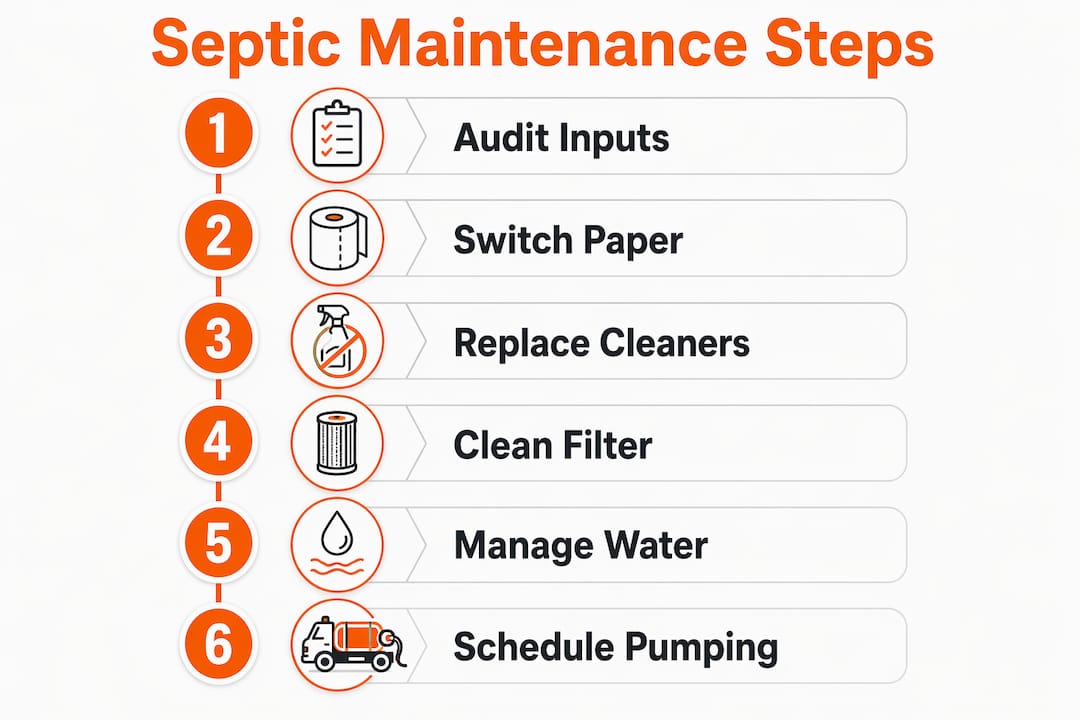
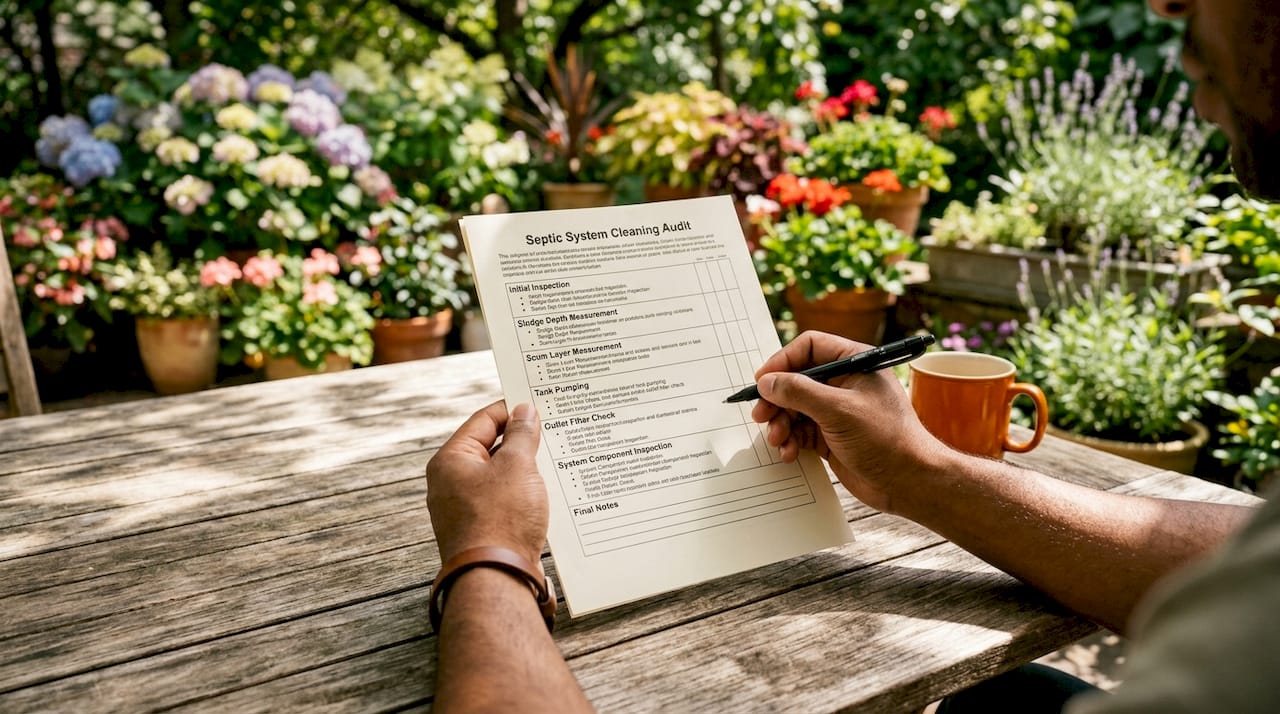
Step 1: Audit what enters your system. Walk every household member through the 3 Ps rule. Post a simple list near each toilet. Children and guests are the most common sources of accidental flushing mistakes.
Step 2: Switch to single-ply toilet paper. Make this a permanent household standard. The difference in breakdown time between single-ply and double-ply paper is significant over months and years of use.
Step 3: Replace chemical cleaners. Remove antibacterial soaps, bleach-based toilet cleaners, and chemical drain openers from your routine. Use enzyme-based alternatives for any drain maintenance. These products support bacterial activity rather than killing it.
Step 4: Clean your effluent filter every 6–12 months. Cleaning the effluent filter is a five-minute DIY task that prevents backups and restricted flow. Locate the filter in your tank’s outlet baffle, pull it out carefully, rinse it with a garden hose over the tank opening so solids return to the tank, and reinstall it.
Step 5: Manage water use. Spreading laundry loads across the week instead of doing them all on one day reduces the water surge entering your tank. High water volume flushes solids into the drain field before they fully settle.
Step 6: Schedule professional pumping. Contact a licensed septic service provider and put the next pumping date on your calendar. Do not wait for symptoms. Proactive septic tank pump service costs a fraction of emergency repairs.
Pro Tip: Keep a simple maintenance log with dates for pumping, inspections, and filter cleaning. When you sell your home, that record is proof of responsible ownership and can protect your property value.
Comparison of maintenance approaches:
| Approach | Cost range | Risk level |
|---|---|---|
| Proactive pumping every 3–5 years | $300–$600 | Low |
| Reactive repair after failure | $5,000–$15,000+ | High |
| Annual mechanical inspection | $100–$300 | Very low |
| Ignoring warning signs | Unpredictable | Very high |
What problems does improper flushing cause?
Improper flushing is the leading cause of premature septic system failure. The damage is not always immediate, which is why homeowners often do not connect their flushing habits to the problems that appear months later.
When non-degradable items enter the tank, they accumulate in the sludge layer at the bottom. That layer grows faster than bacteria can process it. Eventually, solids overflow into the drain field, clogging the soil and destroying its ability to filter effluent. Drain field replacement is the most expensive outcome of poor flushing habits.
Chemical disruption is equally serious. Antibacterial products and chemical cleaners kill the bacteria that break down waste. Without those bacteria, the tank fills with raw solids. The system then produces foul odors, backs up into the home, and requires emergency pumping.
Homeowners often mistake the toilet for a trash can, and that single habit causes more septic failures than any mechanical issue. The septic tank is a biological system, not a plumbing fixture. What you flush determines whether that biology thrives or collapses.
Warning signs that flushing habits have already caused damage:
- Persistent slow drains that do not respond to plunging
- Sewage odors inside the home or near the tank lid
- Wet or unusually green patches of grass over the drain field
- Toilets that back up or gurgle when other fixtures run
When you see signs your septic needs service, do not attempt chemical fixes. Adding store-bought bacterial additives can actually damage tank bacteria further. Enzyme-based products are safe for minor issues, but they are not a substitute for professional pumping. Call a licensed technician when symptoms appear. DIY chemical treatments at that stage make the problem worse, not better.
Key Takeaways
Proper septic tank maintenance costs a few hundred dollars every few years. Neglect costs tens of thousands.
| Point | Details |
|---|---|
| Follow the 3 Ps rule | Only flush pee, poop, and single-ply toilet paper to protect bacterial balance. |
| Pump every 3–5 years | Schedule professional pumping before symptoms appear to avoid $5,000+ repairs. |
| Avoid chemicals and wipes | Flushable wipes and drain cleaners destroy the bacteria your system depends on. |
| Clean your effluent filter | Rinse the filter every 6–12 months to prevent backups and restricted flow. |
| Watch for early warning signs | Slow drains, odors, and wet yard patches signal a system that needs immediate attention. |
What 15 years of septic work taught me about flushing habits
The most expensive septic calls I see are almost always preventable. Homeowners call with a backed-up system, and when I ask about their habits, the same patterns come up every time: flushable wipes, antibacterial soap, and years between pumpings. The marketing on “flushable” products is genuinely misleading, and I understand why people trust it. But I have pulled enough wipe clogs from pumps and filters to know that label means nothing in a septic context.
The 3 Ps rule sounds simple, but enforcing it across a whole household is harder than it looks. Guests, kids, and anyone who has lived on city sewer their whole life will default to flushing whatever fits down the drain. One conversation is not enough. Put a small sign near the toilet. Make it a house rule with a real explanation, not just a command.
The other thing I tell every homeowner: do not wait for a symptom to call. By the time you smell sewage or see pooling water, the damage is already happening. A $400 pumping appointment every few years is the cheapest home maintenance you can do. The homeowners who prevent septic failure before it starts are the ones who never have a $10,000 story to tell.
— Jason
Jmseptic serves Alamance County homeowners who need it done right
Jmseptic handles septic pumping, inspections, effluent filter cleaning, and emergency repairs across Burlington, Mebane, Elon, Graham, Whitsett, and McLeansville, North Carolina. Every service follows current 2026 industry standards, and all waste disposal is handled by licensed technicians under North Carolina regulations.

If your drains are slow, your yard smells, or you cannot remember the last time your tank was pumped, that is the signal to act. Jmseptic provides honest assessments with no upselling. Schedule your septic pump service today and protect your home before a small issue becomes a costly repair. For homeowners dealing with urgent backups or system failure, Jmseptic also offers emergency septic repair with fast response across Alamance County.
FAQ
What does flushing a septic tank actually mean?
Flushing a septic tank refers to two things: controlling what you flush daily and scheduling professional pumping to remove accumulated solids. The term covers both daily habits and periodic professional service.
How often should a septic tank be pumped?
Most tanks need pumping every 3–5 years, with inspections every 1–3 years. Households with garbage disposals or mechanical system components may need more frequent service.
Are flushable wipes safe for septic systems?
Flushable wipes are not safe for septic systems. They do not break down under septic conditions and cause pump clogs, filter blocks, and shortened system lifespan.
Can I use chemical drain cleaners with a septic tank?
Chemical drain cleaners kill the beneficial bacteria inside your tank, with bacterial recovery taking 2–6 weeks. Use enzyme-based products instead for any drain maintenance.
What are the first signs that my septic tank needs pumping?
Slow drains throughout the house, foul odors near drains or the yard, and water pooling near the drain field are the most reliable early indicators that pumping is overdue.