
Fabric Softener Septic Safe: What Homeowners Need to Know
Is fabric softener septic safe? Learn how to use it wisely to protect your septic system and maintain its health with expert tips.

Occasional, well-diluted fabric softener use usually won’t ruin a healthy septic system, but regular use of conventional softeners raises real long-term risk. The key variable isn’t a single load — it’s cumulative exposure to quaternary ammonium compounds (quats) and petroleum-based oils that gradually suppress the bacteria your tank depends on. Septic guidance from Oregon State University Extension and other university specialists consistently land on the same practical advice: limit loads, use the dispenser, and cut your dose in half.
Here’s the short version before we go deeper:
- Use the machine’s built-in dispenser — never pour softener directly into the drum or wash water.
- Cut the recommended dose to half (or less) and skip softener entirely on alternating loads.
- Limit laundry to 1–2 loads per day to prevent hydraulic overload, which septic specialists identify as often a bigger immediate threat than the chemicals themselves.
- Choose products with EPA Safer Choice certification or explicit biodegradability claims over anything simply labeled “septic safe.”
- When in doubt, swap to white distilled vinegar or wool dryer balls — both work and neither harms your tank.
Pro Tip: If your system history is unknown — you just bought the house, or you’ve never had it pumped — skip fabric softener entirely until you get a professional inspection. Starting from a clean baseline is far cheaper than diagnosing a problem that’s been building for years.
Table of Contents
- Are fabric softeners actually septic safe?
- How fabric softener residues actually damage your septic system
- How risk varies by product type
- Practical rules for using fabric softener with a septic system
- Septic-safe alternatives that actually work
- How regular softener use affects your maintenance schedule and costs
- Signs your septic system may be reacting and what to do immediately
- When to call a septic professional
- Key Takeaways
- The part most softener guides skip
- Jmseptic serves Alamance County homeowners with honest septic diagnostics
- Useful sources for further reading
Are fabric softeners actually septic safe?
Most conventional fabric softeners are not formulated with septic systems in mind. They work by depositing a thin coating of positively charged molecules (usually quats) onto fabric fibers, which reduces static and makes clothes feel softer. That coating stays on your clothes through the rinse cycle, but a portion of it washes off into your wastewater stream and eventually reaches your tank.
The two ingredient classes that matter most for septic health are quaternary ammonium compounds and petroleum-based oils or silicones. Quats are antimicrobial by design — that’s what makes them effective in disinfectants too. In your septic tank, that same antimicrobial action can suppress the beneficial anaerobic bacteria responsible for breaking down solid waste. Petroleum-based oils and emulsion stabilizers don’t kill bacteria directly, but they coat solids and scum, interfering with the tank’s natural stratification process.
Research on fabric softener and septic interactions confirms that both quats and petroleum-based oils can accumulate and disrupt settling — the process by which solids sink to the bottom, liquids pass through, and a scum layer forms at the top. When that stratification breaks down, more solids carry over into the drain field, which is where expensive failures begin.
| Ingredient | What It Does | Septic Risk | Biodegradability |
|---|---|---|---|
| Quaternary ammonium compounds (quats) | Antimicrobial coating agent | High — suppresses tank bacteria | Slow; persists in wastewater |
| Petroleum-based oils / silicones | Lubricates fibers, reduces static | Medium-High — coats solids, disrupts stratification | Poor |
| Emulsion stabilizers | Keeps formula stable in bottle | Medium — accumulates in scum layer | Variable |
| Synthetic fragrances | Scent delivery | Low-Medium — some compounds are persistent | Variable |
| Plant-based surfactants | Cleaning/softening in natural formulas | Low — breaks down more readily | Generally good |
Where common brands fall on this spectrum: Downy and Snuggle both rely heavily on quats and synthetic fragrance systems, placing them in the higher-risk category for regular septic use. Mrs. Meyer’s uses plant-derived ingredients and essential oils, which reduces but doesn’t eliminate risk. Molly’s Suds positions itself explicitly as a septic-conscious brand, using plant-based formulas without quats — though even plant-based softeners should be used in moderation.
How fabric softener residues actually damage your septic system
The damage isn’t dramatic or immediate. It’s a slow accumulation problem, and that’s exactly what makes it easy to ignore until it becomes costly.
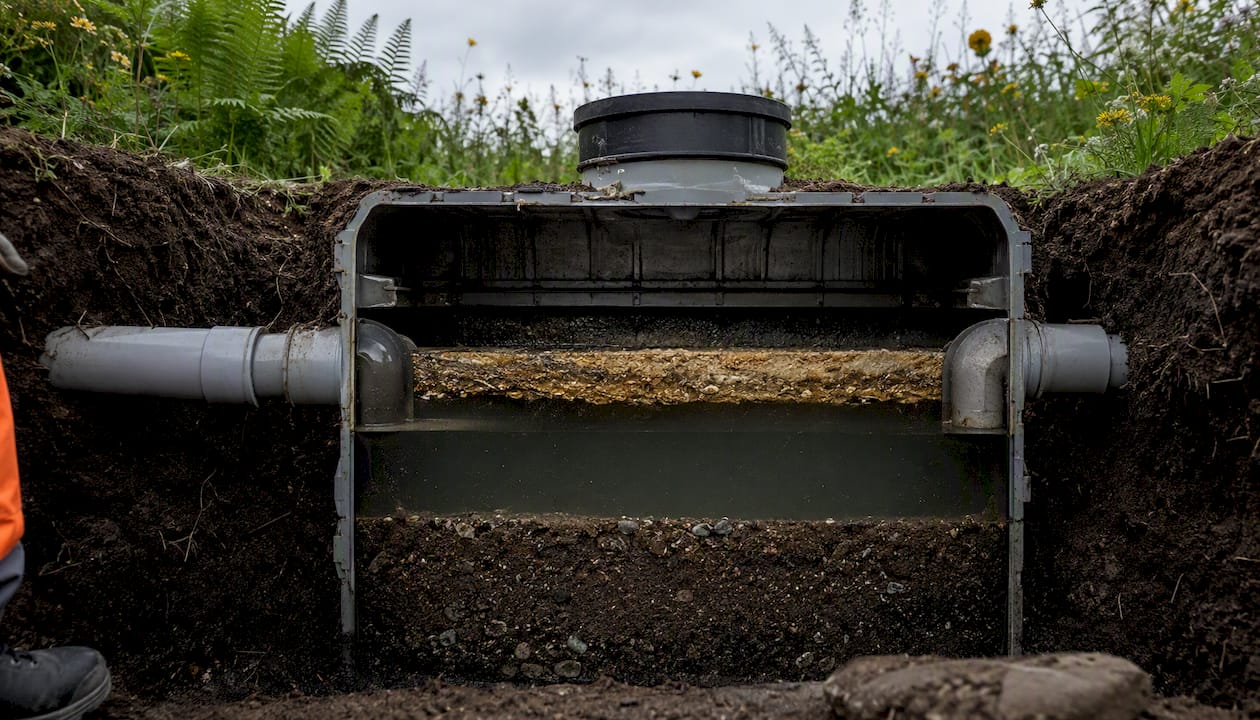
A healthy septic tank operates in three distinct layers: a floating scum layer at the top (fats, oils, grease), a liquid effluent zone in the middle, and a sludge layer at the bottom where solids settle and bacteria break them down. Effluent flows from the middle zone into the drain field, ideally carrying very little solid material. The whole system depends on active bacterial populations doing their job in the sludge layer.
Quats and petroleum-based residues disrupt this process in two ways. First, quats suppress bacterial activity, which means solids break down more slowly and sludge accumulates faster than normal. Second, oils and stabilizers coat the scum layer and tank walls, thickening the top layer and reducing the effective liquid zone. Over time, both effects push more partially digested solids toward the drain field. Once solids clog the drain field’s soil matrix, the repair bill climbs fast.
The distinction between reversible and cumulative damage matters here:
- Occasional use (once a week, half-dose, properly dispensed): low-concentration exposure that a healthy tank’s bacterial population can typically tolerate without lasting harm.
- Daily use, full dose, poured directly: persistent suppression of bacteria, accelerated scum buildup, and measurable reduction in settling efficiency over months.
- Hydraulic overload (multiple loads back-to-back): pushes water through the tank faster than bacteria can process it, carrying solids into the drain field regardless of what’s in the detergent.
Pro Tip: The most common mistake isn’t the softener itself — it’s doing six loads on a Saturday. Spreading laundry across the week does more for your tank than switching brands.
A balanced reading of septic guidance consistently finds that low-concentration, properly dispensed use poses less risk than most homeowners fear. The problem is that “occasional” rarely stays occasional, and cumulative volume is what determines long-term outcomes.
How risk varies by product type
Not all softener formats carry the same risk, and understanding the differences helps you make a faster, smarter swap.
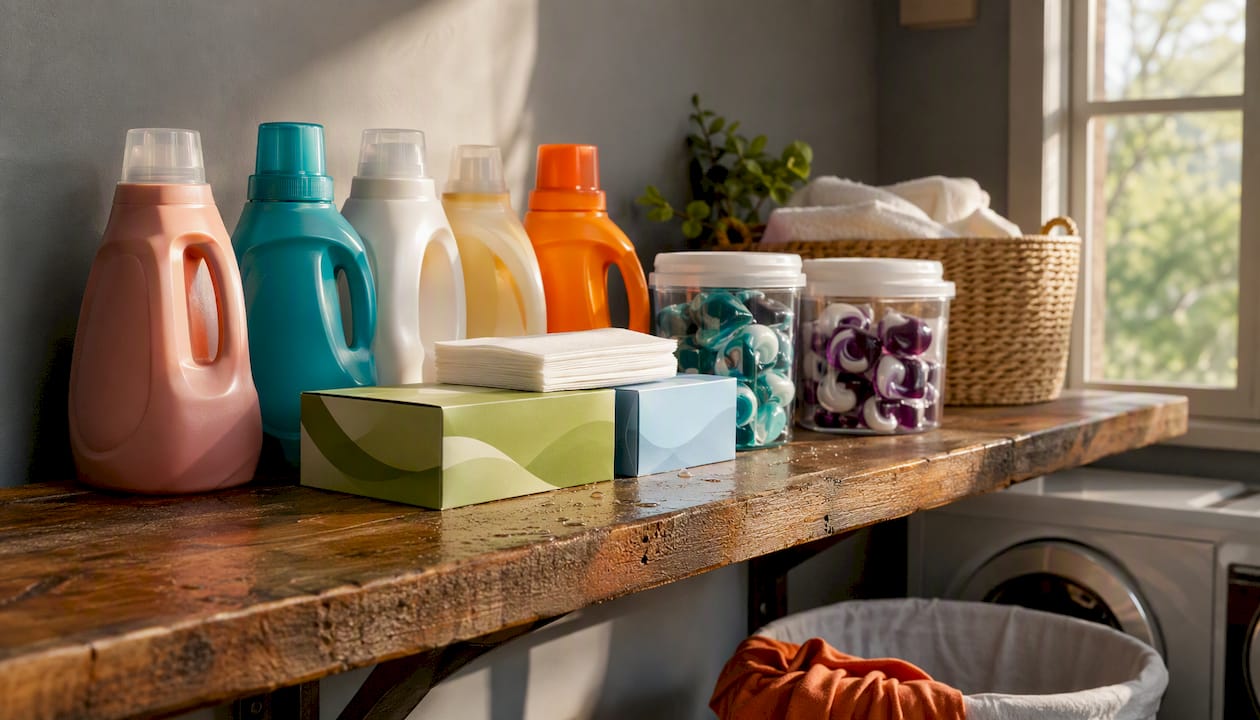
Liquid fabric softeners carry the highest direct septic risk. They enter the wash water during the rinse cycle, pass through the drain, and reach the tank in relatively concentrated form. Conventional liquid softeners (Downy, Snuggle) use quat-heavy formulas. Plant-based liquids (Molly’s Suds, Mrs. Meyer’s) are lower risk but not zero risk.
Dryer sheets are a different story. Because they’re used in the dryer rather than the washer, they don’t enter your wastewater stream at all under normal use. The septic risk from dryer sheets is essentially zero — unless someone flushes them or they end up in a drain, which does happen. Never flush a dryer sheet or let one go down a sink.
In-wash scent beads and crystals (like Downy Unstopables) dissolve in the wash water and follow the same path as liquid softeners. Many contain synthetic fragrance compounds and stabilizers that are slow to biodegrade. Treat them the same as liquid softeners for risk purposes.
Products labeled “septic safe” deserve a closer look. There is no official U.S. regulatory standard that certifies a product as septic safe — the label is a marketing claim, not a verified certification. A product can carry that label and still contain quats or petroleum derivatives. What actually signals lower risk: EPA Safer Choice certification, explicit biodegradability claims backed by third-party testing, and ingredient lists free of quats and petroleum-based compounds.
Label checklist when shopping:
- Look for: EPA Safer Choice seal, “plant-derived” or “plant-based” ingredients, explicit biodegradability certification.
- Avoid: any ingredient containing “ammonium chloride” or “ammonium methosulfate” (both are quats), “dimethicone,” “polydimethylsiloxane,” or “mineral oil.”
- Treat “natural” and “eco-friendly” as unverified marketing unless backed by a specific certification.
Practical rules for using fabric softener with a septic system
The goal isn’t perfection — it’s keeping your tank’s bacterial population healthy enough to do its job. These rules give you a workable framework without requiring you to give up soft laundry entirely.
Top-line rules:
- Always use the machine’s built-in softener dispenser. It dilutes the product before it reaches the drum.
- Use half the manufacturer’s recommended dose, or less.
- Skip softener on alternating loads — your clothes will be fine, and your tank will thank you.
- Spread laundry across the week. Hydraulic overload is often a bigger immediate threat than chemical exposure.
Daily load limits by washer type:
| Washer Type | Recommended Max Loads/Day | Notes |
|---|---|---|
| Standard top-loader | 1–2 | Higher water use per cycle; space loads 2–3 hours apart |
| High-efficiency (HE) front-loader | 1–2 | Lower water use, but still needs recovery time between loads |
| HE top-loader | 1–2 | Similar to HE front-loader; follow same spacing rule |
For more on how your washer’s water volume affects your system, washing machines and septic tanks covers the full picture.
Do/don’t checklist:
- Do: measure your dose rather than estimating.
- Do: run a rinse-only cycle after a heavy softener load if you’re concerned.
- Don’t: pour liquid softener directly into the drum or wash water — it hits the tank in a concentrated slug.
- Don’t: flush dryer sheets or let them enter any drain.
- Don’t: do back-to-back loads all day on weekends without spacing them out.
Monitoring steps: watch for slow drains anywhere in the house, gurgling sounds from toilets or sinks after laundry, and any odors near the drain field. These are early signals worth taking seriously. If you notice any of them after increasing your softener use, cut back immediately and give the system a week of softener-free laundry before reassessing.
Septic-safe alternatives that actually work
The good news: the best alternatives to conventional fabric softener are cheap, widely available, and genuinely effective. You don’t need a specialty product to get softer clothes.
1. White distilled vinegar
Add ½ cup to the rinse cycle dispenser (not the bleach compartment). Vinegar neutralizes detergent residue, which is what makes clothes feel stiff in the first place, and it rinses out completely. Half a cup per rinse cycle is the standard recommendation from septic guidance sources. It won’t leave a vinegar smell on your clothes — the scent dissipates completely in the dryer.
- Pros: costs pennies per load, fully biodegradable, zero septic risk, no quats or oils.
- Cons: no added scent, won’t reduce static as effectively as a commercial softener.
2. Wool dryer balls
Toss 2–3 into the dryer with your wet laundry. They work by physically separating fabric layers as they tumble, which reduces drying time and softens clothes mechanically. Wool dryer balls provide effective mechanical softening without introducing any chemicals into your wastewater stream.
- Pros: reusable for hundreds of loads, no chemicals, reduces drying time, works on all fabric types.
- Cons: upfront cost ($15–$30 for a set), no scent unless you add a drop of essential oil.
3. Baking soda
Add ½ cup to the wash cycle (not the rinse). It softens water, which helps detergent work more effectively and leaves fabrics feeling softer. It’s fully septic-safe and biodegradable.
- Pros: inexpensive, widely available, safe for all fabric types, zero septic risk.
- Cons: minimal effect on static, no scent, less effective on very hard water.
4. Plant-based commercial softeners (Molly’s Suds, Mrs. Meyer’s)
These are lower-risk options when you want a commercial product. Molly’s Suds uses plant-derived ingredients without quats. Mrs. Meyer’s relies on essential oils and plant-based formulas. Neither is completely risk-free for septic systems, but both are significantly better than conventional quat-based softeners. Use at half dose and through the dispenser.
- Pros: familiar product format, available at most grocery stores, better ingredient profiles than conventional softeners.
- Cons: cost more than vinegar or baking soda, still require moderation, “natural” claims vary in specificity.
5. Essential oils (optional scent add-on)
A drop or two of lavender or eucalyptus essential oil on a wool dryer ball adds light scent without any wastewater impact. Use sparingly — essential oils are concentrated, and more than a few drops can irritate sensitive skin. They’re not a softener on their own, just a scent delivery method.
For a broader look at eco-conscious choices for your system, eco-friendly septic solutions covers product selection and maintenance habits together.
How regular softener use affects your maintenance schedule and costs
The financial case for moderation is straightforward: anything that accelerates sludge buildup or suppresses bacterial activity shortens the time between pumpings and raises the probability of a drain field repair.
A standard septic tank on a well-managed household schedule needs pumping every 3–5 years. University extension guidance consistently cites this as the baseline for a household using phosphate-free, low-surfactant products at reduced dosage. Regular use of quat-heavy softeners can push that interval shorter by accelerating sludge accumulation, though the exact timeline depends on tank size, household size, and overall laundry habits.
Rough cost ranges (U.S. national averages — local rates in Alamance County and the Piedmont Triad will vary):
| Service | Typical Cost Range | When It’s Needed |
|---|---|---|
| Routine tank pumping | — | Every 3–5 years under normal use |
| Hydro-jetting / line cleaning | — | When buildup or partial clogs are detected |
| Drain field repair (partial) | — | When solids carryover has damaged soil matrix |
| Full system replacement | — | When drain field failure is irreversible |
The cumulative risk is real: quats and petroleum-based residues can gradually coat tank interiors, disrupt stratification, and suppress beneficial bacteria — increasing solids carryover into the drain field and raising long-term failure risk.
Beyond your tank, there’s an environmental dimension worth noting. Quats and synthetic fragrance compounds that pass through a failing drain field can reach soil and groundwater. The Environmental Working Group has flagged fabric softener ingredients as environmental concerns, particularly for aquatic ecosystems and soil biology. For homeowners on well water, a failing drain field isn’t just a plumbing problem — it’s a potential contamination issue.
Inspection and maintenance schedule:
- Pump every 3–5 years as a baseline; move to every 2–3 years if you’ve used conventional softeners regularly.
- Schedule a professional inspection if you’ve never had the system evaluated or if you’re new to the property.
- After any period of heavy softener use, have the sludge depth measured at your next pumping to assess whether the interval needs to shorten.
To understand how to prevent septic failure before it gets costly, the maintenance habits you build now are the ones that keep a $400 pumping from becoming a $20,000 replacement.
Signs your septic system may be reacting and what to do immediately
Early signs are easy to dismiss. Most homeowners notice them and assume it’s a minor plumbing issue. By the time the signs are unmistakable, the damage is usually well underway.
Early warning signs:
- Slow drains in multiple fixtures simultaneously (not just one sink)
- Gurgling sounds from toilets or drains after running the washer
- Faint sewage odor near the drain field or inside the house
- Unusually lush, green grass directly over the drain field (effluent is fertilizing it)
Later-stage signs (call a professional immediately):
- Sewage backing up into tubs, sinks, or toilets
- Standing water or soggy ground near the drain field
- Strong, persistent odors inside the house
- Multiple fixtures backing up at once
Immediate steps after accidental heavy softener use:
- Stop running laundry for at least 24–48 hours to give the tank time to recover.
- Run 2–3 rinse-only cycles (no detergent, no softener) to flush residual product through with clean water.
- Switch to vinegar or skip softener entirely for the next 2–4 weeks.
- Monitor all drains and toilets daily for the following week.
- If any early warning signs appear and don’t resolve within a few days, call a septic contractor.
What to have ready when you call:
- Date of last pumping (if known)
- Type and brand of softener used, and approximate amount
- How many loads per day you typically run
- A description of symptoms and when they started
- Whether you’re on a well or municipal water supply
For guidance on recognizing septic tank bog and scum buildup symptoms, that resource covers the visual and physical signs in more detail.
Also worth reading: this guide to septic system alternatives covers how different system configurations handle chemical loads differently, which is useful context if your system is older or non-conventional.
When to call a septic professional
Some symptoms resolve on their own after you stop using softener and let the system rest. Others don’t, and waiting makes them worse.
Call a professional when:
- Slow drains or gurgling persist for more than a week after stopping softener use.
- You notice standing water or wet spots near the drain field.
- Any sewage odor enters the house.
- Toilets or drains back up.
- You’ve never had the system inspected and you’ve been using conventional softeners regularly.
What a professional inspection covers:
A thorough diagnostic visit typically includes locating and accessing the tank, measuring sludge and scum layer depths, inspecting inlet and outlet baffles, and evaluating the drain field for signs of saturation or failure. If the drain field is suspect, a contractor may perform a soil percolation check to assess whether the soil matrix is still functioning. For sewer line cleaning needs, hydro-jetting can clear buildup from lines before it reaches the tank.
Common remediation steps a contractor may recommend:
- Pumping to remove accumulated sludge and reset the bacterial environment.
- Hydro-jetting to clear partial blockages in inlet or outlet lines.
- Baffle replacement if inlet or outlet baffles are damaged.
- Targeted drain field repairs if localized saturation is caught early.
- Full system replacement if the drain field has failed irreversibly.
Questions to ask your contractor:
- What is the current sludge depth, and how does it compare to normal for my tank size?
- Is there evidence of solids carryover into the drain field?
- How often should I pump given my household size and laundry habits?
- Are there any signs of quat or oil accumulation in the scum layer?
Key Takeaways
Fabric softeners are conditionally safe for septic systems: occasional, half-dose use through the machine’s dispenser poses manageable risk, but regular full-dose use of quat-based products accelerates sludge buildup, suppresses tank bacteria, and shortens the time between required pumpings.
| Point | Details |
|---|---|
| Quats are the main risk | Quaternary ammonium compounds suppress tank bacteria; avoid products listing ammonium chloride or methosulfate. |
| Hydraulic overload matters more | Doing too many loads per day often harms your system faster than the softener chemistry itself; limit to 1–2 loads daily. |
| “Septic safe” labels aren’t certified | No U.S. regulatory standard backs that claim; look for EPA Safer Choice certification or verified biodegradability instead. |
| Vinegar and wool dryer balls work | Half a cup of white vinegar per rinse cycle and wool dryer balls deliver real softening with zero septic risk. |
| Jmseptic can assess your system | If you’ve been using conventional softeners regularly, a professional inspection from Jmseptic in Alamance County is the fastest way to know where your system stands. |
The part most softener guides skip
Most articles on this topic treat fabric softener as either totally fine or a guaranteed system killer. Neither is accurate, and the binary framing misses the real lesson.
The honest picture is that your septic system is more resilient than most homeowners think, and more vulnerable than the laundry detergent industry would like you to believe. A single bottle of Downy won’t destroy a healthy tank. But the homeowner who uses full-dose liquid softener on every load, does five loads every Saturday, and hasn’t pumped the tank in eight years? That person isn’t dealing with a softener problem. They’re dealing with a compounding neglect problem where the softener is one of several contributors.
What actually matters is the cumulative picture: laundry volume, product concentration, pumping frequency, and system age all interact. The homeowners who end up with drain field failures usually didn’t do one dramatic thing wrong. They did several moderate things wrong, consistently, for years.
The practical takeaway isn’t “never use softener.” It’s “treat your septic system like the biological system it is.” Bacteria need time to work, space to settle, and a chemical environment that doesn’t suppress them. Half a dose of vinegar and a set of wool dryer balls costs less than $30 and eliminates the risk entirely. That’s a straightforward trade.
If you’re in Alamance County and you’ve never had your system professionally evaluated, that’s the first step, not the last one. Jmseptic sees the full range of outcomes from well-maintained systems to ones that needed complete replacement, and the difference almost always comes down to whether the homeowner caught the early signs.
Jmseptic serves Alamance County homeowners with honest septic diagnostics
If you’ve been using conventional fabric softeners and you’re not sure what condition your system is in, a professional inspection is the right move before a small problem becomes a large one. Jmseptic handles the full range of septic services for homeowners across Burlington, Mebane, Elon, Graham, Whitsett, and McLeansville.

A routine inspection covers sludge depth measurement, baffle condition, and drain field evaluation — the three things that tell you whether your current laundry habits are catching up with your system. If pumping is overdue, septic tank pump service is straightforward and typically the most cost-effective maintenance you can do. For systems showing signs of line buildup or partial blockage, hydro-jetting clears residue fast. And if you’re dealing with an active backup or standing water near the drain field, emergency septic repair in Alamance County is available when you need it. Call Jmseptic to schedule a diagnostic visit and get a straight answer about where your system stands.
Useful sources for further reading
These are the authoritative references behind the guidance in this article:
- Oregon State University Extension: Safe laundry detergent for septic tanks — University extension guidance on load limits, detergent selection, and pumping schedules; used in sections 1, 5, and 7.
- Septic Tank Hub: Laundry Septic System Guide — Practical homeowner guidance on hydraulic overload and softener use; used in sections 1, 5, and 7.
- HowSeptik: Septic tank and fabric softener — Balanced risk analysis and discussion of “septic safe” labeling; used in sections 1, 3, and 4.
- The Source: Fabric softeners and septic systems — Ingredient-level risk discussion and vinegar alternative guidance; used in sections 2, 6, and 8.
- Advanced Septic Services: Fabric softeners and septic tanks — Contractor perspective on cumulative quat and oil buildup; used in sections 3 and 7.
- Molly’s Suds: Liquid fabric softener — Product-level information on plant-based alternatives and vinegar use; used in section 6.
- Environmental Working Group: Skip fabric softeners — Environmental impact analysis of softener ingredients on soil and water; used in section 7.
- Washington State Department of Health: Nitrogen Removal from OSS — State-level guidance on onsite septic system chemistry and treatment; background reference.
- Automatic Washer Forum: Fabric softener and septic tank — Homeowner and technician discussion thread with practical observations on softener use patterns.