
Emergency septic repair: A quick guide for Alamance County homes
Facing a septic backup? Discover our emergency septic repair workflow for Alamance County homes. Act fast to minimize damage and costs!

A septic backup is not a problem that waits for a convenient time. When sewage starts pushing back into your sinks, toilets, or tub, or when your yard suddenly smells like a wastewater plant, every minute matters. Left unchecked, a failing septic system can contaminate your soil, damage your home’s foundation, and create serious health hazards for your family. The good news is that knowing exactly what to do before and during an emergency repair can dramatically reduce the damage, speed up the fix, and save you thousands of dollars in the process.
Table of Contents
- Signs you need emergency septic repair
- What you’ll need before repairs begin
- Step-by-step emergency septic repair workflow
- Troubleshooting and common mistakes to avoid
- How to verify successful emergency repairs
- Why quick action is your best investment in septic emergencies
- Get professional help for your septic emergency
- Frequently asked questions
Key Takeaways
| Point | Details |
|---|---|
| Act fast on warning signs | Sewage backups, odors, or soggy lawns signal the need for immediate professional help. |
| Prepare before help arrives | Gather system info, restrict water use, and keep the area clear for the technician. |
| Follow legal and safety rules | Always use certified pros and get proper county permits for septic system repairs. |
| Verify successful repairs | Check for normal function and keep detailed repair documentation for your records. |
Signs you need emergency septic repair
Before jumping into the step-by-step process, it’s important to confirm your situation truly requires emergency action. Not every slow drain is a crisis, but several warning signs together mean you need to act right now.
The most urgent signals include:
- Sewage backing up into toilets, sinks, or bathtubs inside the house
- Gurgling sounds coming from drains or toilets when water runs elsewhere
- Strong sewage odors inside your home or near the tank area in the yard
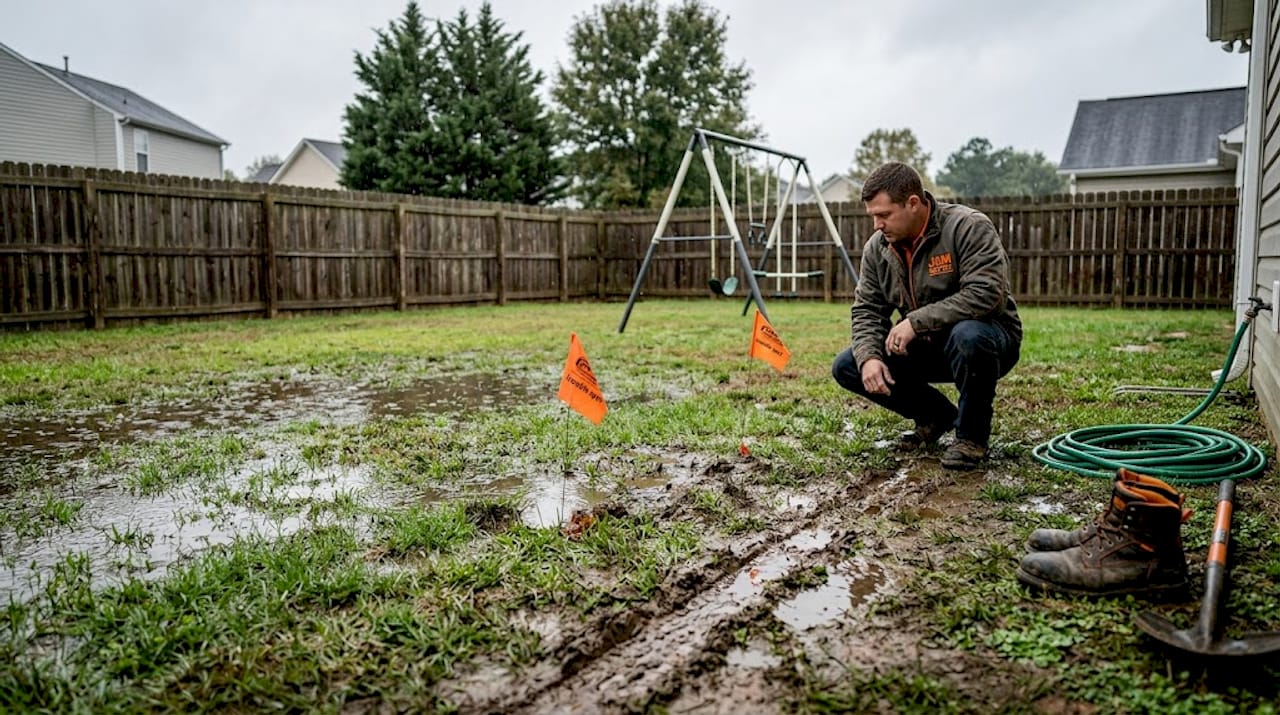
- Soggy, spongy ground or unexpectedly lush green patches over your drainfield
- Standing water or pooling near the septic tank or drain lines
- Multiple slow drains throughout the house at the same time
Any one of these signs warrants a call to a professional. Multiple signs together mean you have a genuine emergency on your hands.
Why this matters: The EPA warns that inspection may reveal the tank is full, baffles are blocked, or the drainfield is saturated. Each of these conditions requires a different repair approach, and only a trained technician can tell you which one you’re dealing with.
Flooded drainfields are particularly serious. When the soil around your drainfield becomes saturated, it can no longer filter wastewater properly. This means partially treated sewage can reach the surface of your yard or, in worst cases, seep toward groundwater. In Alamance County, where many homes rely on private wells, that’s not just a property problem. It’s a drinking water problem.
Ignoring these signs, even for 24 to 48 hours, can turn a manageable repair into a full system replacement. The EPA estimates that a properly maintained septic system lasts 25 to 30 years, but a neglected one can fail in far less time.
What you’ll need before repairs begin
Once you know you have a septic emergency, get prepared to speed up the repair process and keep everyone safe. The faster you can give a technician what they need, the faster work can begin.
Information to gather:
- Your septic system layout diagram (often filed with the county or left by the previous owner)
- A written list of symptoms and when they first appeared
- Notes on any recent changes, such as increased household water use, new appliances, or recent heavy rain
- Location of the tank lid and any access barriers like fencing, landscaping, or vehicles
Safety steps to take immediately:
- Stop all non-essential water use in the house. Every flush, shower, or load of laundry adds more volume to an already overwhelmed system.
- Put on rubber gloves and waterproof boots before going near any wet or affected areas.
- Keep children and pets away from the yard, especially near the tank and drainfield.
- Do not attempt to open the tank yourself. Septic tanks contain toxic gases including hydrogen sulfide, which can be lethal in seconds.
Here’s a quick look at what you can handle versus what requires a licensed technician:
| Task | Homeowner | Licensed technician |
|---|---|---|
| Stop water use in the house | Yes | N/A |
| Secure the area and restrict access | Yes | N/A |
| Gather system records and diagrams | Yes | N/A |
| Open or inspect the tank | No | Required |
| Pump the tank | No | Required |
| Check baffles, filters, and distribution box | No | Required |
| Evaluate drainfield saturation | No | Required |
| Pull repair permits from Alamance County | No | Required |
The EPA outlines that a technician performs a diagnostic inspection including pumping the tank if full, checking sludge levels, inspecting baffles and filters, and evaluating the distribution box and drainfield. This is not a job for a homeowner with a shovel and good intentions.
Pro Tip: In North Carolina, septic repairs must be performed by a licensed contractor and require a county permit before work begins. Calling a certified technician is not just the smart move. It’s the legal one.
Step-by-step emergency septic repair workflow
Now that you’re set up for a smooth repair, here’s exactly how an emergency workflow unfolds. Understanding each step helps you support the process and avoid accidentally slowing things down.
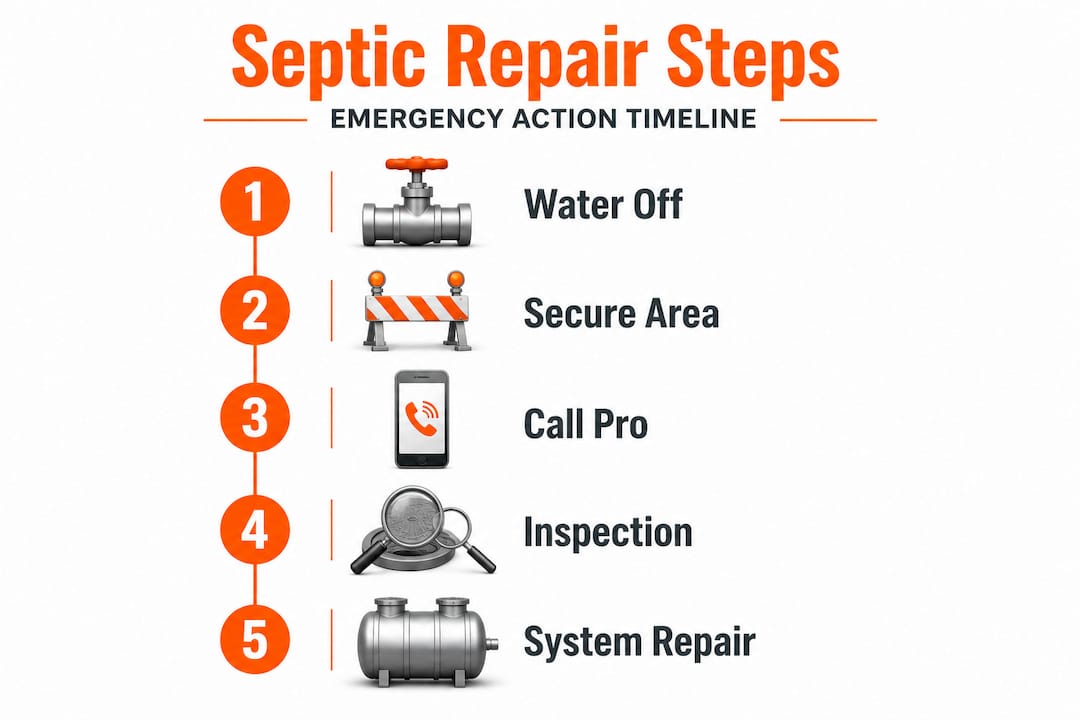
- Stop all water use immediately. Turn off the washing machine, dishwasher, and ask everyone in the house to avoid flushing or running water. This prevents the system from taking on more volume while it’s already overwhelmed.
- Secure the affected area. Rope off or block access to the yard near the tank and drainfield. Put up a warning if needed. Raw sewage on the surface is a biohazard.
- Call a licensed septic repair technician. In Alamance County, this means reaching out to a certified professional who can pull the necessary permits and begin a proper diagnosis. Do not call a general plumber for a septic issue. The systems are different and require specialized knowledge.
- Clear access before the technician arrives. Move vehicles, unlock gates, trim back any overgrowth near the tank lid. This alone can shave hours off your repair timeline and reduce your labor bill.
- Technician performs the diagnostic inspection. According to the EPA’s guidance, the technician performs a diagnostic inspection including pumping the tank, checking baffles and filters, running a camera through pipes to look for roots or clogs, and evaluating the distribution box and drainfield condition.
- Permit application and approval. For any repair beyond basic pumping, Alamance County requires a permit. Your technician handles this, but it’s good to know it’s part of the process. Skipping this step can result in fines and force you to redo the work.
- Repair work begins. Depending on the diagnosis, this may include replacing broken lines, clearing blockages with hydro jetting, repairing or replacing baffles, or in more serious cases, drainfield remediation or tank replacement.
- Post-repair inspection and sign-off. The technician confirms the system is functioning correctly before leaving. You should receive documentation of all work performed.
Here’s a comparison of what you can do versus what requires a licensed pro:
| Emergency action | DIY | Requires licensed pro or permit |
|---|---|---|
| Shut off water supply | Yes | No |
| Clear access to tank | Yes | No |
| Open tank lid | No | Yes |
| Camera inspection of lines | No | Yes |
| Hydro jetting blockages | No | Yes |
| Drainfield repair or replacement | No | Yes, plus county permit |
| Tank replacement | No | Yes, plus county permit |
Pro Tip: Clearing access paths before your tech arrives can shave hours off your repair timeline. A technician who can walk straight to the tank lid is a technician who can start diagnosing immediately.
Troubleshooting and common mistakes to avoid
After repairs, or while waiting, avoid common missteps that could cause bigger headaches and potentially add thousands to your final bill.
Mistakes that make things worse:
- Flushing more water into the system. Running laundry, taking long showers, or flushing repeatedly while the system is backed up adds pressure and can push sewage further into your home or yard.
- Using chemical additives. Products marketed as septic “treatments” or “activators” do not fix a failing system. Some can actually damage the beneficial bacteria your tank needs to function.
- Using drain snakes or hard tools on the main line. Without knowing where the blockage is or what’s causing it, you risk pushing the clog deeper or damaging the pipe.
- Opening the tank yourself. This is not just a bad idea. It’s dangerous. Septic gases can knock a person unconscious within seconds.
- Skipping the permit. North Carolina law is clear: repairs require permits. Homeowners who bypass this step can face fines, be required to redo the work at their own expense, and may have trouble selling the home later.
The bottom line: Routine inspections every 1 to 3 years and prompt repairs prevent escalation. The EPA strongly recommends this schedule, and Alamance County’s own environmental health guidelines align with it. A $300 inspection now is far cheaper than a $15,000 drainfield replacement later.
Regular maintenance is genuinely the most powerful tool you have. Homeowners who schedule consistent inspections almost never face true emergencies because problems get caught early, when they’re small and inexpensive to fix.
How to verify successful emergency repairs
With the emergency handled, ensure it stays fixed by following these final checks. A repair that looks finished is not always a repair that’s complete.
- Test all drains in the house. Run water in every sink, flush every toilet, and run the shower. Everything should drain freely with no gurgling sounds.
- Check for odors inside and outside. A properly functioning system should produce no noticeable smell inside the house and minimal odor outside near the tank.
- Walk the yard near the drainfield. The ground should be firm, not spongy. No standing water should be visible. If you see pooling within a day or two of the repair, call your technician back.
- Request written documentation. Your technician should provide a post-repair report that includes what was found, what was done, and any recommendations for follow-up work or future maintenance.
- Schedule your next inspection. Before the technician leaves, ask them to note when your next inspection or pump-out should be. Put it on the calendar.
The EPA confirms that a thorough post-repair review includes checking tank levels, confirming no return of surface water, verifying free-flowing drains, and documenting repairs for the permit office.
Pro Tip: Keep all paperwork including permits, repair bills, and system diagrams in a dedicated home file. If you ever sell your home, buyers and their inspectors will ask for this documentation. Having it ready builds trust and protects your sale.
Why quick action is your best investment in septic emergencies
Here’s a perspective that most homeowners don’t hear until it’s too late: the cost of a septic emergency is not fixed. It grows every hour you wait.
We’ve seen situations where a homeowner noticed gurgling drains on a Friday evening and decided to “wait and see” over the weekend. By Monday, what could have been a straightforward pump-out and baffle replacement had turned into a saturated drainfield requiring full excavation. The repair cost tripled, and the family was without a functioning system for nearly two weeks.
The conventional wisdom is to call a professional “when things get bad.” We’d push back on that. Call when things get different. A new smell. A drain that’s slower than usual. A patch of grass that’s greener than the rest. These are not random quirks. They’re early warnings, and acting on them is almost always cheaper than waiting for a full failure.
Homeowners who keep clear records, know where their tank is located, and have a trusted technician’s number saved are the ones who come through septic emergencies with minimal damage and minimal expense. That’s not luck. That’s preparation.
In Alamance County, where many properties have older systems and varying soil conditions across the Piedmont, regular professional inspection is not a luxury. It’s the most cost-effective thing you can do for your home. Think of it less as a maintenance expense and more as insurance that actually pays out.
Get professional help for your septic emergency
If you’re facing a septic crisis right now, or you want to make sure you never do, the right team makes all the difference.
At J&M Septic Installation & Repair, we serve homeowners across Burlington, Mebane, Elon, Graham, Whitsett, McLeansville, and the rest of Alamance County. We handle everything from emergency pump-outs to full system replacements, and we know the local permit process inside and out. Our local septic experts are ready to respond quickly, work honestly, and make sure your system is truly fixed before we leave. You can review our service terms and ADA accessibility information on our website. Don’t wait for a small problem to become a major one. Call us today.
Frequently asked questions
How quickly should I respond to septic system failure?
Stop all water use and call a licensed professional immediately. Technician inspection is crucial as soon as issues surface, because every hour of delay increases the risk of property damage and health hazards.
Do I need a permit for emergency septic repairs in Alamance County?
Yes, North Carolina law requires a county permit before most septic repairs can be made legally. NC requires certified pros and county permits for repairs, so working with a licensed technician from the start keeps you compliant and protected.
What can I do while waiting for the technician?
Restrict all water use, secure the area around the tank and drainfield, and gather any system diagrams or prior service records. Homeowner preparation and safe practices can speed up the repair process and reduce risk for everyone involved.
How can I prevent septic emergencies in the future?
Have your system inspected every 1 to 3 years and pumped every 3 to 5 years. Routine inspection every 1 to 3 years helps prevent escalation and keeps your system running efficiently for decades.