
Drano and Septic Systems: What Homeowners Must Know
Learn why Drano is harmful to septic systems. Discover safer alternatives to protect your home's plumbing and save on costly repairs.

Drano is not safe for septic systems. Its active ingredients, sodium hydroxide and sodium hypochlorite, kill the anaerobic bacteria that break down waste inside your tank. Bacterial populations drop 40–80% after a single application, with recovery taking anywhere from 48 hours to two weeks. The EPA and septic professionals consistently recommend mechanical methods over chemical drain openers. When bacteria die off, solids overflow into the drain field, and repair costs for that damage run between $5,000 and $15,000. Drano septic systems damage is not a worst-case scenario. It is the predictable outcome of using the wrong product.
How does Drano damage septic tank biology and pipes?
A septic tank is a living system. Billions of anaerobic bacteria digest solid waste, separate liquids, and prevent sludge from reaching your drain field. Drano’s chemistry attacks that biology directly.
Sodium hydroxide and sodium hypochlorite are both highly alkaline and toxic to microbial life. When either compound enters your tank, it does not distinguish between harmful pathogens and the beneficial bacteria your system depends on. Repeated chemical exposure prevents those bacterial colonies from ever fully recovering, which means solids accumulate faster with each use.
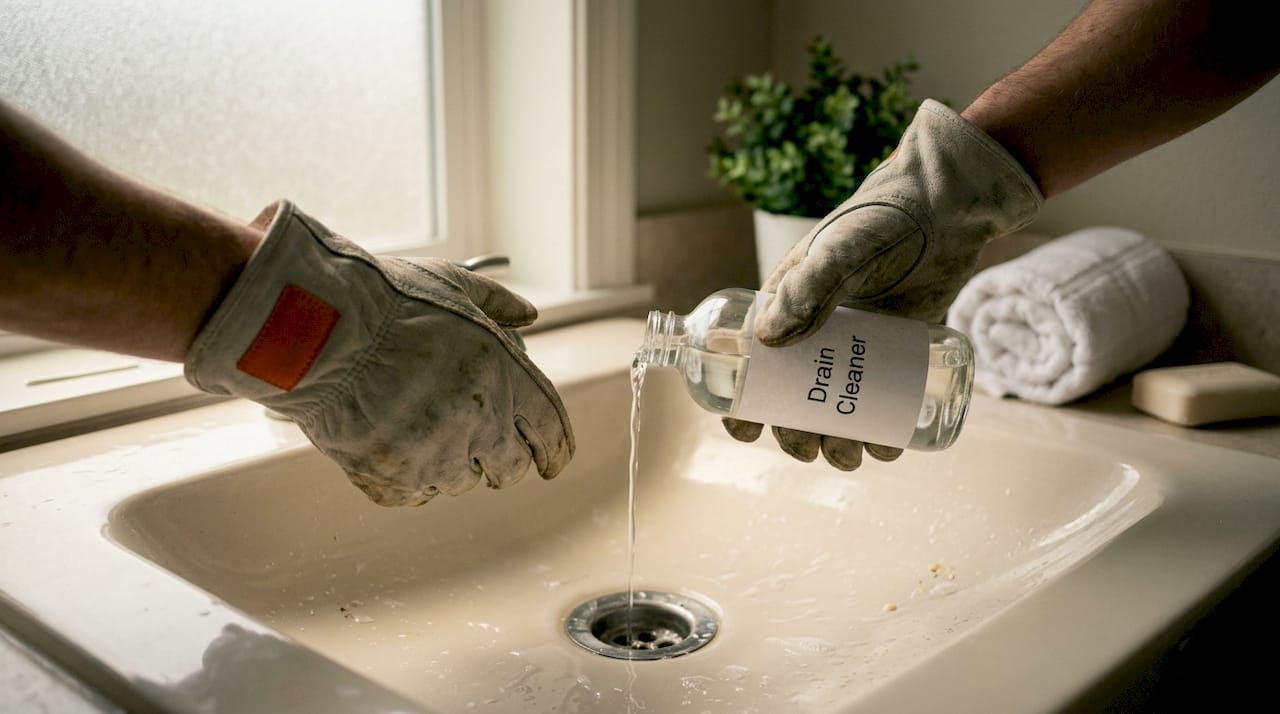
The physical damage is just as serious. Drano’s chemical reaction generates heat that exceeds 200°F. PVC pipes soften at 140°F, so the temperature spike alone can warp fittings, loosen joints, and degrade pipe adhesive. Concrete tanks are not immune either. Repeated alkaline exposure corrodes the tank walls and shortens the system’s lifespan significantly.
Gel formulas make this worse. Gel-based Drano clings to pipe walls longer than liquid versions, extending chemical contact time and amplifying both the biological and structural damage. What feels like a thorough clean is actually a prolonged assault on your system.
- Bacterial die-off: Sodium hydroxide and bleach destroy anaerobic bacteria essential for waste digestion.
- Solids overflow: Dead bacteria allow undigested solids to pass into the drain field, causing clogs.
- Pipe damage: Reaction heat above 200°F softens PVC and corrodes concrete tank walls.
- Gel risk: Gel formulas increase contact time, making every application more destructive than liquid versions.
- Cumulative harm: Each use compounds the damage. Recovery time stacks up until the system cannot recover at all.
Pro Tip: If you have already used Drano once, stop immediately. One application may not cause permanent failure, but a second or third use dramatically increases the risk of drain field damage costing thousands of dollars.
What are the safest alternatives to Drano for septic systems?

Clearing a clogged drain without harming your septic system is straightforward. The best options work mechanically or biologically, not chemically.
Mechanical methods first
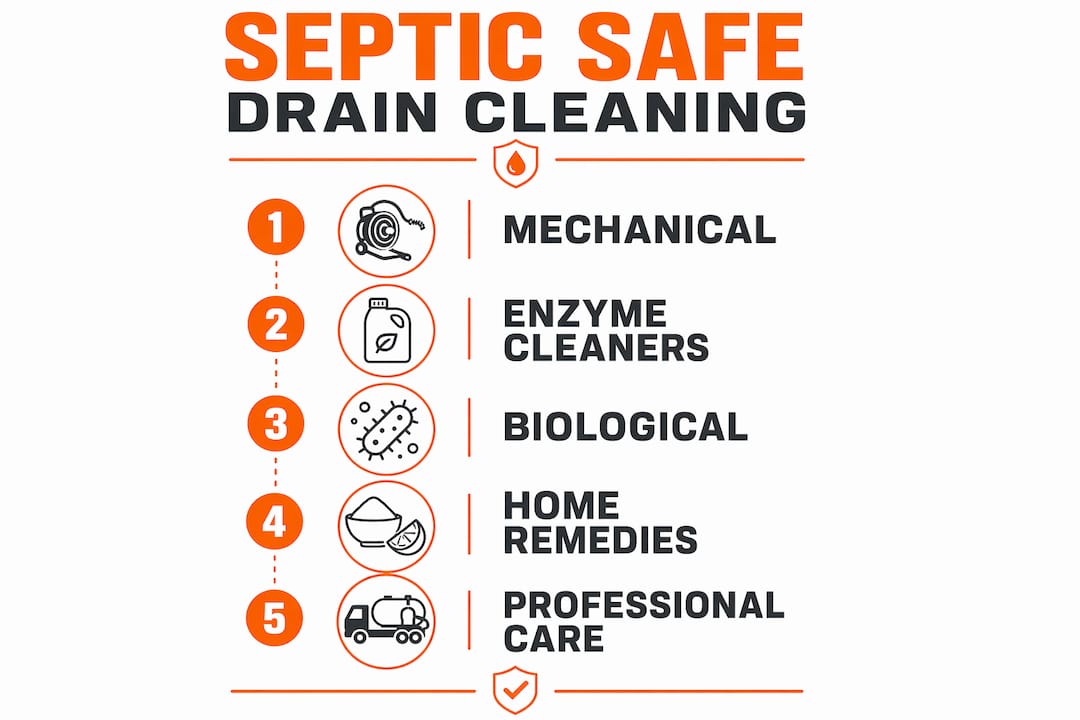
A drain snake, also called a plumber’s auger, physically breaks up or retrieves the blockage without introducing any substance into your pipes. A standard plunger works the same way for sink and tub clogs. The EPA recommends mechanical methods over chemical drain openers as the first response to any blockage in a septic-connected home. These tools cost under $30 at any hardware store and carry zero risk to your tank’s bacteria.
Enzyme and biological cleaners
Enzyme-based drain cleaners use natural enzymes or live bacteria cultures to break down organic material. They are slower than chemical options, requiring 6–24 hours to work, but they do not harm septic bacteria. Products in this category are widely available at home improvement stores and are labeled “septic safe” without the caveats that chemical products carry.
Home remedies that actually work
Boiling water dissolves grease and soap buildup effectively. Boiling water poses no risk to septic bacteria and can clear common kitchen drain clogs in minutes. A mixture of baking soda and white vinegar creates a mild fizzing reaction that loosens soap scum and light organic buildup. Pour half a cup of baking soda followed by half a cup of white vinegar, wait 30 minutes, then flush with hot water.
- Plunge first. Use a cup plunger for sinks and a flange plunger for toilets. Apply firm, steady pressure for 20–30 seconds.
- Try a drain snake. Feed the cable into the drain until you feel resistance, then rotate to break up or hook the clog.
- Apply boiling water. Pour slowly in two to three stages for grease or soap clogs in kitchen drains.
- Use baking soda and vinegar. Best for slow drains caused by soap scum or light organic buildup.
- Switch to an enzyme cleaner. Use an overnight enzyme treatment for persistent slow drains that mechanical methods do not fully resolve.
- Call a professional. If none of the above clears the clog, the blockage may be deeper in the line or inside the tank itself.
| Method | Safe for septic? | Speed | Best for |
|---|---|---|---|
| Drain snake | Yes | Immediate | Hair, debris, solid clogs |
| Plunger | Yes | Immediate | Soft blockages near drain opening |
| Boiling water | Yes | Minutes | Grease and soap buildup |
| Baking soda and vinegar | Yes | 30–60 minutes | Light organic buildup |
| Enzyme cleaner | Yes | 6–24 hours | Persistent slow drains |
| Chemical drain cleaner | No | 15–30 minutes | Not recommended for septic homes |
Pro Tip: Keep a septic-safe drain cleaner on hand before a clog happens. Having an enzyme product in the cabinet removes the temptation to reach for Drano in a moment of frustration.
What septic maintenance prevents clogs before they start?
The best reason homeowners reach for chemical drain cleaners is a clog that should never have happened. Consistent maintenance eliminates most of those situations.
Inspection and pumping schedules
Septic tanks need professional inspection every 1–3 years and pumping every 3–5 years. Effluent filters, which prevent solids from reaching the drain field, need cleaning every 6–12 months. Skipping these intervals allows sludge to build up to the point where the system backs up into your home. That backup is what sends most homeowners to the hardware store for Drano.
What you flush and pour matters
Fats, oils, and grease solidify inside pipes and tank baffles. Pour cooled grease into a container and throw it in the trash, not down the sink. Flushable wipes are not actually safe for septic systems. They do not break down the way toilet paper does, and they accumulate in the tank and clog effluent filters. Harsh chemical cleaners, even those labeled “septic safe,” carry label disclaimers that do not cover cumulative damage or older, smaller tanks.
- Pump every 3–5 years. Sludge buildup is the leading cause of system failure and the main trigger for chemical misuse.
- Inspect every 1–3 years. A professional can catch failing baffles, cracked pipes, and early drain field stress before they become expensive.
- Clean effluent filters every 6–12 months. A clogged filter causes backups that mimic a drain clog.
- Avoid garbage disposal overuse. Disposals add significant solid load to the tank, accelerating sludge buildup.
- Protect the drain field. Do not park vehicles over it, plant trees near it, or direct roof runoff onto it.
- Use biodegradable cleaners for household surfaces. Diluted white vinegar and gentle dish soap are safe for septic-connected drains.
| Maintenance task | Recommended frequency |
|---|---|
| Professional inspection | Every 1–3 years |
| Tank pumping | Every 3–5 years |
| Effluent filter cleaning | Every 6–12 months |
| Drain field visual check | Annually |
| Water usage audit | Annually |
Moisture problems around your foundation can also signal drain field saturation. If you notice wet spots near your home’s base, basement waterproofing may be relevant alongside a septic inspection, since both issues can share the same root cause of excess water in the soil.
How do you recognize and fix chemical damage to your septic system?
Slow drains, gurgling pipes, and odors near the tank are the three clearest signs that your septic system is under stress. These symptoms often indicate damaged bacterial activity and early drain field clogging. They appear after chemical misuse, but homeowners frequently mistake them for a new clog and apply more Drano, compounding the damage.
The recovery process starts with stopping all chemical use immediately. Flush the system with large volumes of water over several days to dilute remaining chemicals. Bacterial additive products, available at hardware stores, can help repopulate the tank, though they work best when the chemical exposure was limited to one or two applications.
- Stop all chemical drain cleaners. Every additional application extends recovery time and increases drain field risk.
- Flush with water. Run water through affected drains to dilute and move chemicals through the system.
- Add bacterial supplements. Biological additives can help restore bacterial populations after mild chemical exposure.
- Reduce water usage temporarily. Lower water flow gives bacteria time to reestablish without being overwhelmed.
- Schedule a professional inspection. A technician can assess whether the drain field has been compromised and whether pumping is needed immediately.
Repeated chemical use accelerates the timeline toward expensive repairs. Drain field repair costs start at $5,000 and can reach $15,000 or more depending on the extent of clogging and soil damage. Catching the problem early, before solids reach the field, is the difference between a service call and a full replacement. Learn more about clearing septic blockages safely before the situation escalates.
Key Takeaways
Drano kills the bacteria that make septic systems work, and the physical and financial damage from repeated use far outweighs any short-term convenience.
| Point | Details |
|---|---|
| Drano harms septic bacteria | A single application reduces bacterial populations by 40–80%, with recovery taking up to two weeks. |
| Physical damage is real | Reaction heat above 200°F softens PVC pipes and corrodes concrete tank walls over time. |
| Mechanical methods work better | Drain snakes and plungers clear most clogs immediately with zero risk to septic biology. |
| Maintenance prevents most clogs | Pumping every 3–5 years and inspecting every 1–3 years eliminates the conditions that trigger chemical misuse. |
| Early symptoms need fast action | Slow drains, gurgling, and odors after chemical use require professional inspection, not more chemicals. |
What I have learned from years of septic work
After years of inspecting and repairing septic systems across Alamance County, the pattern I see most often is this: a homeowner notices a slow drain, grabs Drano because it is fast and familiar, and then calls us six months later with a failing drain field. The Drano did not fix the clog. It masked it, killed the bacteria, and started a slow collapse.
The thing most homeowners do not realize is that a septic tank is not a passive container. It is a biological reactor. When the bacteria die, the whole system stops processing waste. Solids that should stay in the tank start moving toward the drain field, and once that field clogs with biological mat, no amount of pumping fixes it. You are looking at a full replacement.
What actually works is treating the system like the living infrastructure it is. Regular pumping, mechanical clog removal, and enzyme-based maintenance products keep the biology intact. I have seen systems last 40 years with that approach. I have also seen systems fail in under 10 years from chemical abuse.
My honest advice: if you have a persistent clog that a plunger and a drain snake cannot clear, that is a sign something deeper is wrong. A professional inspection costs a fraction of what drain field repair costs. Call before you pour anything chemical down the drain.
— Jason
Jmseptic can protect your septic system from chemical damage
Homeowners across Burlington, Mebane, Graham, and the rest of Alamance County trust Jmseptic to keep their systems running safely. If you have used chemical drain cleaners and are now seeing slow drains, odors, or gurgling pipes, a professional inspection is the right next step.

Jmseptic offers septic tank pumping and inspection services designed to catch bacterial die-off, sludge buildup, and early drain field stress before they become costly failures. The team also provides hydro jetting and sewer line cleaning for clogs that mechanical home methods cannot reach. If your system needs more than maintenance, Jmseptic handles emergency septic repairs across Alamance County with honest assessments and long-term solutions. Call Jmseptic before a slow drain becomes a $15,000 problem.
FAQ
Is Drano ever safe to use with a septic system?
Drano is not safe for septic systems. Its chemicals kill the anaerobic bacteria that break down waste, and even a single application can reduce bacterial populations by 40–80%.
What drain cleaner is safe for septic tanks?
Enzyme-based and biological drain cleaners are safe for septic systems. They take 6–24 hours to work but do not harm septic bacteria.
How do I unclog a drain without harming my septic system?
Use a plunger or drain snake first. For grease clogs, boiling water or a baking soda and vinegar flush works without introducing any chemicals into your tank.
How often should a septic tank be pumped?
Septic tanks need pumping every 3–5 years and professional inspection every 1–3 years. Effluent filters should be cleaned every 6–12 months to prevent backups.
What are the signs that Drano has damaged my septic system?
Slow drains throughout the house, gurgling pipes, and odors near the tank or yard are the primary warning signs. These symptoms require a professional inspection, not additional chemical treatments.