
Drain Field Materials: What Homeowners Need to Know
Discover how to choose the best drain field materials for your septic system. Learn key insights to avoid costly failures and ensure lasting performance!

Choosing the right drain field materials is one of the most consequential decisions you’ll make for your septic system. Get it right, and your system functions quietly for decades. Get it wrong, and you’re looking at a failed drain field replacement costing anywhere from $8,000 to $15,000. The problem is that most homeowners don’t realize how much the material choice affects performance, maintenance frequency, and whether the system even passes inspection. This article walks you through every major material option, the criteria that actually matter, and how to match the right choice to your property.
Table of Contents
- Key takeaways
- 1. Key criteria for evaluating drain field materials
- 2. Gravel and stone: traditional drain field materials
- 3. Plastic infiltrator chambers and modern gravelless systems
- 4. Alternative materials and specialized systems
- 5. Comparing drain field materials: cost, lifespan, and site suitability
- My honest take on choosing drain field materials
- Ready to choose the right drain field system for your property?
- FAQ
Key takeaways
| Point | Details |
|---|---|
| No universal best material | Gravel, chambers, and alternative systems each suit different soil types, budgets, and site conditions. |
| Lifespan varies significantly | Chamber systems typically last 20 to 30+ years; gravel systems average 15 to 25 years depending on maintenance. |
| Maintenance matters as much as material | Biomat buildup from infrequent tank pumping is the top cause of drain field failure across all material types. |
| Site conditions drive the decision | Soil percolation rate, water table depth, and lot size determine which materials your county will approve. |
| Upfront cost is not the full picture | Labor, hauling, and long-term maintenance costs often tip the balance between gravel and modern chamber systems. |
1. Key criteria for evaluating drain field materials
Before you compare specific materials, you need a clear framework. Otherwise, you’re just picking based on price or what your neighbor did, and that can backfire badly on a site with different soil or access conditions.
Here are the factors that should drive your decision:
- Durability and lifespan. How long will the material hold up under normal use? Some materials degrade faster in clay-heavy soils or under heavy vehicle traffic.
- Cost. This means total installed cost, not just what you pay for the material at the supply yard. Labor, hauling, and site prep add up fast.
- Soil compatibility. Your soil’s percolation rate, texture, and drainage behavior will determine which materials perform properly. Percolation rates and soil type critically influence how deep pipes must be buried and how quickly effluent absorbs.
- Installation complexity. Some systems require minimal equipment; others need multiple truckloads of stone and intensive manual labor.
- Regulatory compliance. Local codes in Alamance County and surrounding areas specify approved materials, required depths, and setback distances. What works in one county may not be permitted in another.
- Maintenance and inspection access. Some materials make it easier to inspect the system annually and address problems before they become failures.
- Environmental impact. How the material affects the surrounding soil, groundwater, and vegetation matters, especially on lots near streams or wells.
Pro Tip: Always pull your county’s soil evaluation report before selecting materials. The percolation test result is the single most important number in your drain field design, and it will rule out certain materials before you even get to cost comparisons.
Understanding how a drain field works is the foundation for making any material choice that holds up over time.
2. Gravel and stone: traditional drain field materials
Gravel is the material most people picture when they think about a drain field, and for good reason. It has been the standard for decades because it works well under the right conditions and is available almost everywhere.
Here is how it functions: effluent percolates through gravel, which creates a porous layer where bacteria naturally treat wastewater before it reaches the soil below. The installation involves trenches filled with 6 to 12 inches of base gravel, four-inch perforated PVC pipe with holes facing down, a cover layer of gravel, geotextile fabric to protect the layer from soil infiltration, and backfill on top.
Benefits of gravel systems:
- Widely available and understood by most local installers
- Predictable performance in sandy or loamy soils with good drainage
- Lower material cost per linear foot compared to plastic chamber units
- Familiar to inspectors and straightforward to permit in most counties
The real drawbacks deserve honest attention. Gravel systems require 3 to 5 truckloads of crushed stone, which means significant site disturbance, multiple deliveries across your yard, and higher labor costs for spreading and compacting. On a tight lot or a property with limited vehicle access, this becomes a genuine problem.
The other issue is biomat buildup. When solids escape a tank that has not been pumped regularly, a slimy, impermeable bacterial layer forms at the soil interface and clogs the gravel bed. Once biomat takes hold in a gravel system, recovery options are limited.
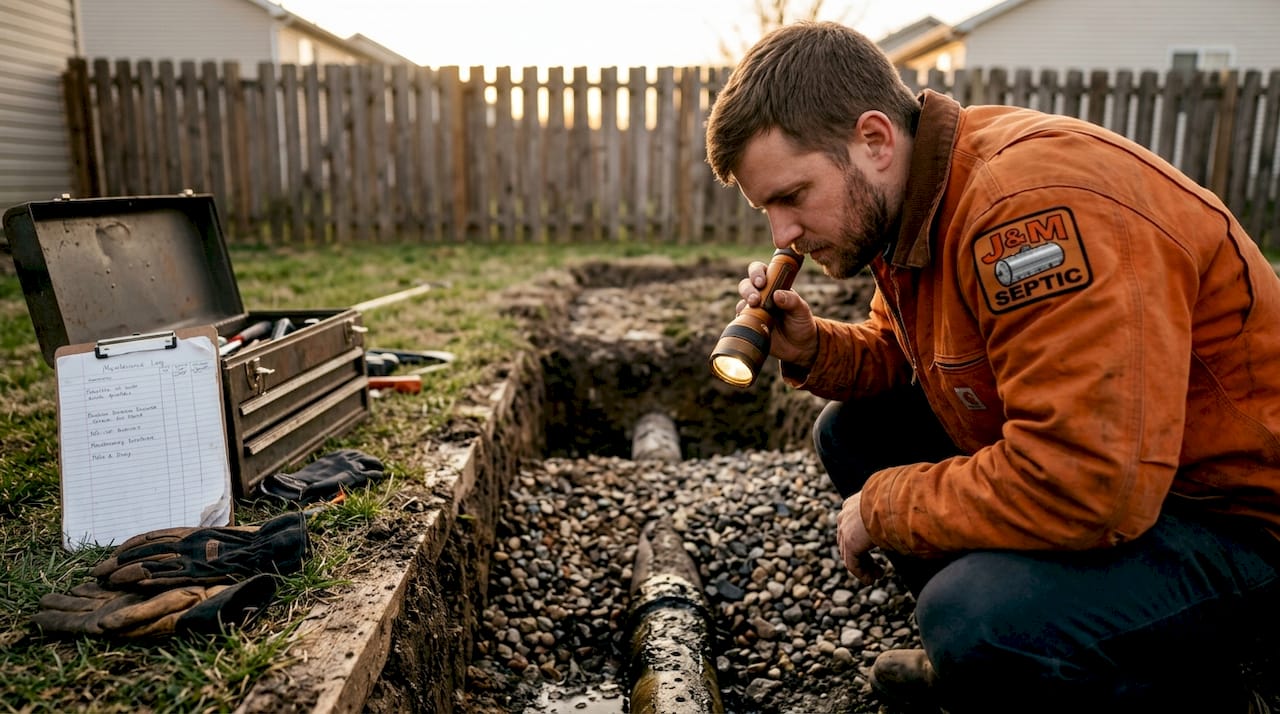
Pro Tip: Gravel drain fields on clay-heavy soils are a risky combination. Clay limits absorption, and gravel alone does not compensate for poor percolation. If your perc test comes back slow, ask about alternatives before committing to stone.
3. Plastic infiltrator chambers and modern gravelless systems
Chamber systems have taken a large share of new installations over the past two decades, and the reasons are practical, not just trendy. Plastic infiltrator chambers act as open-bottomed tunnels, allowing effluent direct contact with the soil. This improves the absorption area compared to a gravel bed, where stone itself takes up space that could be treating effluent.
The design is straightforward. Hollow plastic arched units snap together in trenches. There is no gravel to haul. Effluent flows into the chambers and absorbs directly through the soil at the base and sides.
Key advantages of chamber systems:
- Only one flatbed delivery needed, versus three to five truckloads for gravel
- Greater soil contact area for effluent absorption
- Built-in surge storage volume, which protects the system during heavy use periods like holidays or house guests
- Easier inspection access through cleanout ports
- Expected lifespan of 20 to 30+ years under normal conditions
Chamber systems also reduce yard disturbance significantly, which matters on environmentally sensitive lots or sites where you need to preserve landscaping and trees near the drain field area.
The tradeoffs: chamber units cost more per piece than gravel. Soil preparation must be done carefully because chambers require a clean, level bed to function properly. And not every county code approves every chamber brand or design, so local verification is required before purchasing materials.
Cost comparison: Gravel systems typically run $5,000 to $12,000 installed for a standard three-bedroom home. Chamber systems come in at $5,500 to $10,000, and with a longer lifespan, the cost per year of service often favors chambers over the full lifecycle.
4. Alternative materials and specialized systems
Some properties simply cannot use conventional gravel or chamber systems. High water tables, shallow soil over rock, small lots, and sensitive environmental zones each create conditions where you need a different approach entirely.
Mound systems use engineered sand beds built above natural soil to provide treatment where native soil is too shallow or groundwater sits too close to the surface. The drain field is literally elevated above grade. Mound systems require significantly more space and a reliable pump system, but they are often the only permitted option on challenging sites in the Piedmont region.
Drip distribution systems use small diameter tubing with emitters to deliver effluent slowly and evenly across an absorption area. They work well on small or irregularly shaped lots where trenches would be impractical. The tradeoff is added operational complexity: pumps, filters, and electrical components that need regular maintenance.
Sand filter systems run effluent through a constructed sand bed for additional treatment before it enters the drain field. These are common on sensitive sites near waterways or in areas with strict nitrogen limits.
| System type | Best for | Key material | Maintenance level |
|---|---|---|---|
| Conventional gravel | Standard lots with good soil | Crushed stone, PVC pipe | Moderate |
| Chamber gravelless | Limited access or tight lots | Plastic chamber units | Low to moderate |
| Mound system | High water table, shallow soil | Engineered sand, pump | High |
| Drip distribution | Small or irregular lots | Small diameter tubing | High |
| Sand filter | Sensitive environmental sites | Sand filter media | High |
Each of these specialized systems carries higher installation and operating costs than a standard gravel or chamber setup. For options specific to the Piedmont Triad region, no-leach-field alternatives may also be worth exploring if your site has significant constraints.
5. Comparing drain field materials: cost, lifespan, and site suitability
Putting everything side by side helps you see where the real tradeoffs land. This is not about picking a winner. It is about understanding which option fits your specific property.
| Material type | Installed cost range | Expected lifespan | Soil suitability | Site access needed |
|---|---|---|---|---|
| Gravel and stone | $5,000 to $12,000 | 15 to 25 years | Sandy, loamy soils | High (multiple trucks) |
| Plastic chambers | $5,500 to $10,000 | 20 to 30+ years | Most soil types | Low (one flatbed) |
| Mound system | $10,000 to $20,000+ | 15 to 25 years | Poor native soils | Moderate to high |
| Drip distribution | $8,000 to $18,000 | 10 to 20 years (components) | Flexible | Low to moderate |
| Sand filter | $7,000 to $15,000 | 15 to 25 years | Sensitive sites | Moderate |
A few things stand out in this comparison. Gravel is not always the cheapest option once you factor in hauling and labor costs. Chamber systems often close that gap or come out ahead, especially on properties where multiple truck deliveries require site remediation afterward.
Neither gravel nor chamber systems are universally superior. The right choice depends on soil, site access, budget priorities, and local code. The drain field absorption area is the limiting factor in system capacity, not the tank size. An undersized or improperly matched drain field fails regardless of which material you choose.
For long-term thinking, factor in system lifespan factors like pumping frequency, water usage habits, and whether vehicle traffic will ever cross the drain field area. These behavioral factors affect every material type and should shape your decision as much as the materials themselves.
My honest take on choosing drain field materials
I’ve seen homeowners choose gravel simply because it was familiar, and chambers because they heard they were newer. Neither reason holds up on its own.
What I’ve learned after working on systems across Alamance County is that the site always wins. You can have a strong preference for one material based on cost or ease, but if your soil does not support it, or your lot does not allow the equipment access it needs, that preference is irrelevant. The county soil evaluation will tell you more about your right material choice than any salesperson or online article.
I’ve also seen the real cost of cutting corners on installation quality. A gravel system installed without proper geotextile fabric fails years earlier than it should. A chamber system dropped into poorly prepped soil settles unevenly and creates dead zones in the absorption field. The material itself is only as good as the installation behind it.
The mistake I see most often is focusing entirely on upfront cost. A homeowner saves $1,500 going with a cheaper gravel setup on a marginal site, then spends $10,000 replacing the system eight years later. Over a 25-year period, the more expensive option was actually the cheaper one.
Work with an installer who pulls permits, knows your county’s specific code requirements, and will tell you honestly when a site calls for a more expensive solution rather than just the easiest one to install.
— Jason
Ready to choose the right drain field system for your property?

At Jmseptic, we’ve designed and installed septic systems across Burlington, Mebane, Graham, Elon, and the rest of Alamance County for years. We know the soil conditions, the local permitting requirements, and the material options that hold up in the Piedmont Triad climate. Whether you’re building new or replacing a failing system, we help you select drain field materials that fit your site, your budget, and your county’s codes. No guesswork, no overselling. Just an honest assessment of what your property needs. Reach out to schedule a site evaluation through our new septic installation service, or walk through the full Alamance County septic workflow to understand every step of the process before you commit.
FAQ
What is a drain field and how does it work?
A drain field is the underground network of perforated pipes and surrounding material that receives and treats effluent from your septic tank. Wastewater spreads through the material layer and slowly absorbs into the soil, where bacteria naturally break down remaining contaminants.
What drain field material lasts the longest?
Plastic chamber systems typically have an expected lifespan of 20 to 30+ years, outperforming traditional gravel systems that average 15 to 25 years. However, maintenance practices like regular tank pumping affect longevity more than material type alone.
Can I choose my own drain field material?
You can express a preference, but your county’s soil evaluation, percolation test results, and local code requirements ultimately determine which materials are approved for your specific site. Your installer will guide you through permitted options.
Why does biomat cause drain field failure?
Biomat is a slimy bacterial layer that forms at the soil interface when solids escape an infrequently pumped septic tank. It blocks effluent absorption and can render a drain field permanently damaged. Regular tank pumping every three to five years prevents it.
How much does drain field installation cost?
Costs vary by material and site conditions. Gravel systems typically run $5,000 to $12,000 installed for a three-bedroom home, while chamber systems range from $5,500 to $10,000. Specialized systems like mound or drip distribution can reach $20,000 or more depending on site complexity.