
Do Apartments Have Septic Tanks? What Renters Must Know
Wondering if do apartments have septic tanks? Learn how these systems work, their regulations, and your responsibilities as a renter.

Apartments can and do have septic systems, but these are rarely the simple single-tank setups found behind a suburban home. Most apartment septic systems are classified as Large-Capacity Septic Systems (LCSS) under EPA guidelines, meaning they serve 20 or more people per day and face stricter regulatory oversight than residential tanks. Understanding whether your apartment uses septic rather than municipal sewer affects everything from what you flush to who you call when something goes wrong. This article breaks down how these systems work, what types exist, and what your rights and responsibilities are as a renter.
Do apartments have septic tanks, and how common are they?
Apartments use septic systems more often than most renters expect. The situation is most common in rural and suburban areas where municipal sewer lines do not reach the property. Connecting to a distant sewer main can cost tens of thousands of dollars, so developers often choose alternative treatment systems instead. That decision directly shapes the plumbing infrastructure every resident uses daily.
The EPA draws a clear line in the sand. A septic system serving 20 or more people per day qualifies as an LCSS and falls under a separate layer of federal and state regulation. That threshold is easy to hit in even a modest apartment building. A 12-unit complex with two residents per unit already clears it.
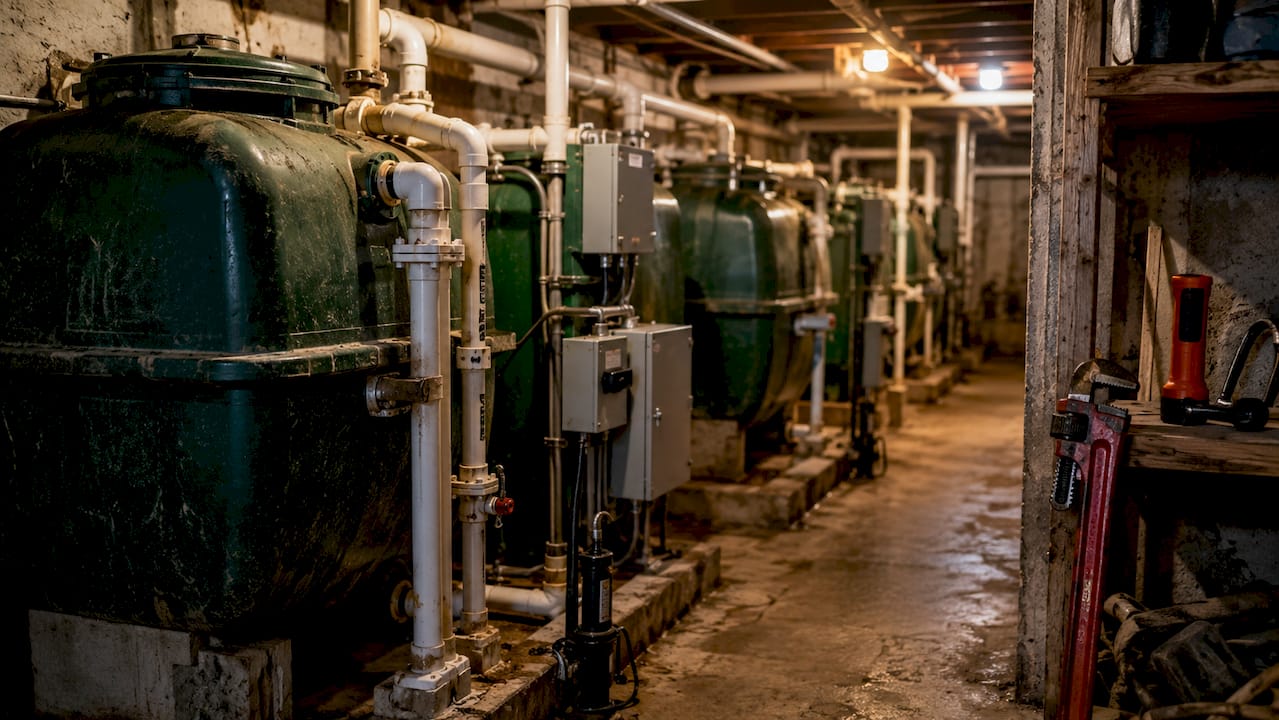
What surprises most renters is that apartment septic systems look almost nothing like the tank buried in a single-family yard. Engineers design these systems with multiple chambers, mechanical components, and surge buffering to handle the concentrated wastewater loads that come with shared living. The word “septic tank” is technically accurate, but it undersells the complexity involved.
How do septic systems work in apartment buildings?
Apartment septic systems are highly engineered, multi-tank systems with surge buffering built in to manage peak wastewater loads. That engineering exists because apartments generate wastewater in sharp bursts, not the steady trickle of a single household. Morning showers, evening cooking, and laundry cycles all hit the system within the same narrow windows.
Why single-family designs fail in apartments
A standard residential septic tank is sized for predictable, low-volume daily use. Drop that same tank under an apartment building and it fails quickly. The drainfield, which is the underground network that filters treated water back into the soil, gets overwhelmed by volume and frequency. Soil absorption capacity is exceeded long before the tank itself shows any visible problem.
Apartment systems solve this with equalization tanks that hold and release wastewater at a controlled rate. This protects the biological treatment stage from being flooded during peak hours. Without that buffer, the bacteria responsible for breaking down waste get disrupted, and treatment quality drops fast.
Lifespan and mechanical needs
Apartment septic systems include blowers, pumps, and control panels that residential tanks simply do not have. Mechanical components typically need replacement every 5–10 years, while the full system can last 20–30 years with proper care. That maintenance schedule is the property owner’s responsibility, not the tenant’s.
Pro Tip: If you are touring an apartment in a rural or semi-rural area, ask the property manager directly whether the building uses a septic system. A straightforward answer tells you a lot about how transparent the management is about maintenance.
Key differences between apartment and single-family septic systems include:
- Equalization tanks to buffer peak flow periods
- Mechanical aeration to support biological treatment at scale
- Multiple treatment chambers rather than a single tank
- Monitored effluent outputs to meet stricter discharge standards
- Scheduled professional servicing required by regulation
What types of wastewater systems do apartments use?
Apartments do not rely on one standard system. The right choice depends on building size, soil conditions, local regulations, and budget. Three main categories cover most installations.
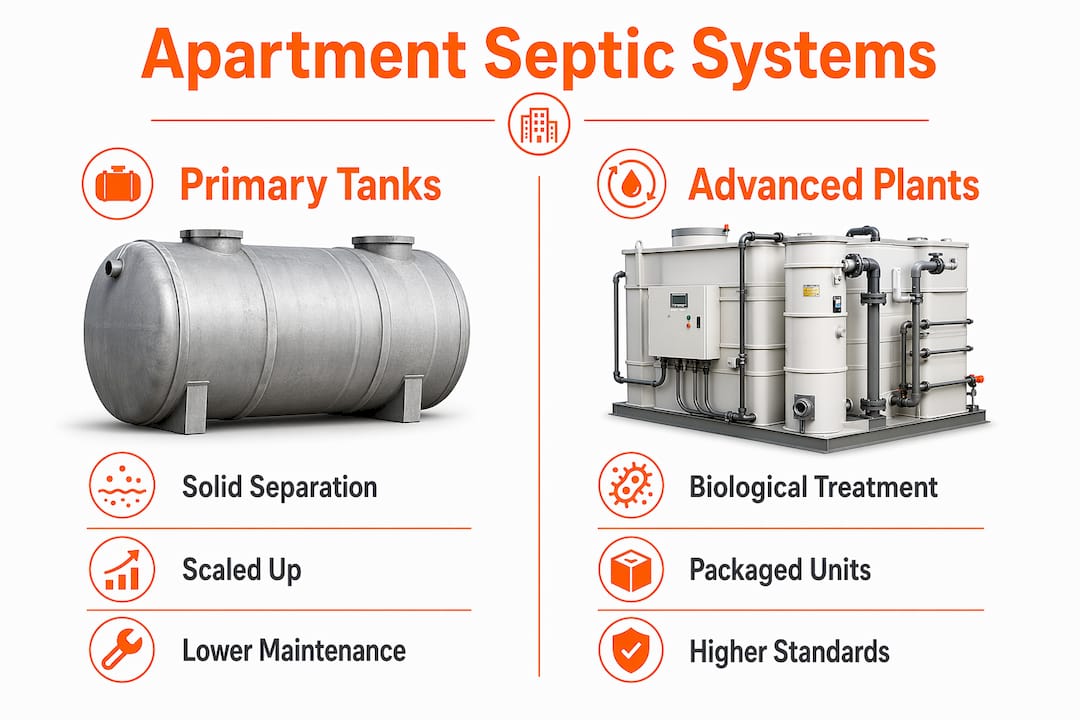
Primary treatment septic tanks
These are the closest to a traditional residential tank, scaled up for multi-unit use. Wastewater separates into solids, liquid, and scum layers. The liquid effluent flows to a drainfield for soil absorption. This approach works for smaller apartment buildings in areas with good soil permeability, but it struggles under high occupancy.
Bio septic tanks and packaged treatment plants
Modern apartment developments increasingly use bio septic tanks or packaged sewage treatment plants when municipal sewer connection costs are prohibitive. These systems add a biological treatment stage where beneficial bacteria break down waste more thoroughly before it reaches the drainfield or discharge point. The result is cleaner effluent and a smaller physical footprint, which matters on tight urban lots.
Packaged sewage treatment plants go further. They are self-contained units that handle primary settling, biological treatment, and secondary clarification in one compact structure. Many include UV disinfection as a final step.
Advanced treatment systems with UV disinfection
Advanced apartment treatment systems often treat wastewater to higher standards than typical residential tanks, with UV disinfection and monitored outputs. This level of treatment is increasingly required by state regulators for multi-family properties near sensitive waterways or in areas with high groundwater tables.
| System type | Best suited for | Treatment quality | Maintenance complexity |
|---|---|---|---|
| Scaled primary septic tank | Small buildings, good soil | Basic | Low |
| Bio septic tank | Mid-size apartments | Moderate to high | Moderate |
| Packaged treatment plant | Large complexes, poor soil | High | High |
| Advanced system with UV | Near waterways, strict regulations | Very high | High |
Understanding conventional septic tank limitations helps clarify why larger apartment buildings almost always need one of the more advanced options.
Who is responsible for apartment septic maintenance?
Landlords are legally responsible for maintaining septic systems in rental properties, including inspections, pumping, and repairs. Tenants do not control the system and cannot be held accountable for normal wear and failures. This is a critical distinction if you ever face a backup or odor problem in your unit.
Common problems in apartment septic systems
The most frequent failure point is the drainfield. High occupancy pushes more water through the soil than it can absorb, leading to saturation and surface pooling. Drainfield saturation from high-density use is the leading cause of system failure in apartment complexes. Once a drainfield fails, repair or replacement is expensive and disruptive.
Other common issues include:
- Sewage backups caused by system overload during peak hours
- Strong odors near the building exterior or in lower-level units
- Slow drains throughout multiple units simultaneously
- Standing water in the yard above the drainfield area
- Gurgling pipes signaling pressure imbalance in the system
Tenants have limited influence over how quickly these problems get fixed. Relying on landlords to address odors or failures promptly is the reality for most renters on septic. Document any issues in writing and report them formally to create a paper trail.
Pro Tip: Avoid flushing wipes, paper towels, or feminine hygiene products in any apartment on septic. These items do not break down and accelerate drainfield clogging far faster than in a municipal sewer system. The damage compounds across every unit in the building.
Knowing the warning signs of common septic system problems before they escalate saves both tenants and landlords significant cost and stress.
How to tell if your apartment uses a septic system
Identifying whether your apartment is on septic rather than municipal sewer is straightforward if you know where to look. Most renters never think to check, but the answer affects how you use your plumbing every day.
-
Check your utility bill. A water bill that includes a separate sewer charge almost always means you are connected to a municipal system. Absence of a sewer line charge on your water bill is one of the clearest signs that the property uses a private septic system.
-
Look for physical clues outside. A lush, unusually green patch of grass in the yard, especially one that stays wet after dry weather, often sits above a drainfield. Vent pipes sticking up from the ground near the building are another indicator.
-
Ask the property manager directly. Landlords are required to disclose the type of wastewater system in most states. A direct question before signing a lease is the fastest path to a clear answer.
-
Review the building permit or local health department records. Septic system permits are public records in most jurisdictions. Your county health department or local water authority can confirm whether a property has a registered septic system on file.
-
Notice odor patterns. Occasional earthy or sulfur-like odors near the building exterior, particularly after heavy rain, suggest a septic system nearby. Municipal sewer connections rarely produce noticeable outdoor odors at the property level.
Regulatory oversight for apartment septic systems is more complex than for single-family systems, which means local authorities keep detailed records. Those records are accessible to the public and worth reviewing before committing to a lease.
Key takeaways
Apartments can use septic systems, and those systems are almost always engineered, large-capacity installations with stricter regulatory requirements than a standard residential tank.
| Point | Details |
|---|---|
| LCSS classification applies | Apartment septic systems serving 20+ people per day fall under EPA Large-Capacity Septic System rules. |
| Engineering sets them apart | Apartment systems use equalization tanks, mechanical aeration, and multi-chamber treatment not found in single-family designs. |
| Landlords own the responsibility | Property owners are legally required to maintain, inspect, and repair apartment septic systems. |
| Drainfield failure is the top risk | High occupancy saturates soil absorption capacity faster than any other component fails. |
| Detection is simple | Checking your utility bill for sewer charges and asking your landlord directly are the two fastest ways to confirm septic use. |
What I have learned from years of working with apartment septic systems
Most renters walk into a lease without any idea whether their building sits on septic or sewer. That gap in awareness causes real problems, and not just for the tenants. Landlords who do not disclose septic use upfront end up fielding angry calls about odors and backups that could have been prevented with a five-minute conversation at lease signing.
The biggest misconception I see is that apartment septic systems are just bigger versions of what you find behind a farmhouse. They are not. The engineering required to handle 30 or 40 people flushing, showering, and running dishwashers in overlapping cycles is genuinely complex. When a property owner cuts corners on that engineering or skips scheduled maintenance, the drainfield pays the price first. And drainfield replacement is not a quick fix.
What I tell renters is this: knowing your building is on septic does not mean you should walk away. It means you should ask harder questions. Find out when the system was last inspected. Ask whether the property has had any backups or odor complaints in the past two years. A landlord who answers those questions confidently and specifically is managing the system properly. One who deflects or does not know is a red flag.
The future of apartment wastewater management is moving toward packaged treatment plants with real-time monitoring. That shift is good for tenants, good for the environment, and good for property values. The technology exists. The regulatory pressure is building. The gap is in adoption, and that is a landlord decision, not a tenant one.
— Jason
Jmseptic: septic expertise for multi-family properties
Septic systems in apartment buildings require a different level of knowledge than standard residential installations. Jmseptic serves property owners and residents across Alamance County and the Piedmont Triad with septic installation and repair services built for exactly this kind of complexity.

Whether you are a landlord evaluating a new system, a property manager dealing with a recurring drainfield problem, or a renter trying to understand what is under your building, Jmseptic has the experience to give you a straight answer. From new installations designed for multi-unit loads to preventing costly septic failures before they disrupt your tenants, the team handles it all. Call Jmseptic today for an honest assessment of your property’s septic needs.
FAQ
Do apartments use septic tanks or municipal sewer?
Apartments use either municipal sewer or private septic systems depending on location. Rural and suburban properties without access to sewer lines commonly rely on engineered septic or packaged treatment systems.
What is a Large-Capacity Septic System?
A Large-Capacity Septic System (LCSS) is an EPA classification for any septic system serving 20 or more people per day. Most apartment buildings meet this threshold and face stricter federal and state regulatory requirements as a result.
Who maintains the septic system in an apartment building?
The landlord or property owner is legally responsible for all septic maintenance, including pumping, inspections, and repairs. Tenants are not responsible for system upkeep.
How long do apartment septic systems last?
With proper maintenance, apartment septic systems last 20–30 years. Mechanical components like pumps and blowers typically need replacement every 5–10 years.
How can I tell if my apartment is on septic?
Check your utility bill for a separate sewer charge. If no sewer charge appears, the property likely uses a private septic system. You can also ask your landlord directly or check local health department permit records.