
Crack in Sewer Line: Signs, Causes, and Fixes
Learn how to identify a crack in a sewer line and discover effective fixes. Prevent costly damage and health hazards with our expert tips.

A crack in a sewer line is a structural break in the underground pipe that carries waste from your home to the municipal system or septic tank. Left untreated, it causes sewage backups, foundation damage, and serious health hazards from raw waste exposure. Sewer lines generally last 75+ years, but older materials like clay and cast iron deteriorate faster due to soil shifts and corrosion. Catching the problem early is the difference between a one-day trenchless repair and a weeks-long excavation project.
What are the common signs of a crack in sewer line?
The clearest warning sign is multiple drains failing at once. When two or more fixtures such as a toilet, bathtub, and basement floor drain all run slow or gurgle at the same time, the problem is almost certainly in the main sewer line, not a single fixture. A single slow drain usually means a localized clog. Multiple fixtures acting up simultaneously points to a damaged sewer pipe.
Watch for these specific symptoms:
- Multiple slow or gurgling drains. Gurgling sounds from your toilet when you run the sink are a textbook main line symptom. Read more about diagnosing gurgling pipes if you are hearing this regularly.
- Persistent sewer odors. A rotten egg or sewage smell inside or outside your home means gas is escaping through a crack. Healthy sewer lines are airtight.
- Unusually green or soggy yard patches. Sewage leaking underground acts as a nitrogen-rich fertilizer, creating bright green patches of grass directly above the broken pipe. This is one of the most overlooked signs homeowners miss.
- Sinkholes or yard depressions. Soil erodes when sewage saturates it. A soft spot or small depression in your yard near the sewer line path is a red flag.
- Foundation cracks or shifting. Persistent leaks near the home’s foundation can undermine the soil that supports your slab or footings.
- Increased pest activity. Rats and cockroaches enter homes through cracks in sewer pipes. A sudden pest problem with no other explanation warrants a sewer inspection.
Pro Tip: Take a photo of any soggy or unusually green yard patches before calling a plumber. The location helps technicians narrow down where to run the camera.
How do professionals diagnose a cracked sewer pipe?
Professional diagnosis starts with a CCTV pipe inspection camera. A technician feeds a waterproof camera through a cleanout access point and watches live footage of the pipe interior on a monitor. This method pinpoints the exact location, length, and severity of any crack, root intrusion, or collapse without digging a single hole.
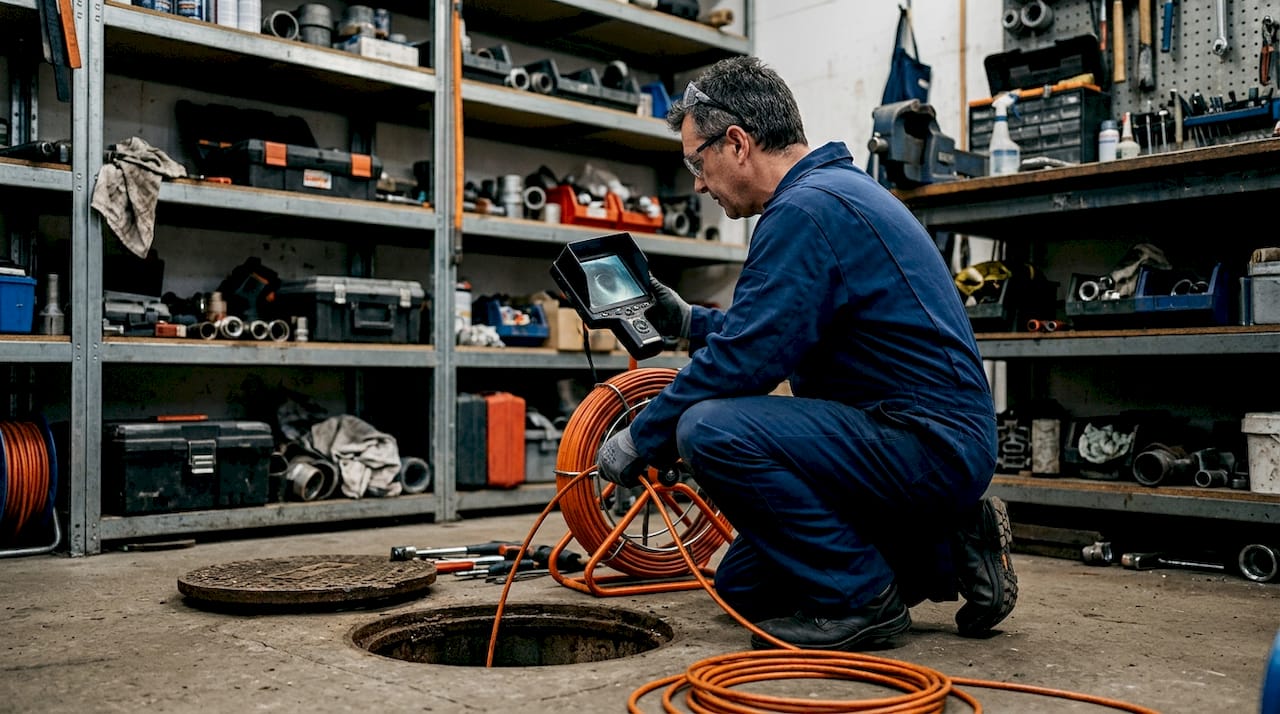
Homeowners should ask to view the CCTV footage during the inspection. Seeing the footage yourself confirms the crack location and shape, which directly determines whether a liner repair or excavation is the right call. A reputable plumber will walk you through what you are looking at. If a technician refuses to show you the footage, that is a problem.
The inspection also identifies the pipe material. Pipe materials like Orangeburg lack structural integrity and collapse under the heat used to cure trenchless liners, making them incompatible with modern repair methods. Knowing your pipe material before any repair quote is non-negotiable.
“A CCTV inspection does more than find the crack. It tells you the pipe’s shape, material, and slope, which together determine every repair decision that follows.”
CCTV inspection guides the repair method choice between CIPP lining and full replacement. Pipes that retain 80–90% of their original shape are candidates for lining. Severe collapses require pipe bursting or excavation. Learn more about what CCTV pipe inspection involves before your appointment so you know what questions to ask.
How to fix a crack in sewer line using trenchless repair
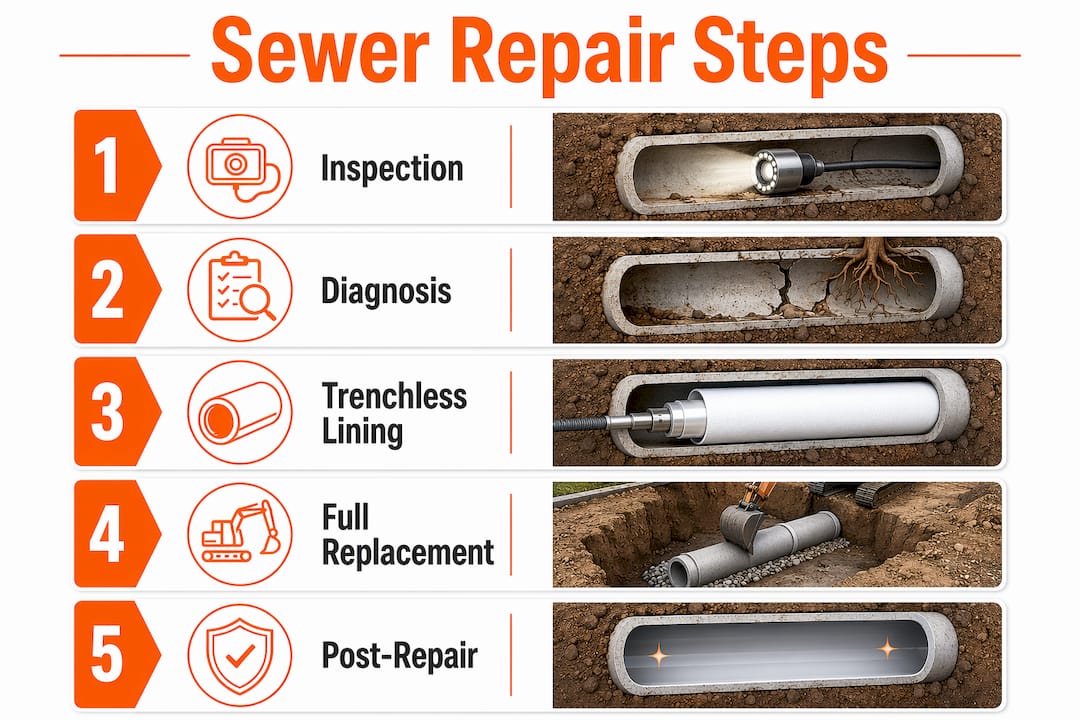
Trenchless repair is the standard method for most residential sewer line cracks in 2026. The most common technique is CIPP, which stands for cured-in-place pipe lining. A resin-saturated liner is inserted into the damaged pipe and inflated against the pipe walls, then cured with heat or UV light to form a rigid new pipe inside the old one.
Here is how the process works from start to finish:
- Hydro jetting. Technicians clean the pipe with high-pressure water to remove grease, roots, and debris. A dirty pipe will not accept a liner properly. Jmseptic uses hydro jetting as a standard pre-repair step.
- Pre-lining CCTV inspection. A second camera pass confirms the pipe is clean and documents the exact crack dimensions for liner sizing.
- Liner preparation. A felt or fiberglass tube is saturated with epoxy resin and sized to match the pipe’s diameter and length.
- Liner installation. The liner is pulled or inverted into position using air pressure or a winch, with no large trench required.
- Curing. Heat, steam, or UV light hardens the resin over several hours, bonding the liner to the pipe walls.
- Post-lining inspection. A final camera pass confirms the liner is sealed, smooth, and properly positioned.
Pro Tip: Ask your contractor for the post-lining camera footage as a record. If a problem appears in the same section within a year, you have documentation to support a warranty claim.
The cost difference between methods is significant. Trenchless CIPP lining typically costs $3,000–$10,000 and finishes in one day. Traditional excavation runs $5,000 to over $25,000 and takes one to three weeks due to site restoration. Trenchless methods require only small access holes instead of a full trench across your yard, preserving landscaping, driveways, and hardscaping.
| Repair Method | Typical Cost | Time to Complete | Yard Disruption |
|---|---|---|---|
| CIPP trenchless lining | $3,000–$10,000 | 1 day | Minimal |
| Pipe bursting | $4,000–$12,000 | 1–2 days | Small access holes |
| Traditional excavation | $5,000–$25,000+ | 1–3 weeks | Full trench |
Pipe bursting is the right choice when the existing pipe is too deteriorated to support a liner but the homeowner still wants to avoid full excavation. A new pipe is pulled through the old one while a bursting head fractures the original pipe outward. For severely collapsed sections or pipes with major misalignment, partial or full excavation remains the only viable path.
Common mistakes to avoid when repairing a damaged sewer pipe
Fixing a cracked sewer pipe incorrectly costs more than the original repair. These are the errors that cause homeowners the most grief.
- Using chemical drain cleaners. Chemical drain cleaners worsen existing cracks and release caustic wastewater that creates health hazards for repair technicians. Stop using them the moment you suspect pipe damage.
- Skipping pipe material identification. Ordering a CIPP liner for an Orangeburg pipe wastes money and delays the real fix. Always confirm the pipe material during the CCTV inspection before agreeing to any repair method.
- Ignoring slope and alignment. Trenchless lining replicates the existing pipe’s pitch. If the pipe already has poor drainage slope, relining will not fix the drainage problem. A pipe with incorrect slope may need partial excavation and repositioning before lining.
- Choosing spot repairs when full replacement is smarter. If repair costs for multiple localized fixes exceed 40% of full replacement cost, replacing the entire line delivers better long-term reliability at a lower total price.
“Spot repairs feel cheaper in the moment, but a pipe that needs three separate fixes in five years is a pipe that needed replacement from the start.”
Preventing sewer line damage starts with regular maintenance. A sewer line cleaning guide can help you build a schedule that keeps roots, grease, and debris from building up to the point of cracking. Homeowners with slow drains who are not yet sure whether they have a crack should also review safe DIY drain clearing methods before calling a plumber.
Key Takeaways
A crack in a sewer line requires a CCTV inspection to confirm the damage, followed by trenchless CIPP lining or excavation depending on pipe condition, material, and slope.
| Point | Details |
|---|---|
| Recognize the signs early | Multiple slow drains, sewer odors, and green yard patches all signal a main line crack. |
| Get a CCTV inspection first | Camera footage confirms crack location, pipe shape, and material before any repair decision. |
| Trenchless lining saves money | CIPP lining costs $3,000–$10,000 and finishes in one day versus weeks for excavation. |
| Verify pipe material upfront | Orangeburg and severely collapsed pipes cannot accept CIPP liners and need replacement instead. |
| Replace when repairs exceed 40% | If multiple spot fixes cost more than 40% of full replacement, replace the whole line. |
What I have learned after years of sewer line calls
The homeowners who call us in the worst shape are almost always the ones who waited. They noticed the gurgling drain six months ago. They smelled something odd in the yard but assumed it was a dead animal. By the time they call, a $4,000 lining job has turned into a $15,000 excavation with foundation repairs on top.
The thing that surprises most people is how fast trenchless technology has changed this repair category. Ten years ago, a cracked sewer line almost always meant a torn-up yard and a week without full plumbing use. Today, most residential cracks are fixed in a single day with no visible damage to the lawn. That shift matters enormously for homeowners who were dreading the call.
My strongest advice is this: ask to see the camera footage. Every time. A good technician will show you the crack on screen, explain what it means, and walk you through why a particular repair method fits your specific pipe. If a contractor hands you a quote without showing you footage, get a second opinion. The footage is your protection against unnecessary work.
Regular maintenance prevents most of the calls I see. A professional cleaning every few years, combined with keeping grease and wipes out of your drains, extends pipe life significantly. The cost of prevention is a fraction of the cost of repair.
— Jason
Jmseptic is ready to help with your sewer line repair
Sewer line problems rarely wait for a convenient time. Jmseptic serves homeowners across Alamance County, including Burlington, Mebane, Graham, Elon, and the surrounding Piedmont Triad area, with professional sewer line diagnosis and repair.

Jmseptic offers video camera inspections to locate cracks fast and trenchless repair options that get your plumbing back to normal without tearing up your yard. If you are seeing the warning signs covered in this article, the right move is a professional inspection before the damage spreads. For homeowners dealing with a full system issue, the emergency septic repair guide covers what to do when things go wrong fast. You can also review why timely repairs protect your home and your budget before the problem gets worse.
FAQ
What causes a crack in a sewer line?
Soil shifting, tree root intrusion, ground freezing, and corrosion in older pipe materials like clay and cast iron are the leading causes. Pipes older than 40 years face significantly higher crack risk.
How do I know if my sewer line is cracked or just clogged?
A clog affects one fixture. A cracked main sewer line causes multiple drains to slow or gurgle at the same time, and often produces sewer odors or wet yard patches that a clog alone would not cause.
Can a cracked sewer line be repaired without digging?
Yes. CIPP trenchless lining repairs most residential sewer cracks in one day using only small access holes, with no full trench required, as long as the pipe retains 80–90% of its original shape.
How much does sewer line repair cost?
Trenchless CIPP lining typically costs $3,000–$10,000. Traditional excavation ranges from $5,000 to over $25,000 depending on depth, length, and site restoration requirements.
How long does a sewer line last after trenchless repair?
A properly installed CIPP liner is rated to last 50 years or more in most residential applications, making it a long-term fix rather than a temporary patch.