
Cost Factors for Septic Installation in North Carolina
Discover key cost factors for septic installation in North Carolina. Learn how to budget effectively and avoid surprises in your project!

Septic system installation cost is determined by five core variables: system type, soil conditions, permitting fees, excavation complexity, and tank material. In North Carolina, these cost factors for septic installation combine to produce a total project range anywhere from $3,000 for a simple conventional system to well over $20,000 for an engineered alternative on difficult soil. Homeowners in Alamance County, Burlington, and across the Piedmont Triad who understand each variable before breaking ground avoid the budget surprises that derail projects mid-construction. This article breaks down every major driver with 2026 cost data so you can plan with confidence.
1. How system type drives the biggest cost difference
System type is the single largest cost variable in any septic installation project. Conventional gravity systems cost $3,000 to $7,500 in North Carolina when soil conditions are favorable, while mound and aerobic treatment systems run $10,000 to $20,000 or more depending on engineering requirements. That gap exists because engineered systems require electrical components, specialized media, additional inspections, and more complex drainfield construction.
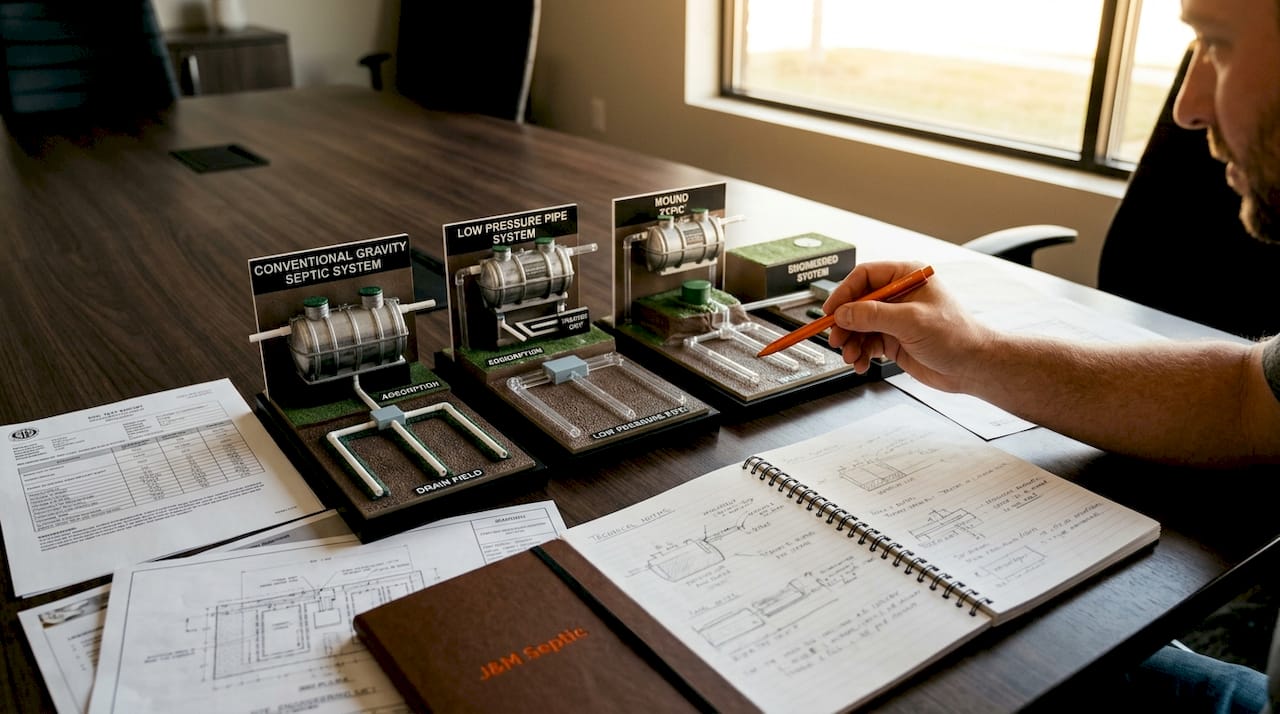
The four main system types you will encounter in North Carolina are conventional gravity, low-pressure pipe, mound, and aerobic treatment units. Conventional gravity relies on natural slope and permeable soil to distribute effluent. Low-pressure pipe systems cost roughly double conventional because they use a pump and pressurized distribution network. Mound systems, which build an elevated drainfield above the natural grade, can cost two to four times more than conventional. Aerobic treatment units add aeration chambers and chlorination, pushing costs toward the top of the range.
Pro Tip: Ask your contractor to quote at least two system types before your perc test results arrive. Knowing the cost gap in advance helps you decide whether to pursue soil amendments or accept the higher-cost system.
| System type | Typical NC cost range | Best use case |
|---|---|---|
| Conventional gravity | $3,000 to $7,500 | Sandy or loamy soil with adequate slope |
| Low-pressure pipe | $6,000 to $12,000 | Moderately limiting soils, flatter lots |
| Mound system | $10,000 to $20,000+ | High water table or shallow restrictive layers |
| Aerobic treatment unit | $10,000 to $20,000+ | Limited lot size or strict effluent quality requirements |
You can explore the full system type breakdown to compare options before your first contractor meeting.
2. What soil conditions and perc tests actually cost you
Soil evaluation is the regulatory gatekeeper for every septic project. Perc tests and soil evaluations cost $250 to $1,500 and determine which system type your county health department will approve. That fee is unavoidable, but the real financial risk is what the results trigger downstream.
A failed perc test does not just mean a more expensive system. It means larger drainfields, more excavation, additional engineering fees, and sometimes a licensed soil scientist report on top of the standard evaluation. Poor soil can increase both drainfield size and excavation complexity, which compounds costs across multiple line items simultaneously. Clay-heavy soils common in parts of Alamance County absorb water slowly, which often disqualifies conventional gravity systems entirely.
Here is what soil conditions directly affect in your budget:
- Drainfield size: Slower percolation rates require more linear footage of distribution lines, adding material and labor costs.
- System type eligibility: Only certain systems are approved for specific soil classifications under North Carolina regulations.
- Excavation depth and difficulty: Dense clay or shallow rock layers require heavier equipment and more labor hours.
- Engineering fees: Engineered systems triggered by poor soil require stamped design plans, adding $500 to $2,000 or more to the project.
Pro Tip: Schedule your soil evaluation before purchasing land if possible. A property that requires a $15,000 mound system instead of a $5,000 conventional system changes the economics of the entire purchase.
Early soil evaluation is the most effective single action you can take to control total project cost.
3. How permits, inspections, and county regulations add up
North Carolina septic permitting operates at the county level, which means fee schedules and inspection requirements vary significantly depending on where your property sits. Permitting fees typically range from $150 to $400 in North Carolina, but that figure covers only the permit itself. Soil testing, design review, and multiple inspections add to the total administrative cost of the project.
Most counties require at least two inspections: one before backfill to verify drainfield placement and one final inspection before the system goes into service. Some counties require a third inspection for engineered systems. Each inspection may carry its own fee, and scheduling delays can push your project timeline out by days or weeks depending on inspector availability.
Regional permitting in NC varies widely, so consulting your county health department for the current fee schedule before you budget is the only way to get accurate numbers. Alamance County, Orange County, and Guilford County each maintain their own schedules. A land survey may also be required if property lines are unclear, adding $400 to $900 to the administrative cost bucket.
For a detailed walkthrough of what to expect, the NC permitting process guide covers county-specific requirements and timelines that affect your total installation expenses.
4. Excavation, site prep, and tank material choices
Excavation and site preparation costs range from $1,000 to $4,000 depending on soil type, slope, and equipment access. Rocky or clay-dense soil requires heavier machinery and more labor hours, pushing costs toward the top of that range. A flat, sandy lot with good road access sits at the low end. Steep grades or lots with mature trees near the drainfield area add both time and cost.
Tank material is a separate line item that most homeowners underestimate. Concrete tanks cost $800 to $1,500, plastic tanks run $500 to $1,200, and fiberglass tanks fall between $1,200 and $2,000. Concrete remains the most common choice in North Carolina because of its durability and local availability. Plastic tanks are lighter and easier to install on difficult sites, which can offset the material cost difference through lower labor charges.
Pro Tip: On sloped or rocky lots, ask your contractor whether a lighter plastic or fiberglass tank would reduce crane or equipment fees. The tank itself may cost slightly more, but total installed cost can come out lower.
| Cost component | Typical range | Key variable |
|---|---|---|
| Excavation and site prep | $1,000 to $4,000 | Soil density, slope, equipment access |
| Concrete septic tank | $800 to $1,500 | Tank size (750 to 1,500+ gallons) |
| Plastic septic tank | $500 to $1,200 | Site access and installation ease |
| Fiberglass septic tank | $1,200 to $2,000 | Corrosion resistance, weight advantage |
| Drainfield construction | $2,000 to $8,000+ | System type, soil classification, footage |
Labor accounts for 50% to 70% of total septic installation cost, which means excavation complexity has an outsized effect on your final bill. A site that takes two extra days to excavate adds thousands in contractor time before a single pipe is laid.
5. How to budget accurately and avoid hidden costs
Accurate budgeting starts with separating your project into distinct cost buckets: soil testing and evaluation, system design, permits and inspections, tank purchase, drainfield construction, excavation and site prep, labor, and site restoration. Incomplete quotes often omit soil testing, design, permits, and restoration, which is how a $7,000 quote becomes a $10,500 final invoice.
When comparing contractor estimates, confirm that every quote covers all components. A quote that lists only “tank and drainfield installation” is missing at minimum three to four cost categories. Verify that all components are included in each bid so you are comparing equivalent scopes of work.
Practical ways to reduce your total project cost without cutting corners:
- Schedule in the off-season: Fall and winter installations often carry lower contractor rates due to reduced demand.
- Handle your own landscaping prep: Clearing brush, marking utilities, and removing obstacles before the crew arrives saves billable hours.
- Pull your own permit: In some North Carolina counties, homeowners can pull their own septic permit, saving contractor markup on the permit fee.
- Buy materials directly: Some contractors allow owner-supplied tanks, which can reduce markup on the tank itself.
- Get three quotes minimum: Cost variability between licensed contractors in Alamance County can exceed $3,000 on identical scopes of work.
Pro Tip: Ask each contractor to provide a line-item quote rather than a single lump sum. Line-item quotes make it easy to spot what is missing and give you leverage to negotiate specific components.
Understanding factors affecting septic lifespan also matters at the budgeting stage. A system installed correctly with proper materials will cost less over ten years than a cheaper installation that requires early repairs.
Key takeaways
The total cost of septic installation in North Carolina is controlled by five factors: system type, soil conditions, permitting, excavation complexity, and tank material selection.
| Point | Details |
|---|---|
| System type sets the cost ceiling | Conventional systems start at $3,000; engineered systems can exceed $20,000 based on soil and site requirements. |
| Soil testing is non-negotiable | Perc test results determine which system type is approved, directly setting your minimum project cost. |
| Permits vary by county | North Carolina permitting fees range from $150 to $400, but total administrative costs are higher when inspections and design reviews are included. |
| Labor dominates the budget | Labor represents 50% to 70% of total installation cost, making site complexity the most controllable expense. |
| Line-item quotes prevent surprises | Quotes missing soil testing, permits, or restoration understate true project cost by thousands of dollars. |
What I’ve learned after years of septic installations in NC
The homeowners who get blindsided by septic costs almost always share one thing in common: they received a quote before completing a soil evaluation. I have seen properties in Alamance County where the difference between a conventional system and a required mound system was $9,000. That gap was invisible until the perc test came back. Getting the soil evaluation done first is not just good advice. It is the only way to get a quote that reflects what you will actually pay.
I also see homeowners accept the lowest bid without checking what it includes. A $6,500 quote that omits permits, soil testing, and site restoration is not cheaper than an $8,500 quote that covers everything. When you ask for line-item breakdowns, the real comparison becomes obvious fast.
One more thing worth saying plainly: county permitting in North Carolina is not uniform. What Alamance County requires differs from what Chatham or Randolph County requires. Contractors who work across multiple counties know this. Contractors who only work in one area sometimes do not flag the differences. Before you sign anything, call your county health department and ask for the current fee schedule and inspection checklist. That 15-minute call can save you from a $500 surprise at the end of the project.
— Jason
How Jmseptic helps you budget and build the right system

Jmseptic serves homeowners across Burlington, Mebane, Elon, Graham, Whitsett, and McLeansville with septic installations designed around your specific soil conditions and county requirements. Every project starts with an honest assessment of what your property actually needs, not the most expensive option on the menu. Jmseptic handles permitting coordination, soil evaluation scheduling, and full installation so you are not managing multiple contractors and chasing inspections on your own. If you are planning a new installation or replacing a failing system, start with the conventional septic tank guide to understand your baseline options and typical costs before your first call.
FAQ
What is the average price for septic installation in NC?
Most North Carolina homeowners pay between $5,000 and $12,000 for a complete septic installation, with conventional systems on favorable soil starting around $3,000 and engineered systems on difficult soil exceeding $20,000.
What factors affect septic system installation costs the most?
System type and soil conditions are the two largest cost drivers. A failed perc test can shift a project from a $5,000 conventional system to a $15,000 mound or aerobic system.
How much do septic permits cost in North Carolina?
Septic permits in North Carolina typically cost $150 to $400 depending on the county, but total permitting expenses including soil testing and inspections commonly reach $500 to $2,000 or more.
Can I reduce my septic installation cost in North Carolina?
Yes. Scheduling during the off-season, handling your own site prep, pulling your own permit where allowed, and getting at least three line-item quotes are the most effective ways to reduce total project cost without compromising system quality.
How long does a septic system last in North Carolina?
A properly installed and maintained septic system in North Carolina typically lasts 25 to 40 years. Regular pumping, avoiding heavy loads over the drainfield, and early diagnosis of common septic problems are the primary factors affecting septic lifespan.