
Conventional Septic Tanks: What Homeowners Must Know
Discover essential tips for maintaining conventional septic tanks. Learn how they work, when to pump, and avoid costly repairs with our expert guide.

Most homeowners treat conventional septic tanks the same way they treat their water heater. They install it, forget about it, and only think about it again when something goes wrong. That mindset is expensive. Conventional septic tanks are the most widely installed wastewater systems in rural and suburban America, but they require real maintenance to perform well and last decades. This guide breaks down exactly how these systems work, how they’re sized and installed, what maintenance actually looks like, and how to recognize trouble before it costs you thousands.
Table of Contents
- Key takeaways
- How conventional septic tanks work
- Sizing and installation guidelines
- Maintenance schedule and best practices
- Conventional vs. alternative septic systems
- Troubleshooting common problems
- My honest take after years in the field
- How Jmseptic helps you protect your system
- FAQ
Key takeaways
| Point | Details |
|---|---|
| Conventional systems need regular pumping | A 1,000-gallon tank with four occupants needs pumping roughly every three years. |
| Tank size depends on bedroom count | A four-bedroom home typically requires at least a 1,250-gallon tank under standard sizing formulas. |
| Garbage disposals shorten pump cycles | Using a disposal can cut your recommended pumping interval by up to 50%. |
| Ignoring maintenance is costly | Drainfield repairs run $3,000 to $7,000; full replacement can exceed $15,000. |
| Conventional works best in suitable soil | Gravity-fed drainfields require permeable soil and adequate setback distances from wells and property lines. |
How conventional septic tanks work
Understanding what a conventional septic system actually does changes the way you think about maintaining it. The system has three core components working together: the tank itself, the inlet and outlet baffles, and the drainfield.
Wastewater from your home flows into the tank through the inlet pipe. Inside the tank, gravity does the primary work. Heavier solids sink to the bottom and form sludge. Lighter materials like grease and soap float to the top and form a scum layer. The liquid in the middle, called effluent, remains relatively clear and exits through the outlet baffle into the drainfield, where it percolates through the soil and gets naturally filtered.
The baffles are more important than most people realize. The inlet baffle slows the incoming flow so it doesn’t disturb the settled sludge layer. Without it, short-circuiting disrupts settling, pushing solids toward the drainfield prematurely and accelerating system failure. The outlet baffle prevents the scum layer from escaping into the drainfield lines.
Here’s a breakdown of the main types of conventional systems:
- Gravity-fed single-compartment tanks: The most basic configuration. One chamber handles all settling. Common in older installations.
- Two-compartment tanks: The preferred modern standard. The first compartment handles initial settling; the second provides a secondary settling stage before effluent exits. More reliable and better at protecting drainfields.
- Concrete septic tanks: The most durable and widely used material, though they can crack over time. Fiberglass and polyethylene tanks are lighter alternatives but less common in traditional systems.
The key difference between conventional and alternative systems comes down to treatment level. Conventional tanks rely entirely on anaerobic bacterial activity and gravity. They don’t have pumps, electrical components, or mechanical parts. That simplicity is a strength in the right conditions.
Pro Tip: Ask your installer whether your tank has an effluent filter on the outlet baffle. Many modern tanks include one. Cleaning it every 1 to 3 years keeps solids from migrating into your drainfield.
Sizing and installation guidelines
Getting the sizing right before installation protects your investment for decades. Install a tank that’s too small for your household and you’ll be pumping it constantly. The state minimum is 1,000 gallons for most single-family homes, but the right size depends on how many people actually live there.
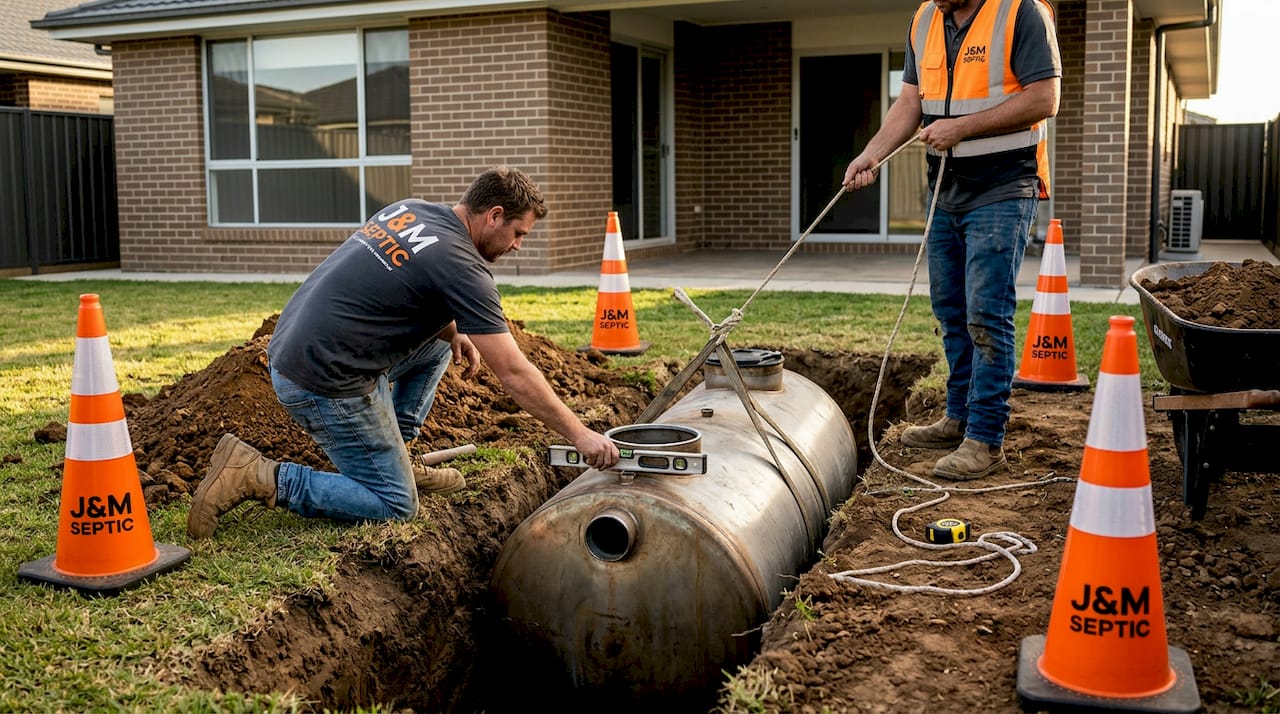
The standard sizing formula used widely across most states: multiply the number of bedrooms by 150 gallons, then add 500 gallons. So a four-bedroom home needs a minimum of 1,250 gallons. A three-bedroom home needs 950 gallons, which is typically rounded up to 1,000 gallons to meet statutory minimums.
| Home size | Estimated daily flow | Recommended tank size |
|---|---|---|
| 2 bedrooms | 240 gallons/day | 1,000 gallons |
| 3 bedrooms | 360 gallons/day | 1,000 gallons |
| 4 bedrooms | 480 gallons/day | 1,250 gallons |
| 5 bedrooms | 600 gallons/day | 1,500 gallons |
The tank needs to hold wastewater long enough for settling to occur. A 1,000-gallon tank provides roughly two to three days of retention time, which is the minimum needed for proper solids separation before effluent moves to the drainfield.
Beyond tank size, the installation site matters enormously. Your installer will evaluate:
- Soil permeability: Clay-heavy soils don’t absorb effluent well and may disqualify a conventional gravity drainfield entirely.
- Setback requirements: Most states require minimum distances from wells, property lines, streams, and the home’s foundation.
- Slope and elevation: Gravity systems need enough grade to move effluent naturally without pumping.
- Seasonal high water table: If groundwater sits too high, it can saturate the drainfield and push untreated effluent to the surface.
Septic system installation costs for a conventional three to four bedroom system typically run $8,000 to $15,000, depending on soil conditions, local permit fees, and tank material. If your soil fails a percolation test, you’ll need an engineered alternative system, which costs more and requires ongoing mechanical maintenance.
Pro Tip: Get a soil evaluation done before you purchase rural land. If the perc test fails and no suitable alternative site exists, the property may not support any septic system at all.
Maintenance schedule and best practices
Here is where most homeowners underestimate what their system actually needs. The EPA recommends inspections every three years and pumping every three to five years for most conventional tanks. But those numbers shift based on your specific situation.
Follow this practical framework:
- Schedule a baseline inspection first. Before committing to any pumping schedule, have a professional inspect your tank. They’ll check baffles, measure sludge and scum layers, and tell you exactly how much time you have before pumping is needed.
- Pump based on actual data, not calendar years. Pumping frequency should reflect your tank volume, household size, and daily water use, not a generic three-year rule. A 1,500-gallon tank with two occupants may go seven to nine years between pumpings.
- Inspect annually, even if pumping isn’t due. Annual inspections catch problems like cracked baffles, root intrusion, and effluent surfacing long before they require expensive repairs.
- Track your garbage disposal use. If you use a garbage disposal regularly, solids loading increases by up to 50%, which can cut your pumping interval from every three years down to every 18 months. That’s a significant maintenance cost increase over time.
- Keep a maintenance log. Document every inspection, pumping, and repair with dates and findings. This history is valuable if you ever sell the property or need to troubleshoot a problem.
Professional pumping typically costs $300 to $600, and inspections run $150 to $400. Spread over three to five years, that’s a modest expense compared to what happens when maintenance gets skipped.
Statistic: Drainfield failure from neglected maintenance can cost $3,000 to $7,000 to repair. Full system replacement runs $15,000 or more. Routine pumping is a fraction of that cost.
Note that most routine maintenance tasks like pumping and filter cleaning don’t require permits. But any repair or replacement work does require licensed professionals and proper permitting to stay legal and avoid fines.
Pro Tip: Never flush wipes, medications, or grease down any drain connected to a septic system. These materials disrupt bacterial activity inside the tank and accelerate sludge buildup faster than any other household habit.
Conventional vs. alternative septic systems
Not every property can support a conventional gravity system. Understanding where conventional tanks perform well and where they fall short helps you make a smarter decision at installation time or when an existing system fails.
| System type | Treatment efficiency | Best conditions | Relative cost | Maintenance complexity |
|---|---|---|---|---|
| Conventional gravity | 60 to 70% organic removal | Permeable soil, adequate slope | Lowest | Low (no mechanical parts) |
| Aerobic treatment unit | 85 to 95% organic removal | Poor soil, stricter regulations | Higher | High (motors, air pumps, filters) |
| Mound system | Moderate | High water table, shallow bedrock | Moderate to high | Moderate |
| Chamber system | Similar to conventional | Varies, good for tight sites | Moderate | Low to moderate |
Conventional septic tanks achieve 60 to 70% organic removal through anaerobic bacterial action. That’s enough to meet state standards in most jurisdictions with suitable soil. Aerobic systems push that figure to 85 to 95%, making them necessary in environmentally sensitive areas or where soil conditions demand a higher level of treatment before effluent enters the ground.
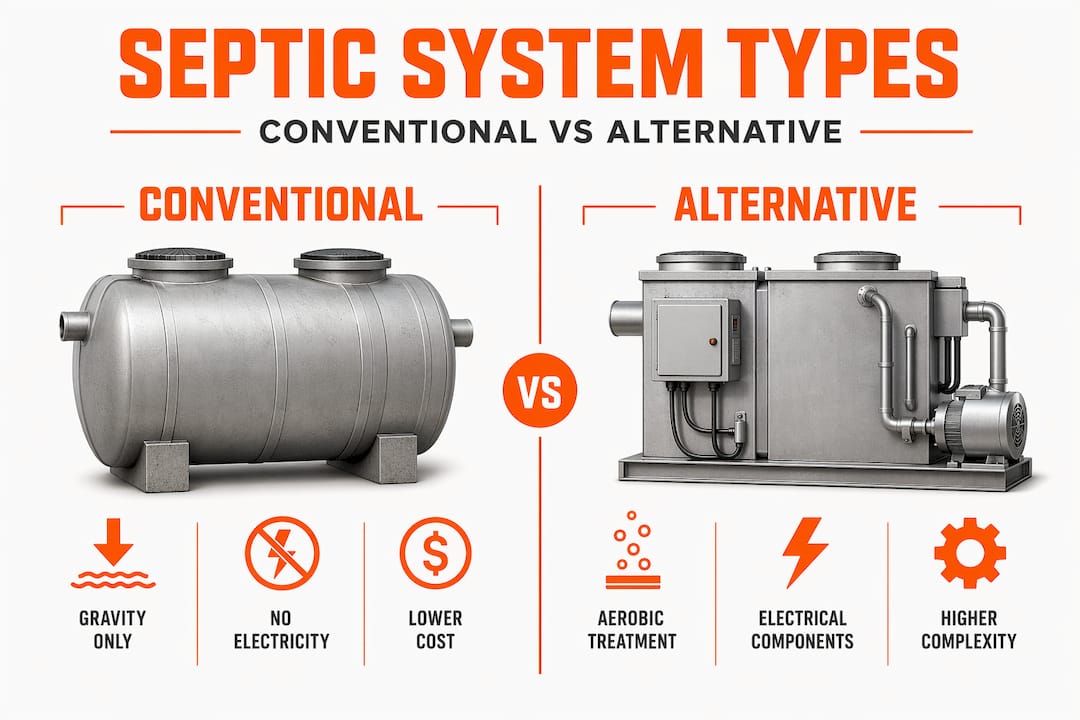
The tradeoff is cost and complexity. Aerobic systems require electrical components, air pumps, and more frequent professional servicing. When comparing aerobic vs anaerobic septic systems, conventional anaerobic systems win on simplicity and upfront cost for properties with appropriate conditions. But forcing a conventional system onto a site with clay soil or a high seasonal water table creates bigger problems down the road.
Mound and chamber systems fill the gap for properties that can’t pass a standard perc test but don’t require the full treatment level of an aerobic unit. Your licensed installer or a soil scientist can help you determine which system the site actually needs.
Troubleshooting common problems
Most conventional septic tank problems give you warning signs before they turn into emergencies. Knowing what to look for protects your drainfield and your wallet.
Watch for these signals:
- Slow drains throughout the house: Not just one fixture. If every drain is sluggish, the tank is likely full or the outlet is blocked.
- Gurgling pipes: Air trapped in the drain lines, often caused by a full tank or a venting issue.
- Sewage odors inside or outside the home: Inside odors suggest a plumbing vent problem; persistent outdoor odors near the tank or drainfield suggest effluent is surfacing.
- Wet spots or unusually green grass over the drainfield: The soil is saturated with effluent, meaning the drainfield is failing or overloaded.
- Sewage backup in the lowest fixtures: The worst sign. It means the tank is full and waste has nowhere to go.
Baffle failure is one of the most common and overlooked causes of drainfield damage. When the inlet baffle breaks or disappears entirely, incoming wastewater hits the tank with full force and disrupts the settled sludge, sending solids toward the outlet before they’ve settled. The drainfield clogs with solids, and biomat forms in the soil, blocking percolation.
Drainfield clogging caused by years of neglect is the most expensive outcome. Repair costs run $3,000 to $7,000 for partial rehabilitation. Full replacement of both tank and drainfield can exceed $15,000. Timely septic repairs almost always cost far less than waiting until the system collapses completely.
Pro Tip: If you see standing water over your drainfield after a period of no heavy rain, stop doing laundry and reduce household water use immediately. Every gallon you push into a failing drainfield makes the damage worse. Call a professional the same day.
My honest take after years in the field
I’ve inspected and installed a lot of septic systems across Alamance County and the Piedmont Triad. The single most consistent thing I’ve seen is homeowners who inherited a system they knew nothing about and assumed it was fine because nothing had gone wrong yet.
That assumption doesn’t hold. A tank that hasn’t been pumped in ten years isn’t a tank that’s doing well. It’s a tank that’s sending sludge into the drainfield and quietly destroying it. By the time the symptoms show up at the surface, the repair bill is already significant.
What actually works is simple. Get the system inspected so you know what you’re working with. Pump it when the sludge layer says it needs it, not when the calendar says so. Pay attention to the warning signs and act on them fast. The homeowners who understand their system’s lifespan and stay ahead of maintenance spend a fraction of what reactive homeowners spend on emergency repairs and replacements.
My other consistent observation: baffles get ignored because they’re inside the tank and invisible. They’re also one of the first things to fail. Ask your inspector about baffle condition every single time. That one habit prevents a lot of expensive problems.
— Jason
How Jmseptic helps you protect your system
Jmseptic serves homeowners and property managers across Burlington, Mebane, Graham, Elon, and the wider Alamance County area with everything from new septic system installation to urgent repairs and routine pumping. Whether you’re building on a new lot and need a properly sized conventional system designed for your soil conditions, or you’re dealing with slow drains and suspect your existing tank is overdue for service, the Jmseptic team handles it all with licensed professionals and honest assessments.

If you’re seeing any of the warning signs covered in this article, don’t wait. Contact Jmseptic for an inspection and get a clear picture of where your system stands before a manageable problem becomes an expensive one. Reach out through jmseptic.com to schedule service.
FAQ
What is a conventional septic system?
A conventional septic system uses a buried tank to separate solids from wastewater through settling, then disperses the liquid effluent into a soil drainfield using gravity. It has no mechanical parts, making it the simplest and most common type of septic system for residential properties.
How often should conventional septic tanks be pumped?
Most conventional tanks need pumping every three to five years, but the actual interval depends on tank size and household occupancy. A 1,000-gallon tank with four residents typically needs pumping every three years, while a 1,500-gallon tank with two residents may go seven to nine years.
What size septic tank does my home need?
The standard formula is: number of bedrooms multiplied by 150, plus 500 gallons. A four-bedroom home requires at least 1,250 gallons, though most states set 1,000 gallons as the minimum for any single-family home regardless of bedroom count.
What are the signs that my septic tank is failing?
The most common signs are slow drains throughout the home, gurgling pipes, sewage odors near the yard or inside the house, standing water or unusually lush grass over the drainfield, and sewage backing up into the lowest fixtures. Any of these signals warrants an immediate professional inspection.
What is the difference between conventional and aerobic septic systems?
Conventional anaerobic systems rely on natural bacterial activity without electricity or mechanical parts, achieving 60 to 70% organic removal. Aerobic systems introduce oxygen to accelerate treatment and reach 85 to 95% removal efficiency, but they require motors, air pumps, and more frequent servicing, making them more expensive to maintain over time.