
Common Septic System Problems: What Homeowners Must Know
Discover essential insights on common septic system problems. Learn to spot issues early and save on costly repairs with our expert guide!

That slow drain in your bathroom is easy to ignore. You blame it on hair buildup, pour some cleaner down the pipe, and move on. But when two or three fixtures start backing up at the same time, that is no longer a plumbing quirk. It is a warning your septic system is sending you. Understanding common septic system problems early is the difference between a $400 pump-out and a $15,000 drainfield replacement. This guide covers the symptoms, root causes, troubleshooting steps, and prevention habits every homeowner with a septic system needs to know.
Table of Contents
- Key takeaways
- Common signs of septic system problems
- Root causes of common septic problems explained
- How to troubleshoot common septic issues at home
- Preventive maintenance that actually works
- When to call a professional
- My honest take after years on the job
- Get expert help from Jmseptic
- FAQ
Key takeaways
| Point | Details |
|---|---|
| Multiple slow drains signal system issues | When more than one fixture backs up simultaneously, the problem is likely your septic tank or drainfield, not a pipe. |
| Pump every 3 to 5 years | Skipping routine pumping allows sludge to reach your drainfield and turn a simple service call into a major repair. |
| Yard signs matter as much as indoor signs | Soggy soil, lush grass patches, or standing water near your drainfield are reliable signs of system failure. |
| Water habits directly affect system health | Spreading laundry loads, fixing leaks, and avoiding harsh chemicals extend the life of your septic system significantly. |
| Act fast at the first warning sign | Delayed repairs allow minor issues to escalate into drainfield failures that cost ten times more to fix. |
Common signs of septic system problems
Most homeowners notice something is off before they understand what that something is. The US EPA lists these signs explicitly as indicators that your drainfield or septic system is failing. Knowing which signs point to which problems helps you respond faster and smarter.
Indoor warning signs to watch for:
- Sewage backing up into toilets, tubs, or sinks
- Slow drains in multiple fixtures at the same time
- Gurgling sounds coming from drains or toilets after flushing
- Sewage or rotten egg odors inside the home
- Toilets that flush sluggishly even after plunging
Outdoor warning signs that demand attention:
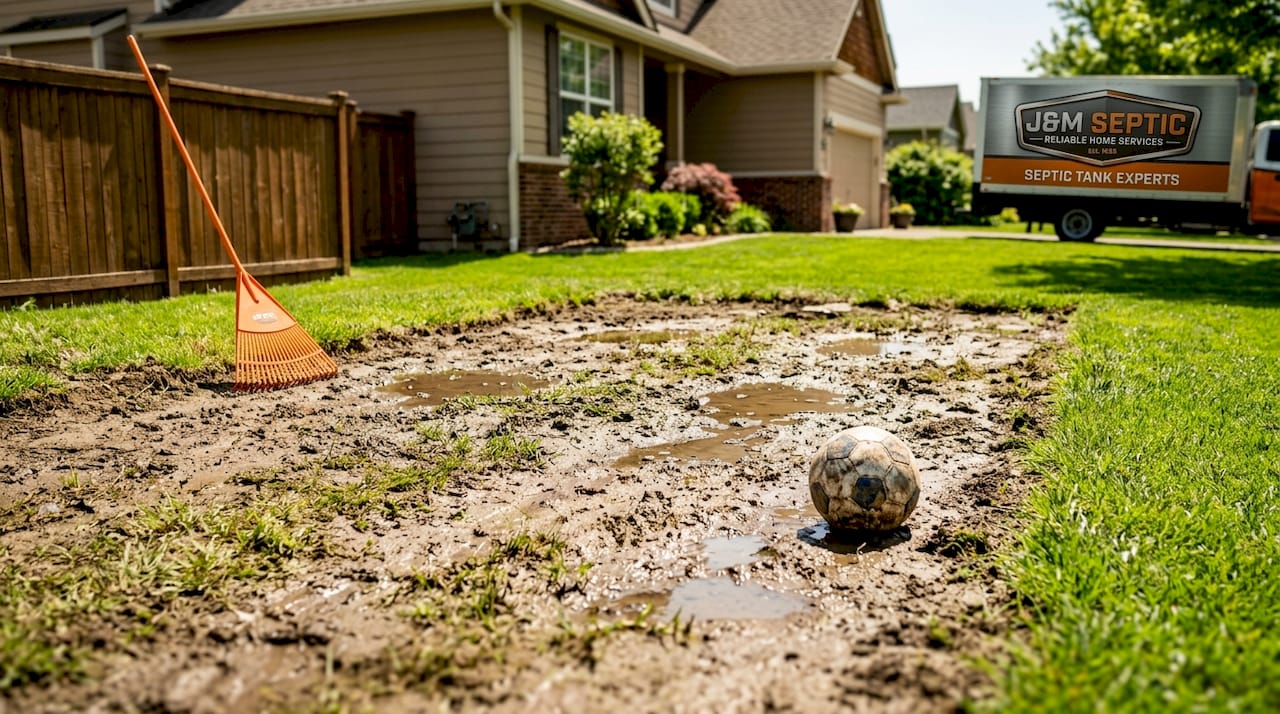
- Wet, spongy, or soggy soil above the drainfield when it has not rained
- Standing water or puddles near the septic tank or leach field
- Unusually green, thick grass growing directly over the drainfield
- A foul odor outside near the tank or yard area
- Algae blooms in a nearby pond or stream, which may signal contaminated runoff
Soft or wet soil over the drainfield without recent rain is one of the clearest visual clues that your system is failing and needs professional evaluation right away. The bright green grass over a drainfield is easy to mistake for healthy lawn growth. What it actually means is that your drainfield is releasing partially treated sewage, which acts as fertilizer. That is not a good sign.
Root causes of common septic problems explained
When you understand why these problems happen, prevention becomes much easier. Common septic issues rarely appear out of nowhere. They build slowly from neglect, habits, or conditions that were overlooked.
Infrequent tank pumping is the number one cause of frequent septic failures. Delayed pumping causes solids to push through into the drainfield, turning a straightforward maintenance call into expensive excavation and restoration work.
Tree and plant root intrusion is a less obvious but very damaging culprit. Roots from trees and large shrubs grow toward moisture. They find cracks in pipes or tank lids and worm their way in over time. Once inside, they block flow and cause backups that look like clogs but will not respond to standard drain clearing.
Drainfield hydraulic overload happens when more water enters the system than the soil can absorb. This often ties back to poor water use habits, but it can also result from naturally poor soil conditions. Improper site conditions like poor soil and high groundwater can cause hydraulic failures even in systems that are well-maintained.
Broken or blocked baffles are another common septic system issue that goes unnoticed until a professional inspection catches it. Baffles direct the flow of wastewater through the tank properly. When they crack or corrode, solids escape too early and reach the drainfield ahead of schedule.
Harmful household products are the quiet killers of healthy septic systems. Bleach, antibacterial soaps, certain medications, and chemical drain cleaners kill the bacteria your tank depends on to break down waste. Once that bacterial balance is disrupted, solids build up faster and the whole system strains under the load. Excessive water use and harmful household habits consistently rank among the leading causes of shortened system lifespan.
Pro Tip: Never flush wipes labeled “flushable.” These products do not break down in a septic tank the way toilet paper does and are a leading cause of baffle damage and premature solids buildup.
How to troubleshoot common septic issues at home
Before you call a professional, there are steps you can take to diagnose what you are dealing with. The goal is to figure out whether you have a localized plumbing issue or a system-wide problem. These steps will not replace a professional inspection, but they will help you communicate clearly and act appropriately.
-
Check all fixtures at once. Run water in the bathroom, kitchen, and laundry area. If slow drains appear in multiple fixtures, you are almost certainly dealing with a full tank, blocked outlet pipe, or drainfield issue rather than a localized clog.
-
Look up your last pumping date. If you cannot remember the last time your tank was pumped, it has probably been too long. Most residential systems need service every 3 to 5 years. Check with your county records or previous service invoices if you are unsure.
-
Walk your yard and inspect the drainfield area. Look for wet spots, lush patches of grass, or standing water. Do this after a dry spell so rain does not confuse the picture. Wet soil over the drainfield on a dry day is a clear red flag.
-
Test your indoor odor source. Sewage odors inside the house often come from dry plumbing traps rather than the tank itself. Pour water into floor drains and infrequently used fixtures to refill the trap. If the smell persists after that, the source is likely outside.
-
Cut back on water use immediately. If you suspect a problem, stop running large water loads. Do not run the dishwasher, washing machine, and multiple showers in the same window. Giving the system a break can prevent a bad situation from getting worse while you schedule a service call.
-
Know when to stop and call a pro. If you see sewage surfacing in your yard or backing up into your home, that is not a situation for DIY troubleshooting. Pattern recognition across fixtures helps determine when to escalate, and surfacing sewage is always a professional-level emergency.
Pro Tip: Photograph any wet spots or unusual yard growth before calling a technician. Those images help the professional assess severity faster and give you a reference point if the problem returns.
Preventive maintenance that actually works
Keeping your system out of trouble is far cheaper than fixing it once it fails. The habits below are not complicated. They just require consistency.
- Pump on schedule. Routine pumping every 3 to 5 years prevents solids from reaching and clogging your drainfield. The financial benefits of regular pumping become obvious the moment you compare a pump-out cost to a drainfield replacement quote.
- Spread your laundry loads. Running three or four full loads back to back overwhelms a system. Space them out across the week.
- Protect your drainfield physically. Never park vehicles, install sheds, or plant deep-rooted trees over or near the drainfield. Compaction destroys the soil’s ability to absorb effluent.
- Skip the additives. Most septic tank additives are unnecessary and some are actively harmful. A healthy system already has the bacteria it needs.
- Install water-efficient fixtures. Low-flow toilets and showerheads reduce the total water load on your system. The factors that affect system lifespan consistently point to water volume as a major variable you can control.
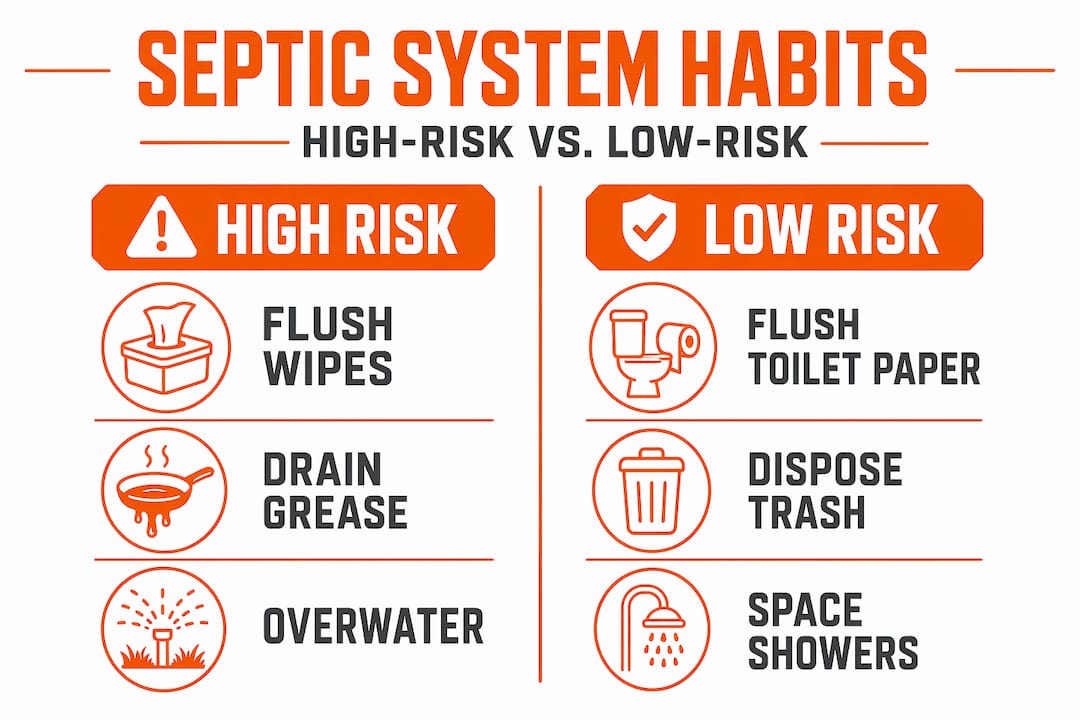
Habits comparison: high-risk vs. low-risk behaviors
| High-Risk Habit | Low-Risk Alternative |
|---|---|
| Flushing wipes, paper towels, or medications | Flush only toilet paper and human waste |
| Running all laundry loads in one day | Space loads throughout the week |
| Pouring grease or cooking oil down the drain | Dispose of grease in the trash |
| Using antibacterial soaps excessively | Use standard soap and limit harsh chemicals |
| Parking vehicles on the drainfield | Keep the drainfield area clear and unobstructed |
| Planting trees near the tank or pipes | Use shallow-rooted ground cover near the system |
When to call a professional
Some problems are beyond what a homeowner can or should handle. Recognizing the line between self-help and professional help protects your health, your property, and your wallet.
Professional septic inspections cover sludge levels, baffle condition, outlet pipes, electrical components in advanced systems, and the drainfield itself. A trained technician can spot failure patterns that a homeowner walking the yard simply cannot.
Signs that require a professional call right away:
- Raw sewage surfacing anywhere in your yard
- Sewage backing up into the lowest fixtures in your home
- Multiple drains failing simultaneously with no clear plumbing cause
- A persistent strong odor outdoors near the tank or drainfield
- Frequent need for pumping that keeps recurring within months of service, which suggests the drainfield itself is failing rather than just an overfull tank
Repair options your technician may recommend include tank pumping, hydro jetting to clear stubborn line blockages, baffle replacement, distribution box repairs, or drainfield remediation. In advanced failure cases, full system replacement may be the only realistic path forward. Waiting on any of these situations only drives the cost higher.
My honest take after years on the job
I have been doing this work in Alamance County long enough to know that the calls we dread most are the ones that could have been avoided. Every week I see homeowners who dismissed a gurgling drain for six months or ignored a soft wet patch in the yard because it did not look “that bad.” By the time they call us, what started as a $350 pump-out has turned into a $12,000 drainfield project.
The thing is, most people are not ignoring signs because they are careless. They genuinely do not know what those signs mean. Slow drains feel like a plumbing annoyance. A little extra-green grass looks like good lawn health. That is the problem. The signs are easy to explain away individually. But when you learn to see them as a pattern, the picture becomes much clearer.
What I tell every homeowner I work with is this: your septic system is not complicated, but it is unforgiving when neglected. One bad year of habits, one too-long gap between pumpings, one batch of wipes flushed too many times. That is often all it takes. The good news is that simple, consistent maintenance really does work. I have seen systems last 40 years with proper care. I have also seen systems fail at year 8 because no one paid attention.
Act at the first sign. Do not wait for confirmation that something is wrong before you make the call. Trust the pattern, not your best-case interpretation of it.
— Jason
Get expert help from Jmseptic

If you have been troubleshooting slow drains, strange odors, or wet spots in your yard, the next step is a professional evaluation before the problem gets more expensive. Jmseptic serves homeowners across Alamance County including Burlington, Mebane, Elon, Graham, Whitsett, and McLeansville with septic repair, maintenance, pumping, and hydro jetting. Learn what you need to know about your system by reviewing our guide to conventional septic tank basics, or get immediate support through our emergency septic repair guide for urgent situations. Do not wait until a manageable problem becomes a crisis. Call Jmseptic and get it handled right.
FAQ
What are the most common septic system problems?
The most common septic issues include sewage backups, slow drains in multiple fixtures, gurgling pipes, standing water over the drainfield, and strong odors inside or outside the home. Most trace back to infrequent pumping or drainfield overload.
How do I know if my septic tank is full or failing?
If drains in multiple areas of your home are slow at the same time, or you see wet soggy soil over your drainfield without rain, your tank is likely full or your drainfield is failing. Schedule a professional inspection rather than waiting for the problem to resolve on its own.
How often should a septic tank be pumped?
Septic tanks should be pumped every 3 to 5 years for most residential systems, though households with heavy use may need more frequent service. Regular pumping is the single most effective way to prevent drainfield damage.
Can I fix septic problems myself?
You can take steps like cutting back water use, testing drain traps for odors, and inspecting your yard for wet spots. However, system-level diagnosis and repairs like baffle replacement, hydro jetting, or drainfield work require a licensed professional.
What happens if I ignore septic system warning signs?
Ignoring signs like slow drains or soggy soil allows solids to migrate into the drainfield, eventually causing full system failure. What starts as a routine pump-out can escalate into costly excavation and replacement that runs into five figures.