
Cleaning Out Storm Drains: A Homeowner’s Safety Guide
Learn essential tips for cleaning out storm drains to prevent flooding and protect your property. Discover the right tools and safety measures!

Cleaning out storm drains is the process of removing debris, sediment, and blockages from drainage grates and pipes to maintain proper water flow and prevent property flooding. Most homeowners treat this task as optional, but homeowners may be legally responsible for drains on their property since public crews only maintain public right-of-ways. The standard toolkit for storm drain maintenance includes puncture-resistant gloves, a garden trowel, a bucket, a garden hose with a spray nozzle, and a manual drain snake. Done correctly and on schedule, this work protects your yard, your foundation, and your wallet.
What tools and safety equipment do you need for cleaning storm drains?
The right gear makes storm drain maintenance faster and safer. Skipping protective equipment is the most common mistake homeowners make before they start.
Essential DIY tools for the job include:
- Puncture-resistant gloves: Protect hands from sharp debris, broken glass, and bacteria in standing water.
- Safety glasses: Shield eyes from splashing sediment and pressurized water during flushing.
- Garden trowel: Scoop compacted sediment and leaf matter from the sump area below the grate.
- Bucket: Collect removed debris for proper disposal away from the drain.
- Garden hose with spray nozzle: Flush the drain after manual clearing to confirm flow is restored.
- Manual drain snake (5–10 feet): Clear deeper clogs that hand removal cannot reach.
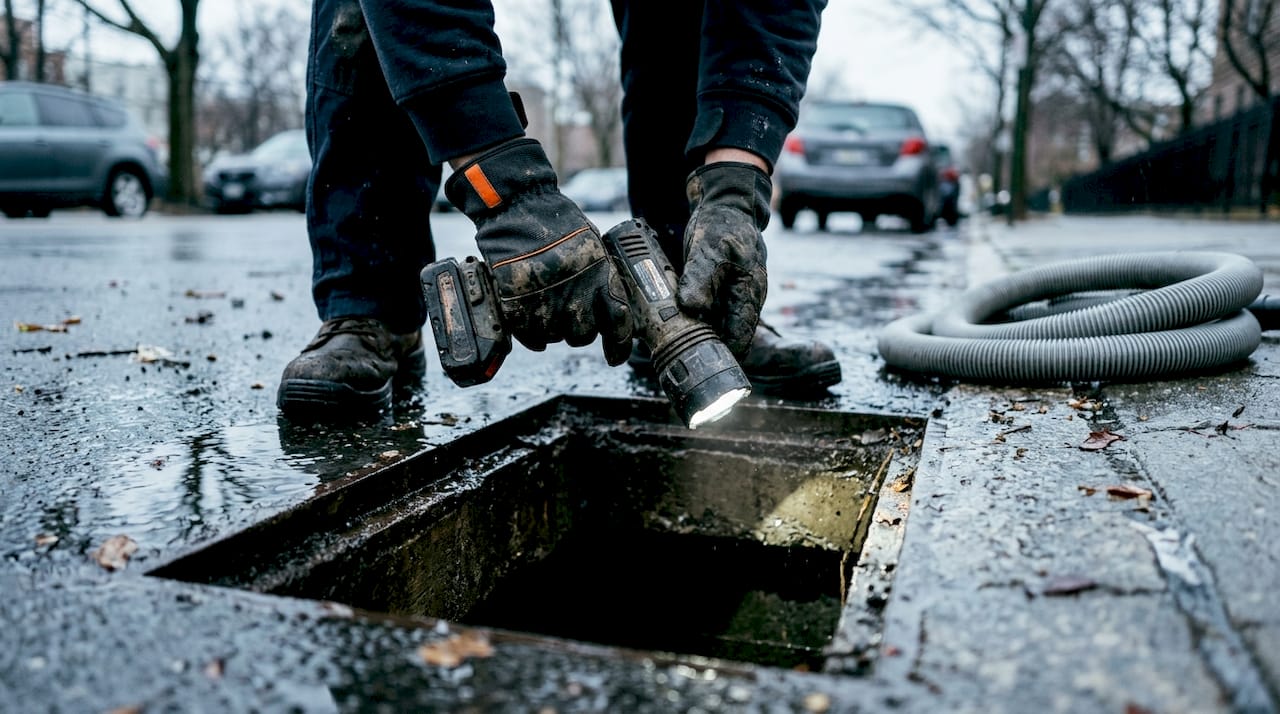
Optional tools that improve results include a wet-dry shop vacuum for pulling out fine sediment and a flashlight for inspecting the sump depth before you reach in.
| Tool | Function |
|---|---|
| Puncture-resistant gloves | Hand protection from sharp debris and pathogens |
| Safety glasses | Eye protection during flushing and scooping |
| Garden trowel | Sediment and debris removal from sump |
| Manual drain snake | Clearing clogs 5–10 feet below the grate |
| Garden hose with nozzle | Post-cleaning flush to verify drainage |
| Wet-dry shop vacuum | Fine sediment extraction (optional) |
Pro Tip: Before lifting any grate, press down on one corner to test stability. A grate that shifts or rocks on an uneven frame can slip and cause a serious hand or foot injury. If the surface around the drain is wet or mossy, place a rubber mat down before you kneel.
How do you clean out a storm drain step-by-step?
A clear sequence prevents the most common DIY error: flushing water into a clogged drain before removing the debris. Flushing before clearing compacts blockages and makes them significantly harder to remove. Follow this order every time.
- Clear the surface area. Remove leaves, mulch, and litter from around the grate before touching it. This prevents fresh debris from falling into the drain when you lift the cover.
- Remove the grate. Use a flathead screwdriver or grate hook to lift the cover. Set it aside on a stable surface. If the grate weighs more than you can lift safely, stop and call a professional.
- Scoop out sediment by hand. Use your trowel and gloved hands to remove compacted sediment, leaves, and debris from the sump. Place everything directly into your bucket.
- Use the drain snake for deeper clogs. Insert the manual snake into the drain pipe and rotate it slowly. Pull back gently to extract material rather than pushing it further down the line.
- Flush with the garden hose. Run water at moderate pressure for 10–15 minutes. Watch the flow rate. If water backs up quickly, a deeper clog remains and professional help is needed.
- Dispose of debris responsibly. Collected leaves go to organic waste and trash goes to the garbage bin. Never dump debris back into the drain or into a nearby waterway.
- Rinse your tools and replace the grate. Confirm the grate sits flush and secure before leaving the area.
Pro Tip: Work from the outside in. Clear the surface, then the sump, then go deeper with the snake only if needed. Skipping straight to the snake without removing surface debris first just pushes material further into the pipe.
| Method | Best for | Limitation |
|---|---|---|
| Hand removal | Surface debris and loose sediment | Cannot reach clogs more than 12 inches deep |
| Manual drain snake | Clogs 5–10 feet into the pipe | Cannot clear root intrusion or pipe damage |
| Garden hose flushing | Confirming clearance after manual cleaning | Worsens clogs if used before debris removal |
| Professional hydro jetting | Deep clogs, root intrusion, pipe inspection | Requires professional equipment and access |
When and why should you inspect and clean storm drains regularly?
Frequency matters as much as technique. Sites inspected quarterly experience 85% fewer surface flooding events compared to properties that only clean reactively after a flood occurs. That number reflects a real operational difference between scheduled maintenance and crisis response.
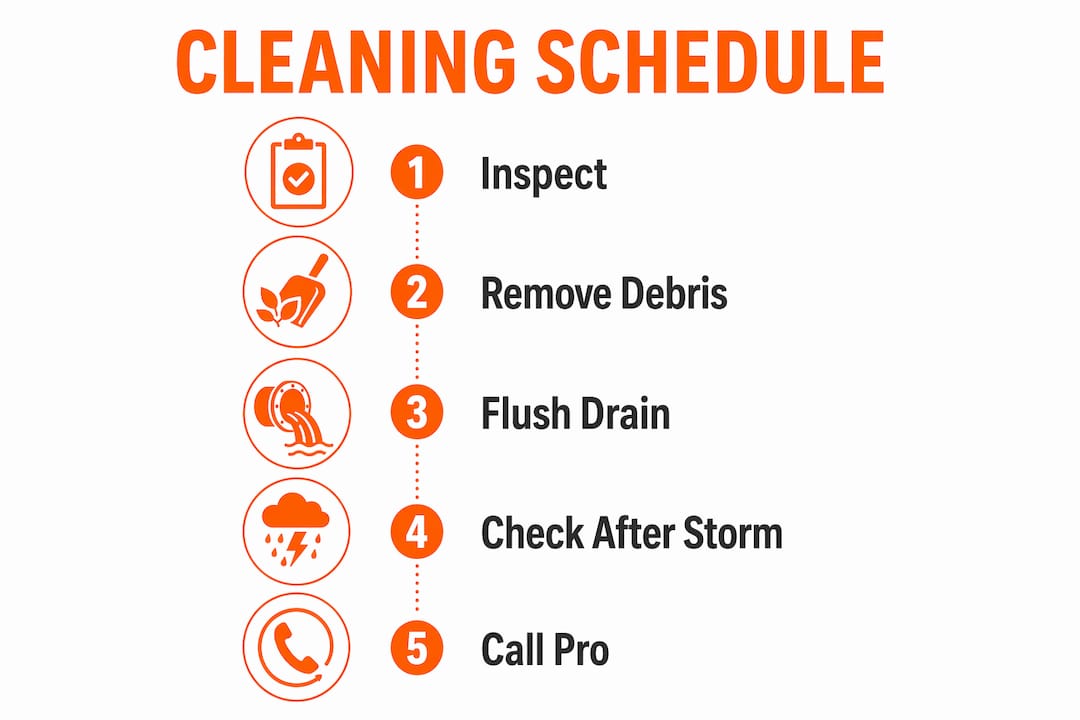
A practical baseline schedule pairs annual cleaning with visual checks after major storms or when buildup becomes visible. Adapting your schedule to local risk factors, including leaf drop seasons and heavy rainfall periods, keeps you ahead of blockages rather than responding to them.
The legal stakes are real. Sediment buildup exceeding 50% of sump capacity requires immediate cleaning to prevent overflow. Non-compliance with local stormwater ordinances can result in fines ranging from $10,000 to $75,000. That range reflects municipal enforcement, not rare edge cases.
Risk factors that call for more frequent cleaning include:
- Heavy tree canopy over or near the drain
- Properties in low-lying areas that collect runoff
- Drains near driveways or parking areas with oil and grit buildup
- Regions with frequent storms between september and march
- Drains that showed slow drainage or pooling during the previous season
Signs that a drain needs urgent attention include standing water that does not clear within 30 minutes after rain stops, foul odors near the grate, and visible sediment mounding up inside the opening. Waiting on any of these signals increases the risk of both property damage and regulatory penalties.
What challenges come up during cleaning, and when should you call a pro?
Some storm drain problems exceed what a garden hose and a manual snake can fix. Recognizing those limits early prevents property damage and personal injury.
Heavy grates and unstable surfaces are the most immediate physical hazards. A cast iron grate can weigh 50 pounds or more. Lifting one on a wet surface without proper footing creates a fall risk. If the drain sits near a road or driveway, traffic proximity adds another layer of danger that makes professional engagement the safer call.
Root intrusion is a problem that DIY tools cannot solve. Tree roots grow into drain pipes through small cracks and expand over time, creating blockages that a manual snake cannot clear without risking pipe damage. Similarly, heavy sediment compacted over multiple seasons often requires equipment beyond what a homeowner carries.
When to stop and call a professional: If water backs up immediately after flushing, if you smell sewage rather than earthy sediment, if the snake meets solid resistance that does not clear, or if the grate or surrounding concrete shows visible cracking, stop work and contact a licensed drainage professional.
Professional hydro jetting paired with video inspection is the preferred method for deep clogs, root intrusion, and pipe damage. The camera confirms clearance and identifies structural issues that would cause the same clog to return within weeks. DIY flushing cannot provide that confirmation. For homeowners in Alamance County, Jmseptic offers hydro jetting and sewer line cleaning that addresses exactly these deeper drainage problems.
The benefits of professional inspections go beyond clearing a single clog. A trained technician identifies whether a recurring blockage points to a structural problem in the pipe, a grading issue on the property, or a failing connection to the municipal system.
Key takeaways
Regular, scheduled storm drain cleaning prevents flooding, protects property value, and keeps homeowners compliant with local stormwater ordinances.
| Point | Details |
|---|---|
| Clean in the right order | Remove surface debris and scoop sediment before flushing to avoid compacting clogs. |
| Inspect quarterly | Sites cleaned on a quarterly schedule experience significantly fewer flooding events than reactive-only approaches. |
| Know the legal risk | Sediment over 50% of sump capacity can trigger fines from $10,000 to $75,000 under stormwater ordinances. |
| Match tools to the task | Use a manual snake for clogs up to 10 feet deep; call a pro for root intrusion or pipe damage. |
| Dispose of debris correctly | Send leaves to organic waste and trash to the garbage bin. Never dump debris back into the drain. |
What I have learned from years of watching homeowners skip this task
Most homeowners I talk to in Alamance County think storm drain maintenance is the municipality’s job. That assumption is wrong, and it costs people real money. The legal responsibility for drains on private property typically falls on the property owner, not the city crew driving by.
The second mistake I see constantly is flushing first. Someone spots a slow drain, grabs the hose, and blasts water into it. That pushes the debris deeper and turns a 20-minute hand-clearing job into a professional service call. The correct sequence, clearing before flushing, is counterintuitive but non-negotiable.
A documented checklist system changes everything for property managers handling multiple sites. A schedule plus visual checks approach adapted to local leaf drop and storm seasons keeps you proactive instead of reactive. I have seen property managers reduce flooding calls dramatically just by adding a post-storm walkthrough to their routine.
The environmental angle matters too. Property owners are the first line of defense against pollution entering local waterways through storm drains. What goes into your drain eventually reaches a creek or river. Responsible disposal is not just compliance. It is stewardship.
My honest advice: do the hand cleaning yourself twice a year, schedule a professional inspection every two to three years, and call a pro the moment you see root intrusion or structural damage. That combination keeps costs low and keeps your property dry.
— Jason
Drainage and septic services for Alamance County homeowners
Storm drain maintenance and septic system health are connected. When surface drainage fails, the excess water often stresses your septic system too, creating compounding problems that are more expensive to fix than either issue alone.

Jmseptic serves homeowners across Burlington, Mebane, Elon, Graham, Whitsett, and McLeansville with professional inspections, hydro jetting, and full septic system services. If your yard shows standing water or slow drainage, that is often the first sign of a deeper drainage or septic issue. The Jmseptic team can diagnose both. For homeowners considering a new system or dealing with an aging one, the NC septic installation guide covers everything from soil conditions to system selection. Call Jmseptic for a consultation before a manageable maintenance issue becomes an emergency repair.
FAQ
How often should you clean a storm drain?
Clean storm drains at least once or twice per year as a baseline, with additional cleaning after heavy storms or during leaf drop season. Properties in high-risk areas benefit from quarterly inspections.
What happens if you never clean your storm drain?
Sediment buildup blocks water flow and causes surface flooding. When buildup exceeds 50% of sump capacity, local stormwater ordinances may impose fines ranging from $10,000 to $75,000.
Can you flush a storm drain with a garden hose?
Yes, but only after manually removing debris and sediment first. Flushing a clogged drain before clearing it compacts the blockage and makes it harder to remove.
When should a homeowner call a professional for drain cleaning?
Call a professional when the snake meets solid resistance, water backs up immediately after flushing, or you notice sewage odors or visible pipe damage. Professional hydro jetting with video inspection is the correct tool for root intrusion and structural problems.
Are homeowners responsible for storm drains on their property?
In most jurisdictions, yes. Public maintenance crews service drains in public right-of-ways only. Drains located on private property are the homeowner’s legal responsibility to maintain.