
Best Septic System Materials for Durable Installations
Discover the best septic system materials for durable installations. Learn about concrete, polyethylene, and fiberglass to ensure a long-lasting system.

Concrete is the most durable septic tank material available, with a typical lifespan of 40–50+ years, making it the preferred choice for most residential and commercial installations. The best septic system materials fall into three categories: concrete, polyethylene (plastic), and fiberglass. Each has a distinct performance profile shaped by soil chemistry, water table depth, site access, and budget. Choosing the wrong material for your site conditions does not just cost money. It can cause system failure within a decade. This guide breaks down each option so you can make a confident, site-specific decision.
1. Best septic system materials: concrete tanks
Concrete is the gold standard for septic tank construction. Concrete tanks resist deformation under lateral earth pressure, which keeps internal components like baffles and outlet pipes aligned over decades. That structural integrity is why most local health codes default to concrete as the approved material for residential systems.
The weight of a concrete tank is both its greatest strength and its biggest installation challenge. Concrete tanks weigh 8,000–12,000 lbs, requiring crane access during installation. That weight also anchors the tank firmly in the ground, making flotation in high water tables a non-issue.
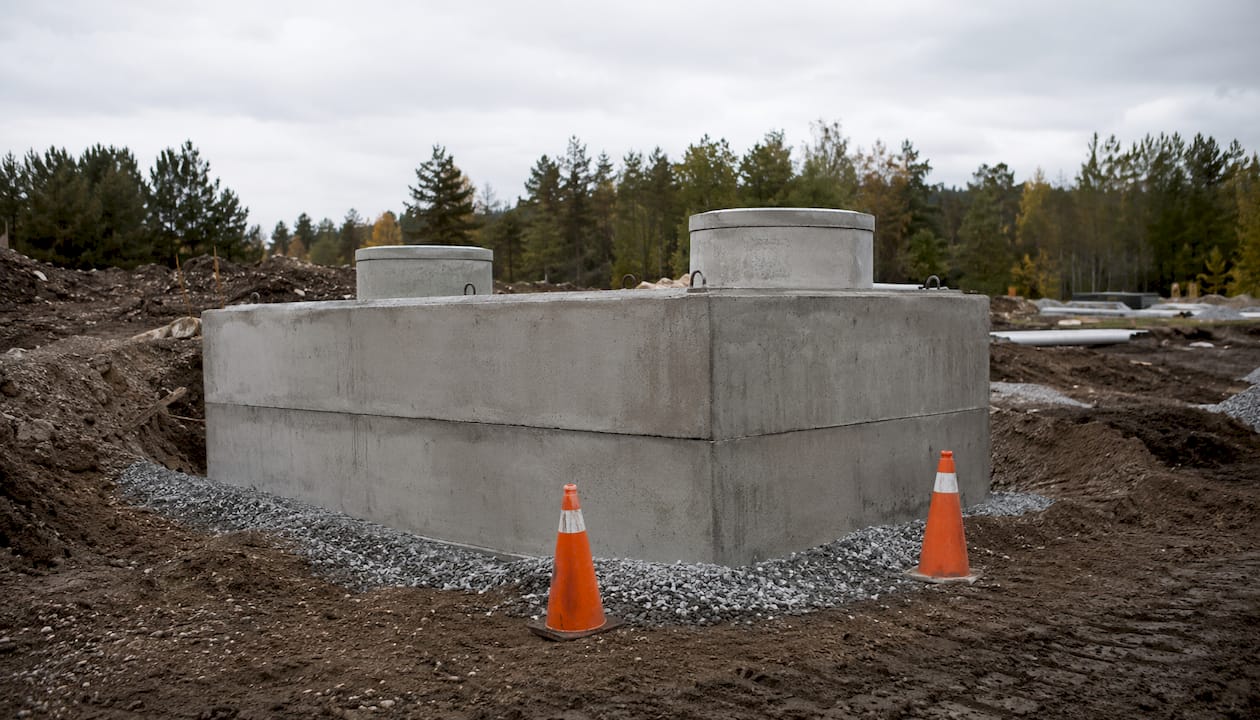
Concrete does have one real vulnerability. Hydrogen sulfide gas inside the tank converts to sulfuric acid, which slowly erodes the interior surface. Modern precast manufacturers address this with dense concrete mixes using water-to-cement ratios between 0.40 and 0.45, plus interior sealers that significantly extend service life.
Concrete tanks are the best fit when:
- Your property sits in a high water table area
- The installation site has vehicle traffic overhead
- You want a permanent system with minimal replacement risk
- Crane access is available on the property
Pro Tip: Ask your installer whether the precast tank carries a manufacturer’s warranty and whether the interior has been sealed. Sealed tanks resist acid erosion far longer than unsealed ones.
2. Plastic (polyethylene) tanks: lightweight and corrosion-proof
Plastic tanks are the easiest septic system components to install. Plastic tanks weigh just 150–300 lbs and can be delivered by pickup truck, which makes them the go-to choice for remote properties or sites where heavy equipment cannot reach. No crane required.
Polyethylene is chemically inert. Plastic and fiberglass tanks are recommended for acidic soils with a pH below 5.5, where concrete degrades faster than expected. If your soil tests acidic, a plastic tank will outlast a concrete one in that specific environment.
The critical risk with plastic is flotation. Plastic tanks can literally pop out of saturated ground when empty or freshly pumped. Anti-flotation anchoring, typically concrete deadman anchors or a poured concrete collar, is mandatory in any site with a seasonally high water table. Skipping this step is the most common and costly installation mistake with plastic tanks.
Plastic tanks work best when:
- The site has limited equipment access
- Soil pH is below 5.5
- The water table stays consistently low
- Budget is the primary constraint
Pro Tip: Always request a soil percolation test and water table depth report before committing to a plastic tank. If the water table rises within 2 feet of the tank during wet season, budget for anti-flotation anchoring from the start.
3. Fiberglass tanks: the middle-ground option
Fiberglass sits between concrete and plastic on almost every performance metric. Fiberglass tanks weigh 250–350 lbs, making them manageable without a crane but heavier than polyethylene. That extra weight reduces flotation risk compared to plastic, though it does not eliminate it entirely.
The material is corrosion-proof and rigid. Fiberglass resists soil pressure better than polyethylene, which means it holds its shape over time without the cracking risk that affects some plastic tanks under heavy backfill. The expected lifespan runs 30–40 years, shorter than concrete but acceptable for many residential applications.
Cost lands between plastic and concrete per gallon of capacity. Fiberglass is the right call when concrete installation is impractical but you need more structural reliability than plastic provides. Sites with moderate water tables and limited crane access are the classic use case.
Fiberglass tanks are a strong fit when:
- Crane access is unavailable but the site has moderate water table risk
- Soil is acidic and concrete degradation is a concern
- You want corrosion resistance with better flotation resistance than plastic
- The project timeline favors faster installation over maximum longevity
4. How soil conditions shape your material choice
Material selection should match site-specific environmental constraints rather than a universal ranking. The same tank that lasts 50 years on one property can fail in 15 on another. Soil testing before any purchase is not optional. It is the single most important step in the selection process.
Acidic soil is concrete’s enemy. When soil pH drops below 5.5, the ground itself accelerates the chemical breakdown of concrete walls. In those conditions, plastic and fiberglass are chemically inert and resist acid-related corrosion entirely. You can learn more about how soil chemistry affects your system at Jmseptic’s guide on soil conditions for septic.
High water tables flip the equation. Concrete’s weight becomes an asset when groundwater rises seasonally. Plastic tanks require engineered anchoring systems in those conditions, which adds cost and complexity. Local health codes add another layer. Many jurisdictions restrict lightweight plastic tanks in traffic-bearing zones or certain soil classifications. Always check with your county health department before finalizing a material choice.
| Site condition | Recommended material | Reason |
|---|---|---|
| Acidic soil (pH below 5.5) | Plastic or fiberglass | Concrete degrades faster in acid |
| High water table | Concrete | Weight prevents flotation |
| Limited equipment access | Plastic or fiberglass | No crane needed |
| Vehicle traffic overhead | Concrete | Superior load-bearing strength |
| Moderate water table, acidic soil | Fiberglass | Balances corrosion resistance and weight |
5. Budget and long-term value across materials
Concrete costs more upfront. Installation requires crane rental, specialized labor, and heavier site preparation. But the math changes over time. A concrete tank that lasts 50 years costs far less per year of service than a plastic tank replaced at 20 years. For a permanent home, concrete delivers better long-term value in most cases.
Plastic is the lowest entry cost. The tank itself is cheaper, and installation labor is simpler. The hidden cost appears when anti-flotation anchoring is required or when an early replacement becomes necessary. Septic tank pumping every 3–5 years costs $400–$750 per service regardless of material. That maintenance schedule does not change based on what the tank is made of.
Fiberglass sits in the middle on both purchase price and installation cost. It avoids the crane expense of concrete while offering better durability than plastic. For property developers building spec homes or vacation properties with uncertain long-term use, fiberglass often hits the right balance. You can review a full breakdown of septic installation costs for North Carolina properties to plan your budget accurately.
Staying current on septic overflow prevention also protects your investment regardless of which material you choose. Neglected tanks fail faster, no matter how durable the material.
6. Installation quality matters more than material alone
The tank material gets most of the attention, but installation quality often affects system longevity more than the tank itself. A misleveled distribution box (D-box) causes uneven effluent flow across the drainfield. That imbalance overloads one section while starving another, leading to drainfield failure years before the tank itself shows any wear.
Proper backfill technique matters just as much. Compacting fill too aggressively around a plastic tank can deform the walls. Leaving fill too loose around any tank allows settling that stresses inlet and outlet pipes. A quality installer follows manufacturer specifications for compaction density and bedding material, not just local code minimums.
The drainfield is the most expensive component to replace in any septic system. Protecting it starts with correct installation of every upstream component, including the tank, the D-box, and the distribution lines. Jmseptic’s septic installation guide for NC homeowners covers these steps in detail for Alamance County properties.
Key Takeaways
Concrete is the most durable septic tank material for most residential sites, but soil pH, water table depth, and site access determine which material delivers the best long-term value for your specific property.
| Point | Details |
|---|---|
| Concrete lasts longest | Concrete tanks last 40–50+ years and resist flotation in high water tables. |
| Plastic suits acidic, accessible sites | Polyethylene resists acid corrosion but requires anti-flotation anchoring in wet conditions. |
| Fiberglass balances both | Fiberglass offers corrosion resistance and better flotation resistance than plastic at moderate cost. |
| Soil testing is non-negotiable | Test soil pH and water table depth before selecting any tank material. |
| Installation quality drives longevity | Proper D-box leveling and backfill technique protect the drainfield regardless of tank material. |
What I’ve learned after years of septic installations
After working on septic systems across Alamance County and the Piedmont Triad, the question I hear most is: “Which tank is best?” My honest answer is that the tank material is rarely the deciding factor in whether a system succeeds or fails.
I have seen concrete tanks crack because an installer used the wrong backfill. I have seen plastic tanks outlast their expected lifespan because the site conditions were perfect and the installation was meticulous. The material sets the ceiling for performance. The installation determines whether you reach it.
That said, I do recommend concrete for most permanent residential installations in this region. North Carolina’s clay-heavy soils and variable water tables favor the weight and structural strength of concrete. Plastic and fiberglass are legitimate choices for remote lots or acidic soil sites, but they require more careful site evaluation and anchoring work.
The one thing I tell every homeowner: get a soil test and a water table reading before you commit to anything. That data costs very little and eliminates most of the guesswork. Pair that with a licensed installer who pulls the right permits and follows local health department specs, and your system will perform well regardless of which material ends up in the ground.
— Jason
Jmseptic’s approach to septic system installation
Choosing the right tank material is only the first step. Getting it installed correctly, with the right components and proper site preparation, is what determines how long your system actually lasts.

Jmseptic serves homeowners and property developers across Burlington, Mebane, Elon, Graham, and the surrounding Alamance County area. Every installation starts with a site evaluation that accounts for soil conditions, water table depth, and local code requirements. If you are planning a new build or replacing an aging system, the 2026 new construction septic guide covers what to expect from start to finish. Call Jmseptic to schedule a consultation and get a material recommendation grounded in your actual site data.
FAQ
What is the most durable septic tank material?
Concrete is the most durable septic tank material, with a typical lifespan of 40–50+ years. Its weight and structural strength make it the best choice for most permanent residential installations.
Can plastic septic tanks float out of the ground?
Yes. Plastic tanks can float out of saturated ground when empty or recently pumped. Anti-flotation anchoring is required on any site with a high or seasonally elevated water table.
How often does a septic tank need to be pumped?
Septic tanks require pumping every 3–5 years regardless of material. Typical pumping costs range from $400 to $750 depending on tank size and site accessibility.
Is fiberglass better than plastic for a septic tank?
Fiberglass offers better flotation resistance and rigidity than plastic, making it a stronger choice for sites with moderate water table risk. Both materials resist acid corrosion equally well.
Does soil pH affect which septic tank material I should choose?
Yes. Soils with a pH below 5.5 accelerate concrete degradation. Plastic and fiberglass are chemically inert and the correct choice for acidic soil conditions.