
Anaerobic Septic System: What Homeowners Must Know
Discover the benefits of an anaerobic septic system. Learn installation tips, maintenance, and how to avoid costly surprises for your home.

If you’ve heard that anaerobic septic systems are outdated or unreliable, that’s worth pushing back on. An anaerobic septic system is actually the most common residential waste treatment setup in the country, and in the right conditions, it works exceptionally well. Understanding how it functions, what it takes to install one correctly, and what maintenance actually looks like will save you from expensive surprises down the road. This article covers all three areas in plain language so you can make smart decisions about your property.
Table of Contents
- Key takeaways
- How an anaerobic septic system works
- Installation requirements you need to understand
- Maintenance best practices that actually work
- Anaerobic vs aerobic septic systems
- What I’ve learned from years in the field
- Keep your system running with the right support
- FAQ
Key takeaways
| Point | Details |
|---|---|
| Bacteria do the heavy lifting | Anaerobic bacteria in septic tanks break down solids naturally, requiring no electricity or added oxygen. |
| Pumping prevents drainfield damage | Skipping routine pump-outs is the leading cause of costly drainfield failure. |
| Soil quality determines suitability | Anaerobic systems depend on good soil drainage to filter effluent effectively. |
| Aerobic systems cost more to run | Aerobic systems offer higher effluent quality but require electricity and more frequent servicing. |
| Annual inspections catch problems early | Checking sludge levels each year helps you time pump-outs accurately and avoid system overload. |
How an anaerobic septic system works
Most homeowners know they have a septic tank buried in the yard. Fewer understand what actually happens inside it. An anaerobic septic system processes waste without oxygen, relying entirely on naturally occurring anaerobic bacteria in the tank to digest organic solids. No pumps, no electricity, no air injection. The bacteria already present in your waste do the work.
Once wastewater enters the tank, it separates into three distinct layers:
- Sludge settles on the bottom. This is the solid material that anaerobic bacteria slowly digest over time.
- Scum floats on top. Grease, oils, and light solids accumulate here.
- Effluent is the clarified liquid layer in the middle. This is what eventually exits the tank.
The outlet baffle in the tank is positioned to release clarified effluent into the drainfield, while holding back the sludge and scum layers. This hydraulic sorting is what keeps your drainfield pipes from clogging with raw solids.
Here is where many homeowners misunderstand the system. Anaerobic bacteria reduce the volume of solids, but they do not eliminate sludge completely. Over time, sludge builds up. When it gets too close to the outlet baffle, it begins migrating toward the drainfield, and that is when serious damage starts. Neglecting routine pumping is the single most common cause of drainfield failure, which costs between $3,000 and $15,000 or more to repair.
Compare this to an aerobic septic system, which injects oxygen into the tank to speed up bacterial breakdown. Aerobic systems process waste faster and produce cleaner effluent, but they require electricity, mechanical components, and more frequent maintenance. An anaerobic system has none of those moving parts, which is both its strength and the reason routine pumping cannot be skipped.
Installation requirements you need to understand
Installing an anaerobic septic system is not a weekend project. It involves site evaluation, permitting, and professional design work. Here is how the process typically unfolds:
-
Soil and site evaluation. A licensed soil scientist or engineer evaluates your property’s soil type, absorption rate, and water table depth. Anaerobic systems depend heavily on soil to filter effluent after it leaves the tank, so properties with clay-heavy or saturated soil may not qualify. Effluent quality in anaerobic systems depends far more on soil filtration than on anything happening inside the tank itself.
-
System design. Based on the site evaluation, a professional sizes the tank and designs the drainfield layout. A typical household of four needs at minimum a 1,000-gallon tank, though larger households or properties with higher water use require bigger tanks.
-
Permitting. Your local health department issues a permit before any ground is broken. In North Carolina, this process involves a site visit, soil evaluation, and approval of the system design. Skipping this step is not an option legally, and a system installed without permits creates serious problems at resale. You can learn more about navigating NC permitting before you start.
-
Professional installation. Licensed contractors handle excavation, tank placement, and drainfield construction. The work must meet state and county specifications. An improperly installed system can fail within years.
-
Final inspection. A health department inspector reviews the completed installation before the system is put into service.
Compared to aerobic systems, the installation process for an anaerobic septic system is simpler and less expensive upfront. Aerobic systems require additional components like air pumps, chlorination equipment, and control panels, which add cost and complexity. But that upfront simplicity makes ongoing maintenance even more critical since the system has no mechanical backup to compensate for neglect.
Maintenance best practices that actually work
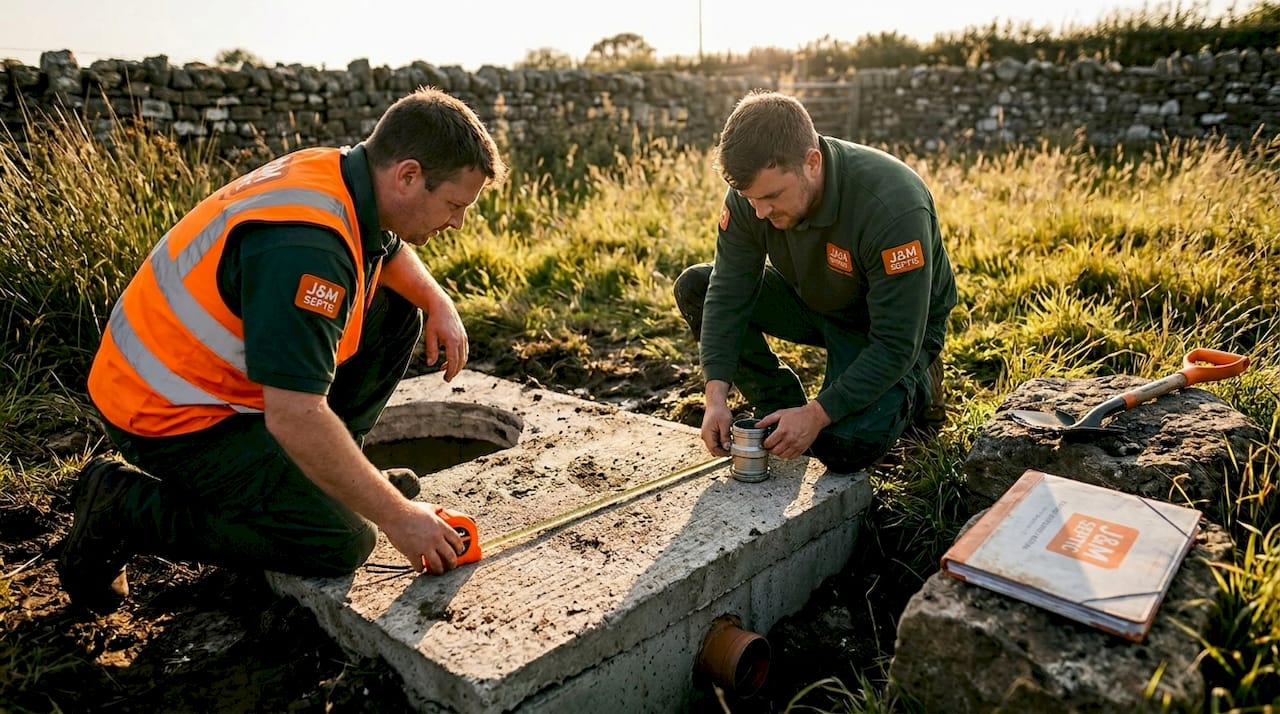
This is where most homeowners fall short, not because they are careless, but because no one explains what maintenance actually involves or why it matters so much.
Annual inspections are the foundation of good anaerobic septic system maintenance. A professional checks sludge and scum levels inside the tank, inspects the inlet and outlet baffles, and looks for any signs of structural damage. Sludge levels and structural integrity should both be evaluated at least once a year to avoid premature system failure.
Pump-out frequency depends on two factors: tank size and household size. A 1,000-gallon tank serving a family of four typically needs pumping every three years. A smaller tank or a larger household shortens that window. A larger tank with only two occupants might go five years. The only accurate way to know is to measure sludge levels during an inspection and adjust your schedule accordingly.
Pro Tip: Ask your septic technician to record the sludge depth at every inspection. Tracking that number over time is the most reliable way to predict when your next pump-out is due.
Here is what homeowners commonly get wrong:
- Flushing the wrong things. Wipes labeled “flushable,” feminine hygiene products, paper towels, and medications do not break down in an anaerobic tank. They accelerate sludge buildup and can clog the outlet baffle.
- Pouring grease down the drain. Grease thickens the scum layer and reduces the tank’s effective capacity faster than almost anything else.
- Using commercial septic additives. Septic additives are ineffective and can actually suspend solids that then travel to the drainfield. The bacteria already in your tank handle the job without any help.
- Excessive water use in short periods. Doing eight loads of laundry in a single day floods the tank with water, pushing partially treated effluent into the drainfield before solids have time to settle. Spread laundry across multiple days.
Watch for these warning signs that your system needs attention: slow drains throughout the house, gurgling pipes, sewage odors inside or outside, wet or spongy ground near the drainfield, or sewage backing up into fixtures. Any of these signals warrant a call to a professional immediately. Learning to recognize common septic system problems early can mean the difference between a simple pump-out and a full drainfield replacement.
Controlling water use and solids input extends system life more effectively than any additive or product on the market. That is the core insight most guides gloss over.
Anaerobic vs aerobic septic systems
Choosing between an anaerobic and aerobic septic system comes down to your site conditions, budget, and how much ongoing maintenance you are prepared to handle.
| Factor | Anaerobic system | Aerobic system |
|---|---|---|
| Upfront cost | Lower | Higher |
| Monthly operating cost | None | Electricity and service contracts |
| Effluent quality | Moderate (soil-dependent) | High |
| Maintenance complexity | Low to moderate | High |
| Power requirement | None | Yes |
| Best suited for | Good draining soil | Poor soil or sensitive areas |
| Mechanical components | None | Air pumps, controls, chlorination |
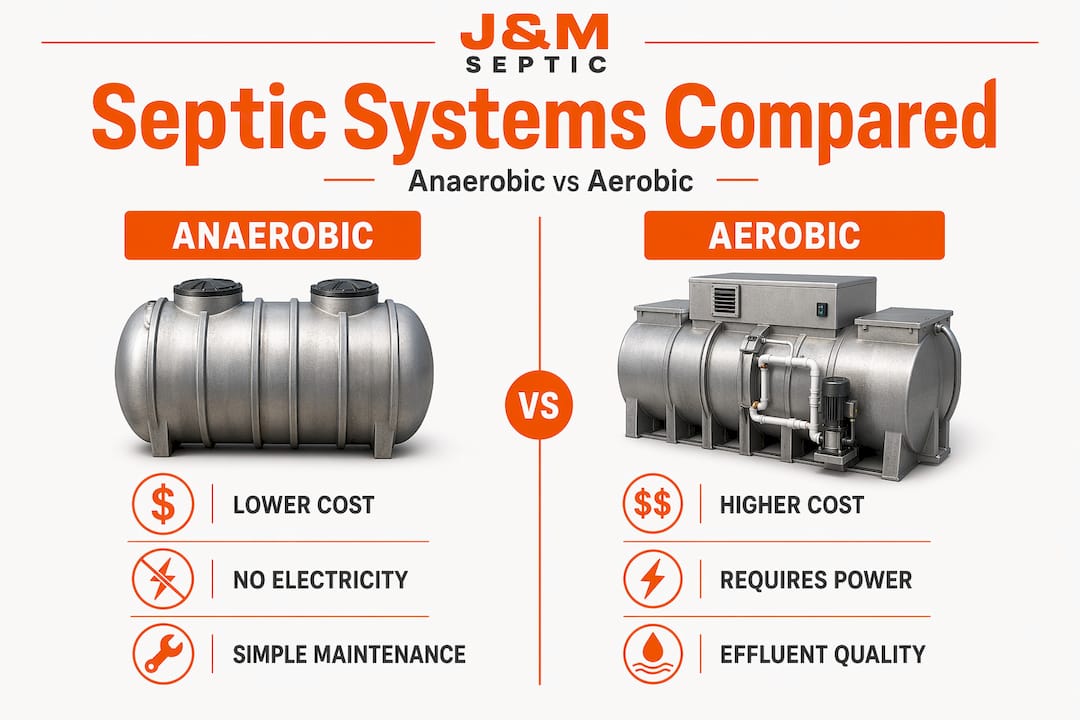
Aerobic systems produce higher quality effluent and are a legitimate choice when soil conditions are poor or when a property is near a water body with strict discharge requirements. But they cost significantly more to operate, require regular service contracts, and can fail if a mechanical component breaks down.
Anaerobic systems win on simplicity, cost, and reliability when soil conditions are suitable. For most rural and suburban properties in North Carolina with good sandy loam or well-draining soil, an anaerobic septic system is the practical, proven choice. The tradeoff is that the system’s performance depends entirely on how consistently you maintain it.
What I’ve learned from years in the field
I’ve seen the full range of how this plays out. Homeowners who schedule annual inspections and pump on time rarely face major problems. Their systems run quietly for decades. The homeowners who end up calling us for emergency repairs almost always have one thing in common: they assumed the system was fine because nothing had gone wrong yet.
The biggest misconception I encounter is that bacteria will handle everything if you just leave the system alone. They won’t. Solids migration caused by pump neglect is what accelerates drainfield failure, and that process is invisible until the damage is already done.
I also see homeowners underestimate how much soil matters. Two properties side by side can have completely different system lifespans because of what is underground. If your soil evaluation comes back marginal, take that seriously. Pushing forward with an undersized or poorly sited anaerobic system to save money almost always costs more in the long run.
My honest advice: treat your septic system like you treat your HVAC. You would not skip annual service on a furnace and wait until it fails in January to call someone. The same logic applies here. Professional support is not a luxury. It is what keeps a simple system working simply.
— Jason
Keep your system running with the right support
Your anaerobic septic system is one of the most important and most overlooked systems on your property. Jmseptic helps homeowners across Alamance County and the Piedmont Triad area stay ahead of problems with professional installation, inspection, and maintenance services.

Whether you need a new system installed on a new build or want expert guidance on preventing drainfield failure before it becomes an emergency, the Jmseptic team brings honest work and practical experience to every job. Serving Burlington, Mebane, Graham, Elon, and surrounding areas. Call today to schedule an inspection or get answers to your septic questions.
FAQ
What is an anaerobic septic system?
An anaerobic septic system uses naturally occurring bacteria inside a sealed tank to break down waste solids without oxygen. Clarified effluent exits to a drainfield where soil provides final filtration.
How often does an anaerobic septic tank need to be pumped?
A 1,000-gallon tank serving four people typically needs pumping every three years, though annual sludge measurements help you dial in the exact timing for your household.
What is the difference between aerobic and anaerobic septic systems?
Anaerobic systems require no electricity and have no moving parts, making them simpler and cheaper to operate. Aerobic systems use injected air to process waste faster and produce cleaner effluent, but require power, mechanical components, and more frequent servicing.
Can I use septic additives to improve my anaerobic system?
No. Commercial additives are ineffective and can harm system performance by suspending solids that then travel to the drainfield. The bacteria already in your tank handle breakdown naturally.
What are the warning signs of anaerobic septic system failure?
Watch for slow drains throughout the house, sewage odors indoors or near the drainfield, gurgling pipes, standing water or spongy ground above the drainfield, and sewage backing up into fixtures. Any of these signs mean you should call a professional right away.