
Avoid the $95 Revisit Fee: Alamance County Septic Permits Checklist
Download Alamance County's official septic PDFs and fee schedule, follow a step by step checklist, and avoid the $95 site revisit fee.

Alamance County Environmental Health issues every septic permit in the county, and the fastest path forward is downloading the official application PDF from their site or calling their Burlington office directly. Most homeowners can request forms by phone or email the same day. If your lot has tricky soil, a small footprint, or you’re relocating a drainfield, loop in a septic contractor before you submit anything.
TL;DR:
- Most permits require prior phone or email confirmation of the project type to avoid delays caused by application errors or incorrect permit selection.
- A site plan must include property dimensions, structure setbacks, neighboring wells within 100 feet, easements, wetlands, and utilities to pass inspection on the first visit.
- Non-expiring permits tied to a recorded plat are valid indefinitely, while 5-year improvement permits expire if construction does not start within the validity period.
- Fixing common issues like missing neighboring well locations or uncleared lots before submitting can prevent costly revisits and delays in approval.
- Hiring a licensed septic contractor for complex lots or engineered systems reduces the risk of mistakes, revisits, and overall project timeline length.
Table of Contents
- Where to Download Forms and Contact Environmental Health
- Which Septic Permits Does the County Issue?
- How to Apply for a Septic Permit Step by Step
- What the Site Plan Must Show Before Inspection
- Septic Permit Fees, Validity, and Timelines
- Common Reasons Septic Applications Get Delayed
- How to Verify or Get a Copy of an Existing Septic Permit
- When It Pays to Hire a Septic Contractor for Permitting
- Let J&M Septic Handle Your Permit and Installation
- Official Forms and Regulations
- Sources
Where to Download Forms and Contact Environmental Health
Every alamance county septic permit starts with the same document: the county’s Application for Services PDF, officially labeled Septic-app-2024-v1.pdf on the Environmental Health website. It covers Improvement Permits, Construction Authorizations, Repair Permits, and Existing System Inspections are included in the application packet, along with a sample site plan you can use as a template.
Here’s how to reach the office directly:
- Office location: Alamance County Environmental Health, Burlington, North Carolina
- Phone: (336) 570-6367
- Email: EH.admin@alamancecountync.gov
- Hours: Monday through Friday, 8:00 AM to 5:00 PM
You can submit applications by mail, email, or in person, and the office accepts check or card payment. Call ahead if you’re dropping off in person. Staff there can also confirm which fee schedule applies to your project before you pay anything.
Which Septic Permits Does the County Issue?
Alamance County issues five distinct permit types, and picking the wrong one is a common reason applications stall. Each corresponds to a different life stage of a septic system.
- Improvement Permit: Confirms your lot can support a septic system. Comes in two flavors: a 5-year version tied to a basic site plan, or a non-expiring version that requires a recorded plat. You need this for new construction, an addition that adds bedrooms, a change of use, or relocating the system entirely.
- Construction Authorization: Follows an approved Improvement Permit and authorizes actual installation. This is the document your installer works from.
- Repair Permit: Covers fixing a failing or damaged system, separate from new installations.
- Existing System Inspection: Common for home sales, additions, or verifying bedroom counts against county records.
- Well permits: Handled through a separate application track, though many properties need both a well and septic permit at the same time.
North Carolina’s statutory framework under G.S. 130A-335 requires the county’s authorized agent to confirm site suitability before issuing either an Improvement Permit or Construction Authorization.
How to Apply for a Septic Permit Step by Step
Before you fill out a single page, call or email Environmental Health and confirm exactly which permit applies to your project. This one call saves more time than anything else in the process, according to the county’s own application guidance.
- Identify your permit type with county staff over the phone or by email.
- Complete the matching pages of the application PDF. Improvement Permits and Existing System Inspections use different page sets, so match yours carefully.
- Draft your site plan. A 5-year Improvement Permit accepts a basic sketch matching the sample in the application. A non-expiring permit requires a recorded plat from the Register of Deeds or a survey from a Registered Land Surveyor.
- Submit your package by mail, email, or in person, along with payment.
- Schedule your site visit. Staff will contact you to set a date once your application is processed.
- Complete the site evaluation, then wait for county review and final sign off.
Pro Tip: Ask the county whether your project needs a recorded plat before you hire a surveyor. Non-expiring permits require one, but a standard 5-year permit usually doesn’t, and skipping an unnecessary survey can save you real money.
Revisions cost money. If your site plan is missing a required detail, expect a revision fee before staff will reschedule anything.
What the Site Plan Must Show Before Inspection
The site plan is where most applications go sideways. The county’s sample plan spells out exactly what needs to appear on the page: property dimensions, the location of all structures with setbacks marked, the proposed wastewater system site, any neighboring wells or septic systems within 100 feet, easements, wetlands, driveways, and underground utilities.
A 5-year Improvement Permit only needs a plan matching this sample. A non-expiring permit needs a recorded plat or a licensed surveyor’s drawing, which adds time and cost to your timeline, so build that into your schedule early.
Before the inspector shows up, clear brush from the proposed system area, mark your property corners, and make sure there’s vehicle access to the site. An uncleared lot or unmarked boundary is one of the most common reasons for a repeat visit.
- Property dimensions and structure setbacks
- Neighboring wells and septic systems within 100 feet
- Easements, wetlands, and underground utilities noted
Pro Tip: Take photos of your cleared site and staked corners before the inspection. If a dispute comes up later about what was or wasn’t accessible, that documentation protects you.
Soil conditions on your specific lot also shape what kind of system gets approved, which is worth understanding before you finalize a design. Our guide on soil evaluation for septic systems breaks down what inspectors look for.
Septic Permit Fees, Validity, and Timelines
The Environmental Health fee schedule lists specific charges rather than vague ranges, which makes budgeting easier.
All payments are non-refundable once submitted, so confirming your permit type and site plan details before you pay matters more than it might seem. A 5-year Improvement Permit expires if construction does not commence within the permit’s validity period, requiring a new application. A non-expiring permit, once tied to a recorded plat, stays valid indefinitely. Inspection sequencing typically runs site evaluation, then construction inspection during installation, then final approval once the system passes.
Common Reasons Septic Applications Get Delayed
Most delays trace back to a handful of repeat offenders. Fixing these before submission is faster than fixing them after a rejection letter.
- Site plans missing neighboring well or septic locations within 100 feet
- Uncleared lots or unstaked corners, which trigger the $95 site revisit fee
- Bedroom counts on the application that don’t match existing county permit records, a frequent snag during home sales
- Missing signatures, wrong permit forms, or absent supporting documents
Pro Tip: If you’re selling a home and the bedroom count on your listing doesn’t match what the county has on file for the septic system, call Environmental Health before you list. Reconciling that mismatch after an offer is already in hand slows everything down.
A quick call to county staff before you submit resolves the vast majority of these issues in minutes rather than weeks.
How to Verify or Get a Copy of an Existing Septic Permit
Real estate transactions almost always require a verified permit, and MLS listings specifically check that the permitted bedroom count matches what’s advertised, per guidance on NC septic permit verification. To request a copy, email or call Environmental Health with the property address, parcel ID, and current owner name.
- Include property address, parcel ID, and owner name in your request
- If no permit record exists, ask for a written county statement confirming that
- Records requests typically process within a few business days, sometimes with a small copy fee
If you’re mid sale and need this sorted quickly, our septic inspection guide for home sales walks through what buyers and sellers should expect.
When It Pays to Hire a Septic Contractor for Permitting
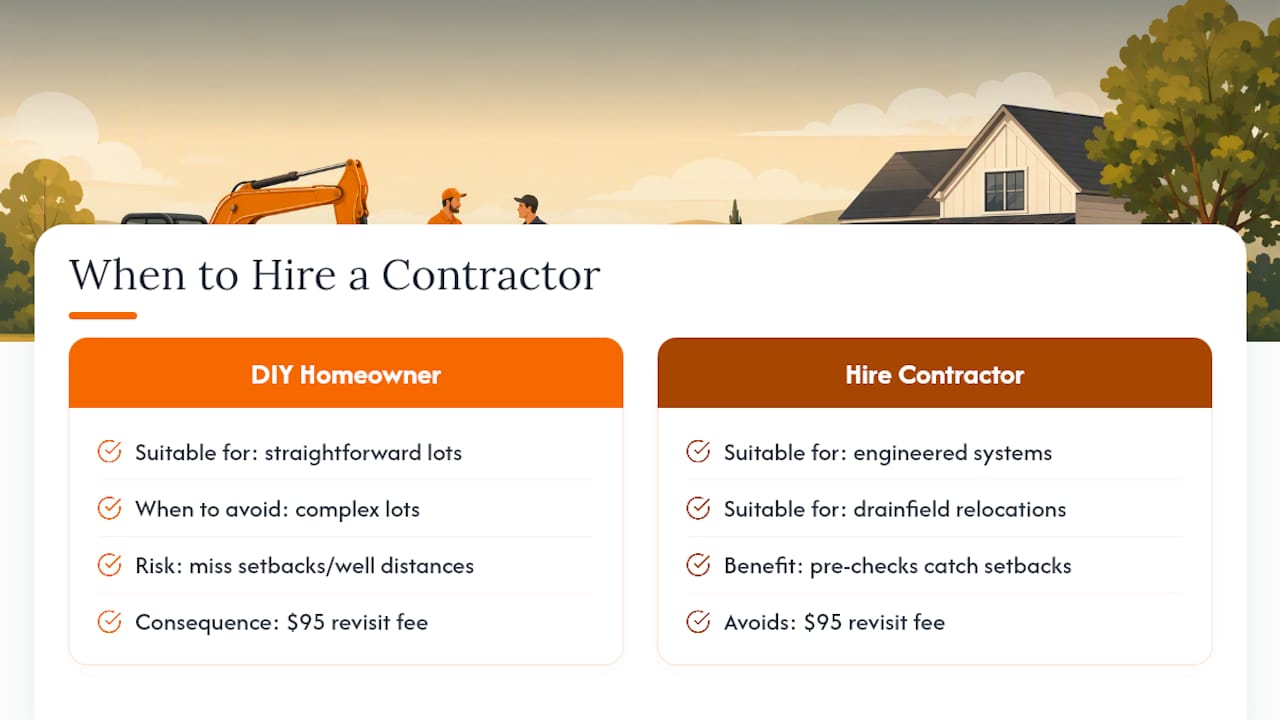
Homeowners with straightforward lots can often handle Alamance County septic permits themselves. Complex properties, engineered systems, or drainfield relocations are a different story. A contractor who’s pre-checked hundreds of site plans catches missing setbacks or well distances before the county does, which avoids a $95 revisit fee and weeks of delay.
Before hiring anyone, ask for their contractor license number, insurance certificate, and two or three recent permits they’ve pulled in Alamance County specifically. That last question tells you more than any sales pitch will.
— Jason
Let J&M Septic Handle Your Permit and Installation
J&M Septic is the local alternative to navigating Alamance County’s permit process alone. We handle site evaluations, coordinate engineered options for tricky lots, assist with permit applications, and manage installation and inspection scheduling, so your project moves from application to approval without a revisit fee eating your timeline.

Because we work with Alamance County Environmental Health regularly, we know what their site plan reviewers flag most often, and we build applications that avoid those flags the first time. If your project involves new construction or a system that needs an engineered design, our septic systems for new construction guide covers what to expect. Homeowners tackling a related permit, like a pool or accessory structure, may also find this pool permit design overview useful for understanding how permitting overlaps on a single lot.
Ready to move forward? Call us to book an on-site evaluation, and we’ll help you figure out exactly which permit your property needs before you spend a dollar with the county.
Official Forms and Regulations
- Septic application PDF and sample site plan
- Environmental Health fee schedule
- Alamance County septic system rules
- NC statutory permit guidance (G.S. references)
Sources
- ALAMANCE COUNTY ENVIRONMENTAL HEALTH APPLICATION FOR SERVICES (Septic-app-2024-v1.pdf)
- Alamance County Environmental Health Fee Schedule 2025/2026
- Septic System Rules – Alamance County Environmental Health
- North Carolina Department of Health and Human Services permit guidance (G.S. references)