
Aerobic vs Anaerobic Septic: Which One Fits Your Yard?
Discover whether an aerobic or anaerobic septic system suits your yard best. Learn about costs, maintenance, and soil requirements.

If your lot has decent soil and enough room for a standard drainfield, a conventional anaerobic septic system is the better default. It costs less to install, needs almost no electricity, and requires minimal upkeep beyond routine pumping. If your lot is small, sits near a lake or stream, has a high water table, or fails a percolation test, an aerobic treatment unit (ATU) is usually the right call, even though it costs more to run.
- Standard lot, good soil, budget matters: anaerobic system
- Small lot, waterfront, high water table, or failed perc test: aerobic system (ATU)
- Strict upfront budget with no site constraints: anaerobic system, but confirm your soil qualifies first
The rest of this guide walks through why, with real cost ranges, maintenance demands, and the questions your contractor should be answering before you sign anything.
Key Takeaways
Choosing between an aerobic and anaerobic septic system comes down almost entirely to your soil, lot size, and proximity to water, not personal preference.
| Point | Details |
|---|---|
| Default to anaerobic on good soil | Conventional systems cost less to install and run, and suit standard lots with adequate soil and space. |
| Aerobic wins on tough sites | Small lots, high water tables, and waterfront property often require or favor an ATU despite higher cost. |
| Budget for the full 20 years | Aerobic systems add electricity, service contracts, and mechanical part replacement every 5 to 10 years. |
| Watch for warning signs | Odors, alarms, gurgling pipes, or wet spots over the drainfield mean it’s time to call a professional. |
| Get a soil test before deciding | J&M Septic evaluates site conditions first and matches the system design to what your property actually supports. |
Table of Contents
- What Is an Anaerobic Septic System?
- What Is an Aerobic Septic System (ATU)?
- Aerobic vs Anaerobic Septic: How Do They Compare?
- What Do Aerobic and Anaerobic Systems Cost Over Time?
- What Maintenance Does Each System Need?
- How Do You Know Which System You’re Allowed to Install?
- How Do I Tell Which System I Already Have?
- What Should a Septic Quote Actually Include?
- Ready to Find Out Which System Fits Your Property?
- Frequently Asked Questions
- Sources
What Is an Anaerobic Septic System?
An anaerobic septic system, sometimes called a conventional system, is the gravity-fed setup most people picture when they hear the word “septic.” Wastewater flows into a buried tank, sits there while solids settle out, and the partially treated liquid moves out to a drainfield where the soil finishes the job.
- Septic tank — holds solids and lets liquids separate by gravity
- Baffles — keep scum and sludge from escaping into the outlet pipe
- Distribution box — spreads effluent evenly across the drainfield
- Leach field (drainfield) — trenches of soil and gravel where final treatment happens
Anaerobic bacteria, the kind that live without oxygen, do the heavy lifting inside the tank, breaking down organic solids slowly over time. That’s the entire mechanism, no moving parts, no electricity, no compressor humming away in your side yard.
Pros: lower installation cost, no power bill impact, simple design with few things to break. Cons: it depends entirely on your soil quality, needs a larger footprint, and can’t legally go on marginal or waterlogged sites. Our anaerobic septic system guide covers pumping schedules and homeowner responsibilities in more depth.
What Is an Aerobic Septic System (ATU)?
An Aerobic Treatment Unit pumps oxygen into the wastewater to feed aerobic bacteria, which digest waste faster and more thoroughly than the anaerobic bacteria in a conventional tank. Think of it as a miniature version of a municipal treatment plant sitting in your backyard.
- Pretreatment/settling chamber — separates solids before aeration
- Aeration chamber and compressor — injects oxygen to accelerate bacterial breakdown
- Pump and disinfection unit — treats and often chlorinates or UV-treats the effluent
- Dispersal system — spray heads or drip lines distribute the cleaner effluent
The EPA notes that ATUs deliver treatment comparable to a small municipal plant, which is why they’re used on lots that a conventional system simply can’t handle. That performance comes at a cost: the compressor runs on electricity around the clock, and most jurisdictions require a maintenance contract.
Pros: dramatically cleaner effluent, smaller dispersal footprint, works on soil that would fail a conventional system. Cons: higher upfront and recurring cost, dependent on grid power (a lengthy outage can knock treatment offline), and mechanical parts wear out. Cold climates can also slow bacterial activity in an ATU more than in a buried gravity tank.
Aerobic vs Anaerobic Septic: How Do They Compare?
Once you line the two up side by side, the tradeoffs get obvious fast.
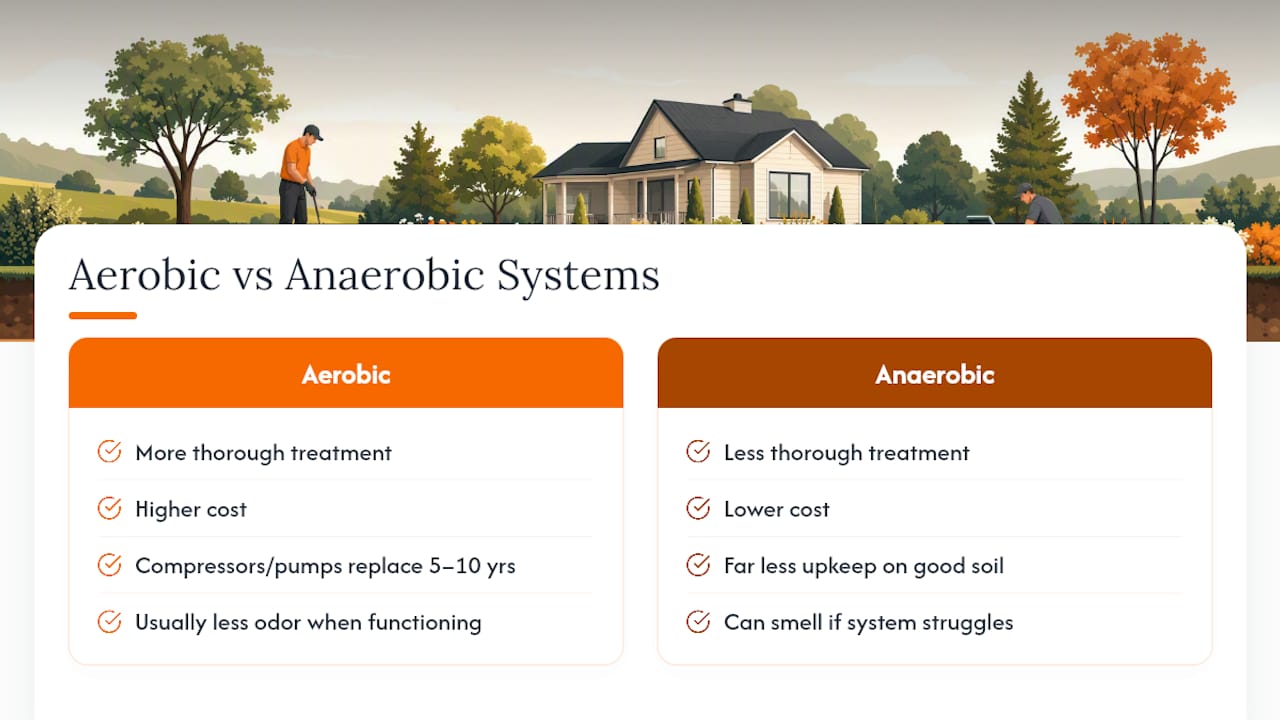
- Treatment quality: ATUs remove a much higher share of BOD and TSS, with industry estimates citing roughly 85 to 98 percent removal before the water ever reaches the soil; anaerobic systems lean on the drainfield to finish treatment.
- Installation cost: anaerobic systems are cheaper to put in the ground; aerobic systems cost roughly two to three times more upfront.
- Operating cost: anaerobic systems run on gravity alone; aerobic systems draw continuous electricity and typically require a paid service contract.
- Maintenance: anaerobic needs pumping every few years; aerobic needs quarterly or biannual professional inspections.
- Footprint: aerobic systems can use smaller spray or drip dispersal areas, while anaerobic needs a full-size leach field.
- Sensitive sites: high water tables, waterfront lots, and shallow bedrock generally favor or require an ATU.
- Lifespan: tanks on both systems can last decades; ATU mechanical components wear out much sooner.
By scenario: a waterfront cabin or small infill lot almost always points to aerobic. A half-acre lot with sandy loam and no nearby wells points to anaerobic. Shallow bedrock or a failed perc test usually forces the aerobic conversation regardless of budget preference.
What Do Aerobic and Anaerobic Systems Cost Over Time?

Expect to pay roughly $3,000 to $8,000 for a conventional anaerobic system installed, with the higher end driven by difficult soil, extra excavation, or complicated permitting. Aerobic systems typically run $10,000 to $20,000, reflecting the compressor, control panel, and disinfection hardware.
The gap doesn’t close after installation, either. ATUs add electricity costs and a mandatory service contract on top of pumping, while anaerobic systems mainly need pumping every three to five years. Mechanical parts like compressors, diffusers, and pumps on an ATU typically need replacement every five to ten years, which is a real budget line most homeowners don’t anticipate.
By the Numbers: Over a 20-year ownership window, an aerobic system’s higher install price and recurring service costs can add up to several thousand dollars more than a comparable anaerobic setup, according to Septic & Well Pro. On poor soil, though, that premium sometimes beats the cost of an engineered mound system a conventional design would otherwise require.
Before you commit to either number, check your county’s permit and inspection fees. Our North Carolina cost factors guide breaks down what tends to move the total up or down locally.
What Maintenance Does Each System Need?
- Anaerobic: pump every 3 to 5 years, visually check the drainfield for standing water, keep grease and chemicals out of the tank
- Aerobic: quarterly or biannual professional service visits, compressor and alarm checks, chlorine or UV component replacement as needed
- Warning signs on either system: slow drains, gurgling pipes, sewage odors, soggy patches over the drainfield, or an active alarm panel on an ATU
If your drains back up or you smell sewage, stop running water and call a septic contractor before the problem spreads into the house. A well-running ATU should actually smell less than a failing conventional tank; strong odor from an aerobic unit usually means the compressor has failed and the system has effectively reverted to anaerobic conditions, which needs immediate attention.
Pro Tip: If you own an ATU, ask your service provider what happens during an extended power outage. Some units have battery backup alarms; others just sit dormant until power returns, so know your system’s limits before storm season.
How Do You Know Which System You’re Allowed to Install?
Soil and site conditions decide this more than personal preference does. A percolation test measures how fast water drains through your soil, and it’s the single biggest factor your local health department uses to approve a system type.
- Contact your county health department before you assume either system is an option
- Ask specifically whether your area has mandatory ATU zones near lakes, wells, or wetlands
- Request a soil evaluation and perc test as part of any quote
- Check setback rules for distance from wells, property lines, and water bodies
Waterfront properties, lots with a high water table, and undersized lots commonly fall into mandatory ATU territory regardless of what the homeowner would prefer to spend, so it’s important to understand ways to prevent water contamination on NJ properties. If you’re building new, our septic systems for new construction guide walks through how site evaluation and permitting fit together.
How Do I Tell Which System I Already Have?
- Look for an electrical control panel, blower housing, or alarm box near the tank lids, which signals an ATU
- Visible spray heads or drip lines in the yard point to aerobic dispersal
- A service contract or quarterly maintenance invoices in your paperwork confirms an aerobic setup
- No control panel and a pumping-only service history usually means a conventional anaerobic system
Never open tank lids yourself to check; septic gases are dangerous and tanks carry real drowning risk. If you’re not sure what you have, book a licensed inspection before you assume either way.
What Should a Septic Quote Actually Include?
A complete quote covers site evaluation, a percolation test, system design, tank and component costs, pump or aerator pricing if applicable, the dispersal method, permit fees, and a written warranty. If a quote skips the soil test, buries the permit fee, or offers a suspiciously low price with vague warranty language, treat that as a red flag.
Field experience matters here. J&M Septic has spent years evaluating Piedmont Triad soil conditions and matching system type to site reality rather than defaulting to whichever system is easiest to sell.
A Contractor’s Honest Take
If you’re budgeting for a new system, get your perc test done before you fall in love with a system type on paper. Soil results decide more than preference ever will.
Ready to Find Out Which System Fits Your Property?
Whichever direction your soil and lot size point you, the first step is the same: a site evaluation. On an initial visit, J&M Septic checks your soil conditions, arranges or reviews percolation test results, and walks you through a preliminary estimate before any contract gets signed.

We serve homeowners throughout Burlington, Mebane, Elon, Graham, Whitsett, and McLeansville, and every estimate comes with a written breakdown so you know exactly what you’re paying for, including permit guidance specific to Alamance County. If you’re planning new construction or replacing a failing system, our septic system installation guide for NC homeowners is a good starting point, or just give us a call to schedule your site evaluation.
Frequently Asked Questions
Is an aerobic septic system better than an anaerobic one?
Neither is universally better. Aerobic systems treat wastewater more thoroughly and fit tighter or more sensitive lots, while anaerobic systems cost less and need far less upkeep on sites with good soil.
How long does an aerobic septic system last?
The tank and structure can last decades, but mechanical parts like compressors and pumps typically need replacement every 5 to 10 years, according to The Septic Guide.
Do aerobic systems smell worse than anaerobic ones?
Not when running correctly. A properly functioning ATU usually produces less odor than a struggling conventional tank; strong smells from an aerobic system typically signal a failed compressor.
Can I convert an anaerobic system to aerobic?
In many cases, yes, especially if your lot later needs to meet stricter environmental standards or your original system starts failing. Our eco-friendly septic solutions guide covers when an upgrade makes sense.
Does a power outage ruin an aerobic system?
A short outage generally isn’t a problem, but an extended one halts the aeration process and can force the system into anaerobic conditions temporarily. Ask your contractor about backup options during installation.
Sources
- Types of Septic Systems | US EPA
- Aerobic vs Conventional Septic: Which Is Right? (2026) | Septic & Well Pro
- Aerobic vs Anaerobic Septic Systems: Differences, Costs, and Which You Need | The Septic Guide
- Aerobic vs Conventional Septic System Comparison: Top 2026 Guide
- Aerobic vs Anaerobic Septic: 12 Pros and Cons 2026