
Advantages of regular pumping: A homeowner’s guide
Discover the advantages of regular pumping for your septic system. Protect your home and save money with a simple maintenance schedule.

Most Alamance County homeowners never think about their septic system until something goes wrong. By that point, the advantages of regular pumping have already been traded for a very expensive lesson. A neglected tank fills past capacity, solids escape into the drain field, and what could have been a $400 pump-out becomes a $10,000 repair. Understanding your pumping schedule, knowing what really affects it, and treating maintenance as predictable upkeep rather than an optional chore is the single most impactful thing you can do to protect your home and your budget.
Table of Contents
- Understanding septic pumping frequency and its benefits
- Common misconceptions about pumping and system maintenance
- Factors affecting your septic pumping schedule
- Financial advantages of regular septic pumping
- Best practices to maximize your septic system life with pumping
- Why most homeowners underestimate their septic tanks until it is too late
- Protect your Alamance County home with expert septic pumping services
- Frequently asked questions
Understanding septic pumping frequency and its benefits
The first question most homeowners ask is: how often do I actually need to pump? The answer depends on a few key factors, but the baseline is clear. Most NC households should pump their septic tank every 3 to 5 years based on tank size and occupancy. A family of four with a standard 1,000-gallon tank generally lands in that range. A retired couple in the same house might stretch to 5 or 6 years. A household of six with a smaller tank should pump closer to every 2 years.
The benefits of routine pumping go well beyond avoiding the obvious mess. When solids accumulate unchecked, they migrate into your drain field, the network of pipes and soil that filters wastewater. Once that happens, the drain field clogs and begins to fail. Regular pumping is the single most cost-effective step you can take to prevent that kind of catastrophic failure. No other maintenance action comes close.
Here is what routine pumping protects you from:
- Drain field clogging from excess solids
- Sewage backups into your home
- Standing water and foul odors in your yard
- Costly emergency calls and repairs
- System failure that triggers replacement
Scheduling pump-outs proactively also means you are never caught off guard. You pick the timing. You budget for it. You are in control. That is a very different experience from calling a technician on a Saturday because sewage is backing up into your bathtub.
Pro Tip: Mark your calendar every time you pump, and note the sludge level the technician reports. A rising level between visits tells you whether you need to pump more frequently. Most homeowners never track this, and it is one of the simplest ways to customize your schedule.
Understanding why septic pumping matters at a mechanical level also helps you make smarter decisions about water use and household habits between visits.
Common misconceptions about pumping and system maintenance
Once you know your schedule, the next trap is assuming that pumping covers everything. It does not. This is one of the most common and costly misunderstandings among homeowners in Alamance County.
A pump-out and an inspection are two separate services that serve completely different purposes. Pumping removes the accumulated solids and scum from your tank. An inspection evaluates whether your system is structurally sound, whether your baffles are intact, whether your effluent filter is functioning, and whether your drain field shows signs of stress. One cleans the tank. The other tells you if the tank and everything connected to it is actually healthy.
“Pumping is cheap insurance. The cost of skipping it is not just a larger pump-out bill next time. It is the risk of a repair or replacement that costs 10 to 30 times more.” This framing from septic professionals captures why homeowners who treat pumping as optional almost always regret it.
Here is how to think about the difference between pumping and inspection:
- Pumping is preventive. It removes waste before it causes damage.
- Inspection is diagnostic. It catches problems before they become failures.
- Both are necessary. Neither replaces the other.
Skipping inspections because you pump regularly is like changing your oil but never checking your brakes. You are handling one part of maintenance while leaving another part completely unmonitored. Read more about the importance of septic inspections to understand what those checkups actually catch.
Factors affecting your septic pumping schedule
Understanding the benefits of consistent pumping is easier when you know what actually drives your tank’s fill rate. Several variables interact to determine how quickly solids accumulate.
Pumping frequency depends on tank volume, daily wastewater flow, solids loading, and soil conditions. Household size is the most obvious factor. But the habits inside your home matter just as much as the number of people living there.
| Household size | Tank size | Recommended pumping interval |
|---|---|---|
| 1 to 2 people | 1,000 gallons | Every 5 to 6 years |
| 3 to 4 people | 1,000 gallons | Every 3 to 4 years |
| 5 to 6 people | 1,500 gallons | Every 2 to 3 years |
| Any size | Any, with garbage disposal | Reduce interval by 30 to 50% |
One factor that surprises many homeowners: garbage disposals. Daily disposal use increases the solid load in your tank by up to 50%, which means your standard pumping interval needs to shrink significantly. If you have a disposal and a family of four, you should treat your system like it belongs in the “more frequent” category, not the standard one.
Other factors to keep in mind:
- Laundry habits. Running multiple large loads in a single day sends a surge of water through the system. That hydraulic load pushes solids toward the drain field faster than a steady spread of small loads throughout the week.
- Soil conditions in Alamance County. Clay-heavy soil, which is common in much of this region, drains more slowly. That puts extra stress on your drain field and means your system has less tolerance for overloading.
- Groundwater proximity. Properties near streams or in lower-lying areas face more saturation in the drain field, especially after heavy rain.
Pro Tip: Spread laundry loads across the week rather than doing everything on one day. This one habit alone reduces hydraulic stress on your system and can meaningfully extend the time between pump-outs.
If you are already noticing sluggish drains or odors, it is worth reviewing common septic system troubleshooting steps before assuming the worst.
Financial advantages of regular septic pumping
The pumping frequency benefits become very concrete when you look at the numbers side by side. Most homeowners underestimate the financial gap between preventive care and reactive repair.
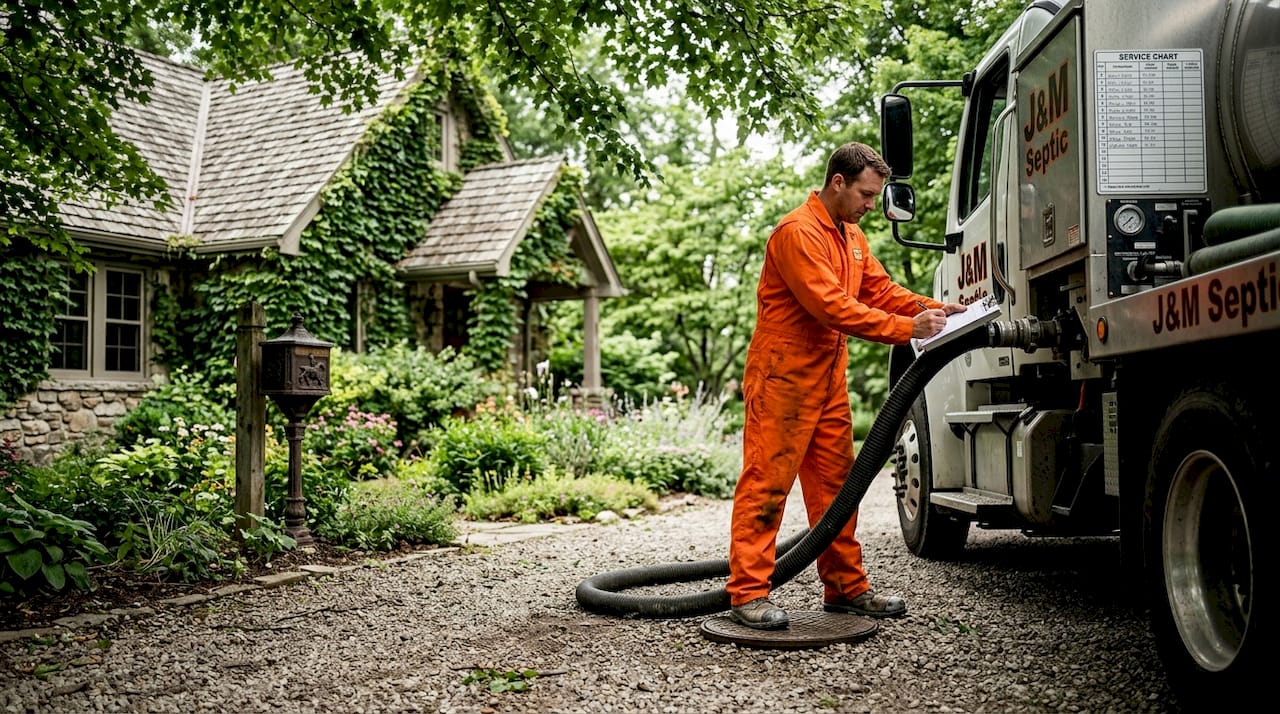
Routine pump-outs cost $300 to $500, while drainfield replacement typically runs $4,000 to $15,000 or higher. That is not a slight difference. That is a worst-case scenario that most families are not financially prepared for and that is almost entirely preventable.
| Maintenance action | Typical cost | Frequency |
|---|---|---|
| Routine pump-out | $300 to $500 | Every 3 to 5 years |
| Effluent filter cleaning | $50 to $150 | Annually |
| Minor repair (baffle, pipe) | $500 to $1,500 | As needed |
| Drain field restoration | $1,500 to $5,000 | As needed |
| Full system replacement | $8,000 to $25,000+ | Once, ideally never |
The math strongly favors pumping. Consistent maintenance can save homeowners $8,000 to $16,000 over 20 years compared to neglecting the system entirely. Spread across two decades, a regular pump-out schedule costs you roughly $75 to $125 per year. Emergency repairs and replacements cost far more than that in a single afternoon.
The real financial advantage is not just avoiding repair bills. It is also protecting your property value. A failing septic system is a disclosure issue when you sell, and it gives buyers significant leverage to reduce their offer or walk away entirely.
There is also the lifetime factor. A properly maintained system typically runs for 25 to 40 years. A neglected one often fails in 10 to 15. When you consider that system replacement can cost $15,000 or more, the financial benefits of consistent septic care are hard to argue against.
Best practices to maximize your septic system life with pumping
Pumping is the foundation, but it works best when combined with a few supporting habits. The effects of routine pumping multiply when you give the rest of the system the attention it needs.
Full septic maintenance includes pumping every 3 to 5 years, annual inspections, effluent filter cleaning, and septic-safe habits throughout the home. These are not complex tasks. They are consistent ones.
Here is the maintenance routine worth building:
- Pump every 3 to 5 years, adjusted for household size, disposal use, and tank capacity.
- Schedule an annual inspection to check baffles, filters, and drain field condition.
- Clean your effluent filter once a year. This small screen prevents solids from reaching the drain field between pump-outs and it gets clogged faster than most homeowners expect.
- Manage water use by spreading loads throughout the week and fixing leaky toilets promptly. A running toilet can waste 200 gallons per day, which is enough to stress even a healthy system.
- Hire certified local professionals who know Alamance County’s specific soil types and system codes.
Pro Tip: Never pour grease, chemical drain cleaners, or “flushable” wipes into your system. Grease coats your tank walls and disrupts bacterial breakdown. Chemical cleaners kill the bacteria your tank depends on to process waste. “Flushable” wipes do not break down and will clog your system over time.
What goes down your drains matters as much as how often you pump. Consistent care is what extends system life to 25 to 40 years and avoids the early failures that plague neglected systems. You can review the full picture at our guide on septic system inspection importance.
Why most homeowners underestimate their septic tanks until it is too late
Here is something we see constantly working in Alamance County: homeowners who have lived in a house for years and have never once pumped the tank. Not because they decided against it, but because nothing had failed yet. Out of sight, out of mind is the default setting for most people when it comes to septic systems.
The uncomfortable truth is that the system not failing is not the same as the system being healthy. Solids build up quietly. The drain field absorbs more than it should. Bacterial activity slows. And then, usually after a heavy rain or a busy holiday weekend with a full house, everything backs up at once.
Pumping is cheap insurance that protects long-term property value and eliminates unpredictable financial burdens. That framing is exactly right. You would not skip homeowner’s insurance because your house has not burned down yet. The same logic applies here.
The shift most homeowners need is treating pumping as a scheduled line item, just like HVAC service or gutter cleaning. Not something you do when you notice a problem, but something you do on a calendar. That mental shift is the most valuable thing you can take from this. Learn more about the importance of regular septic pumping and how routine care protects your home long-term.
Protect your Alamance County home with expert septic pumping services
You now have a clear picture of what regular pumping does, why it matters, and what it saves you. The next step is making sure it actually happens on schedule.

At J&M Septic Installation & Repair, we serve homeowners throughout Burlington, Mebane, Elon, Graham, Whitsett, and McLeansville with honest, experienced septic care. Our technicians know the soil conditions, system types, and local regulations specific to Alamance County, which means you get maintenance that is calibrated to your actual situation. Whether you need a routine pump-out, a full system inspection, or help with an emergency repair, we handle it with the kind of straightforward work that keeps your system running for decades. Explore what affects your system’s long-term lifespan and contact us today to schedule your next service.
Frequently asked questions
How often should I pump my septic tank in Alamance County, NC?
Most NC households should pump every 3 to 5 years, though your specific interval depends on tank size, household size, and daily water use.
Is septic tank pumping the same as a system inspection?
No. Pumping removes solids from your tank, while an inspection evaluates your system’s structural condition and function. A pump-out and inspection are separate services and both are necessary.
What can happen if I skip regular pumping?
Skipping pumping allows solids to migrate into your drain field, which can cause catastrophic drain field failure and a repair bill many times higher than what routine maintenance would have cost.
Does using a garbage disposal affect how often I should pump?
Yes. Garbage disposal use increases tank solids by up to 50%, which means you should pump 30 to 50 percent more frequently than the standard guideline for your household size.
Are there additional maintenance tasks besides pumping I should do?
Yes. Complete septic maintenance includes annual inspections, effluent filter cleaning, careful water use management, and avoiding grease, wipes, and chemical drain cleaners.