
Above Ground Sewer Systems: A Homeowner’s Guide
Discover the benefits of above ground sewer systems! Learn how they can prevent flooding in your home and improve drainage.

An above ground sewer system is a plumbing configuration where sewer pipes and components run above the floor or basement ceiling rather than buried underground, making drainage possible where conventional gravity systems cannot work. The industry term for the most common residential version is an overhead sewer system, and understanding the distinction matters before you spend a dollar on installation. These systems serve homes with high water tables, slab foundations, or chronic basement flooding. Materials like PVC Schedule 40, ABS Schedule 40, and cast iron are the standard choices, each with real trade-offs in cost, noise, and durability.
What are the common types of above ground sewer systems?
Three main configurations cover most residential situations. Each solves a different problem, and picking the wrong one costs you time and money.
-
Overhead sewer conversion. This is the most permanent solution for homes prone to basement flooding. An overhead sewer conversion physically reroutes all below-grade drain connections above the city sewer surcharge level. Sewage can no longer back up into your basement because the connection point sits higher than the flood line. This is a structural plumbing reroute, not a patch.
-
Macerating pump systems. A macerating pump grinds waste and pumps it upward through small-diameter pipes to connect with the main drain line. Above-floor plumbing with macerating pumps lets you add a bathroom or laundry room on a concrete slab without jackhammering the floor. Brands like Saniflo manufacture the most widely installed residential macerating units in North America.
-
Grinder pump systems. Grinder pumps handle heavier waste loads than macerating units and are common in homes where the sewer main sits uphill from the house. They require a holding tank and a dedicated electrical connection.
-
Temporary holding tanks. Portable or semi-permanent above ground waste tanks store wastewater for properties without permanent sewer access. These are true temporary sewer solutions, used during construction or in remote locations, and require regular pumping.
The key difference between these systems is complexity. Overhead conversions are permanent structural changes. Pump-assisted systems add mechanical components that need maintenance. Holding tanks are the simplest but the most labor-intensive to manage long term.
How are above ground sewer systems installed?
Installation for an overhead sewer conversion follows a defined sequence. Cutting corners on any step creates leaks, noise problems, or structural failure down the road.
- Assessment and planning. A licensed plumber maps all existing below-grade drain lines and identifies the new connection point above the sewer surcharge level.
- Cutting access points. Walls, ceilings, and sometimes floors are opened to route new pipe runs. This is the most disruptive phase.
- Pipe installation and support. New pipe runs are hung from structural members using code-compliant hangers. Proper hanger spacing is a structural necessity, not a suggestion. Pipe supports must account for gravity load and long-term stress, not just minimum code requirements.
- Connection and testing. New lines connect to the main stack and the city sewer at the elevated point. The system is pressure-tested before walls close.
- Restoration. Walls and ceilings are patched and finished.
Material choices: PVC, ABS, and cast iron
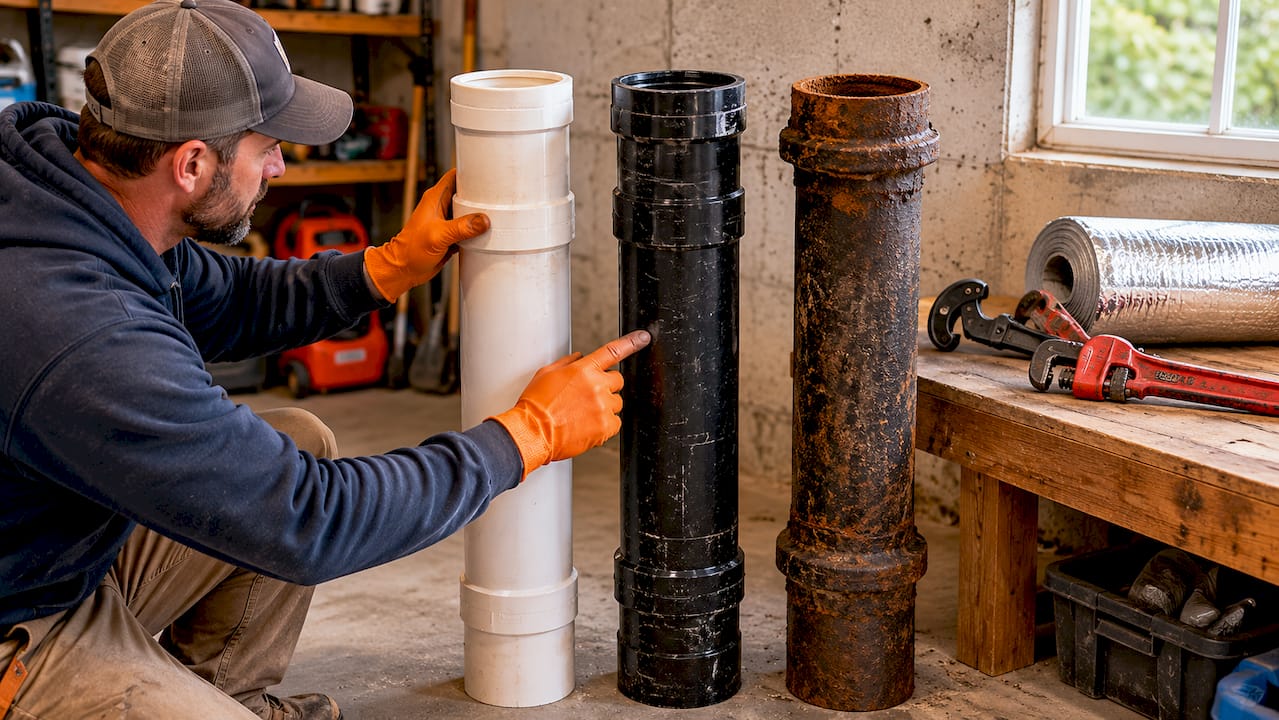
PVC Schedule 40 and ABS Schedule 40 are both approved under the 2024 International Residential Code for above-ground sanitary drainage. You cannot mix them without approved transition fittings. Using a PVC fitting on ABS pipe without the correct adapter causes joint failure over time.
| Material | Cost | Noise Level | Durability | Best Use |
|---|---|---|---|---|
| PVC Schedule 40 | Low | High | Good | General drainage runs |
| ABS Schedule 40 | Low to moderate | High | Good | Cold climates, basements |
| Cast iron | High | Very low | Excellent | Bedrooms, offices, noise-sensitive areas |
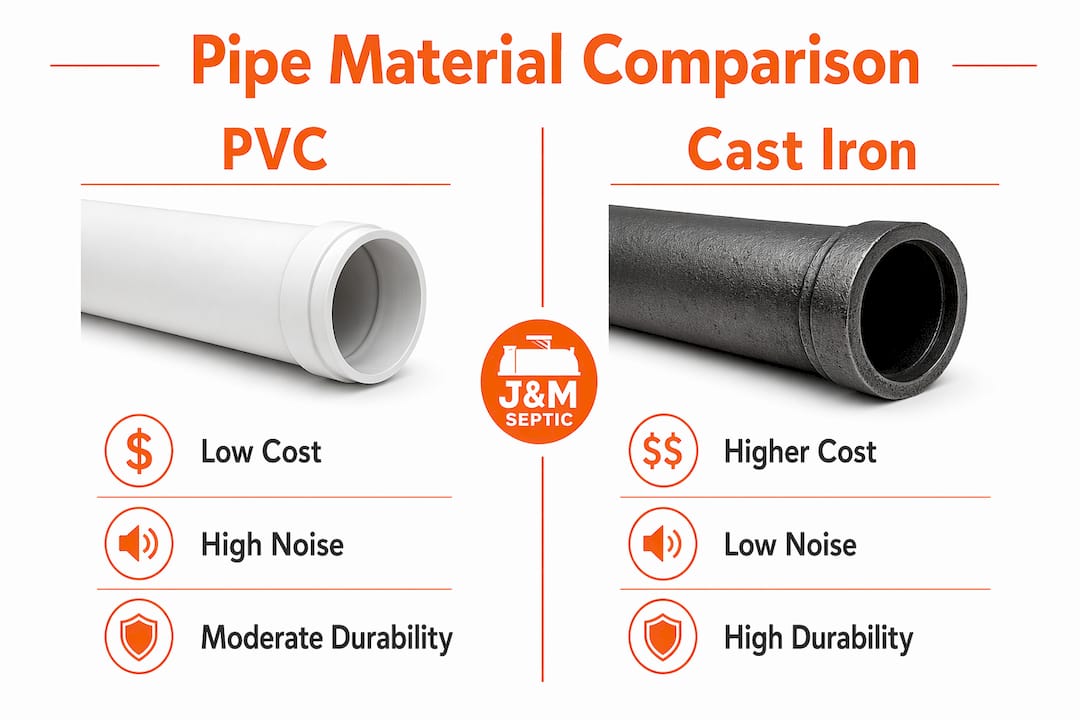
Cast iron pipes absorb vibration and sound far better than PVC or ABS. If your overhead sewer runs through a bedroom ceiling or a home office, cast iron is the right call despite the higher cost.
Pro Tip: Wrap PVC drain pipes with acoustic pipe wrap insulation before closing walls. This reduces flow noise by 50–70% at a fraction of the cost of switching to cast iron.
What do above ground sewer systems cost to install and maintain?
Cost is where most homeowners get surprised. The range is wide because soil conditions, system design, and local labor rates all push numbers in different directions.
Installation costs for an above ground septic system run between $3,000 and $10,000 depending on tank size and system complexity. That range reflects the difference between a straightforward overhead conversion in a small ranch home and a full pump-assisted system with a grinder tank on a larger property. For a detailed breakdown of what drives those numbers in North Carolina, the septic installation cost factors page at Jmseptic covers local pricing variables directly.
Routine maintenance costs are more predictable. Pumping runs $300–$500 and should happen every 3–5 years. Skipping this schedule is the single most common cause of system failure.
| Cost Factor | Typical Range | Notes |
|---|---|---|
| Full system installation | $3,000–$10,000 | Varies by system type and site conditions |
| Routine pumping | $300–$500 | Every 3–5 years |
| Overhead conversion reimbursement | Up to 75% of cost | Program-dependent; see below |
| Pipe repair (single section) | $200–$800 | Depends on access and material |
One cost-saving option most homeowners never hear about: the City of Champaign, Illinois runs a program where overhead sewer reimbursements cover up to 75% of the lowest contractor estimate when multiple bids are submitted. Similar municipal programs exist in other cities with chronic sewer backup problems. Check with your local public works department before assuming you pay the full bill.
Pro Tip: Get three contractor estimates before submitting any reimbursement application. Most programs cap reimbursement at the lowest bid, so having multiple quotes protects your maximum payout.
What problems should homeowners expect with these systems?
Above ground plumbing introduces risks that buried systems never face. Knowing them upfront lets you design around them.
-
UV damage to plastic pipe. Sunlight degrades PVC and ABS over time. UV exposure causes brittleness and eventual cracking in plastic pipes left exposed outdoors. Any outdoor sewer pipe run in direct sunlight needs UV-resistant paint or protective conduit.
-
Mechanical impact damage. Pipes running through garages or utility areas are vulnerable to being hit by vehicles, equipment, or stored materials. Cast iron handles impacts better than plastic, but any exposed pipe in a high-traffic area needs physical protection such as bollards or framed enclosures.
-
Noise transmission. Above-ground drain pipes transmit flow noise directly into living spaces. This is especially noticeable in two-story homes where drain lines run through bedroom ceilings. Cast iron is the industry standard for sound-sensitive locations because its mass absorbs vibration that plastic pipes transmit freely.
-
Pipe sag and joint stress. Suspended pipes that lack adequate hanger support will sag over time. Sag creates low spots where solids collect, leading to clogs and eventually joint failure. Professional engineering oversight on hanger placement prevents this.
-
Wall and ceiling disruption. Overhead conversions require cutting into finished surfaces. Budget for restoration costs as part of the total project, not as an afterthought.
Pro Tip: Before any above ground drain installation, ask your plumber to show you the hanger spacing plan on paper. If they cannot produce one, find a different contractor.
How do you keep an above ground sewer system running long term?
A well-installed system lasts decades with the right maintenance habits. These practices prevent the most common failures.
-
Inspect pipe supports annually. Walk the accessible pipe runs once a year and look for hangers that have loosened, corroded, or pulled away from the structure. Catching one failed hanger early prevents a cascade of joint stress.
-
Protect exposed pipes from sunlight. Paint outdoor PVC runs with latex paint or wrap them in UV-protective sleeve material. Reapply protection every few years in high-sun climates.
-
Pump on schedule. For systems with holding tanks or grinder pumps, stick to the 3–5 year pumping interval. The septic failure prevention guide at Jmseptic explains what happens when pumping gets delayed and how quickly a neglected system deteriorates.
-
Match materials to the environment. Cast iron in noise-sensitive areas, PVC or ABS in utility spaces, and UV-rated materials outdoors. Using the wrong material in the wrong location is the most avoidable installation mistake.
-
Use licensed plumbers for repairs. Above ground sewer repairs that involve cutting into walls or adjusting pipe grades require permits in most jurisdictions. Unlicensed work voids warranties and creates liability during home sales.
Reviewing the types of septic systems available to you is a smart first step before committing to any above ground configuration, since the right system depends heavily on your property’s specific conditions.
Key takeaways
An above ground sewer system works best when the right configuration, materials, and maintenance schedule are matched to the specific conditions of your property.
| Point | Details |
|---|---|
| System type determines complexity | Overhead conversions are permanent fixes; pump systems add mechanical maintenance needs. |
| Material selection affects noise and durability | Use cast iron near bedrooms and offices; PVC and ABS suit utility areas with proper UV protection. |
| Installation costs vary widely | Expect $3,000–$10,000 for installation; budget $300–$500 every 3–5 years for pumping. |
| Reimbursement programs exist | Some municipalities cover up to 75% of overhead conversion costs when multiple bids are submitted. |
| Pipe support is non-negotiable | Proper hanger spacing prevents sag, clogs, and joint failure over the life of the system. |
What i’ve learned after years of sewer installations
Most homeowners come to me after a basement flood or a failed DIY attempt. By then, the cost is always higher than it would have been with a proper plan upfront. Here is what I tell every homeowner before they start.
The biggest mistake I see is treating an overhead sewer conversion as a plumbing job rather than a structural one. Pipe hangers are not hardware store accessories. They are load-bearing components, and I have seen systems fail within five years because a contractor used the minimum code spacing instead of engineering the support for the actual pipe weight and run length.
The second mistake is choosing PVC everywhere to save money, then living with the noise. A drain line running through a bedroom ceiling sounds like a waterfall every time someone flushes. Cast iron costs more upfront, but I have never had a homeowner regret the upgrade. I have had plenty regret skipping it.
My honest advice: get your soil conditions and site layout assessed before you pick a system type. A macerating pump system that works perfectly in a finished basement addition is the wrong answer for a home with chronic sewer backup. Those are two different problems with two different solutions. Spend the time and the consultation fee to get that diagnosis right, and the rest of the project becomes straightforward.
— Jason
Get expert help with your sewer system in alamance county
Choosing the right above ground sewer configuration for your property is not a decision to make from a YouTube video. The soil conditions, existing plumbing layout, and local code requirements in Alamance County all shape what will actually work on your property.

Jmseptic handles new septic system installations, overhead sewer work, and full system repairs across Burlington, Mebane, Graham, and the surrounding Piedmont Triad area. If you are weighing costs or trying to understand what your property needs, the new septic installation page is a direct starting point. For a full breakdown of what installation will cost you specifically in North Carolina, check the septic installation cost guide. Call Jmseptic before the problem gets worse.
FAQ
What is an above ground sewer system?
An above ground sewer system routes wastewater pipes above the floor or basement ceiling rather than underground. The most common residential version is an overhead sewer conversion, which permanently prevents basement flooding by elevating the drain connection above the city sewer surcharge level.
How much does an above ground sewer system cost?
Installation costs range from $3,000 to $10,000 depending on system type, tank size, and site conditions. Routine maintenance pumping costs $300–$500 every 3–5 years.
Can i mix PVC and ABS pipe in an above ground sewer installation?
No. PVC and ABS cannot be joined directly. The 2024 International Residential Code requires approved transition fittings at any point where these two materials meet in a sanitary drainage system.
What pipe material is best for noise reduction in above ground plumbing?
Cast iron is the industry standard for noise-sensitive locations like bedrooms and offices. It absorbs vibration substantially better than PVC or ABS, which transmit flow noise directly into living spaces.
Are there reimbursement programs for overhead sewer conversions?
Some municipalities offer reimbursement programs. The City of Champaign, Illinois covers up to 75% of the lowest contractor estimate for approved overhead sewer conversions. Check with your local public works department to find out if a similar program exists in your area.